Biography
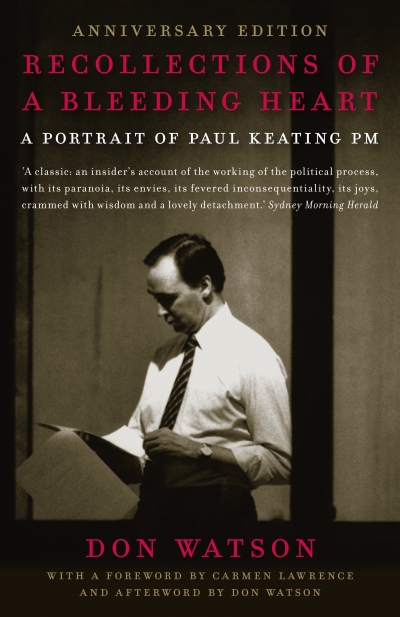
Recollections of a Bleeding Heart: A portrait of Paul Keating PM by Don Watson
What is it about Paul Keating that so fascinated his retainers? Six years ago, John Edwards wrote a massive biography-cum-memoir taking Keating’s story to 1993. Now Don Watson has produced an even heftier tome. Narrower in chronological span – 1992 to 1996 – Watson is broader in his interests, more personal, more passionate ...
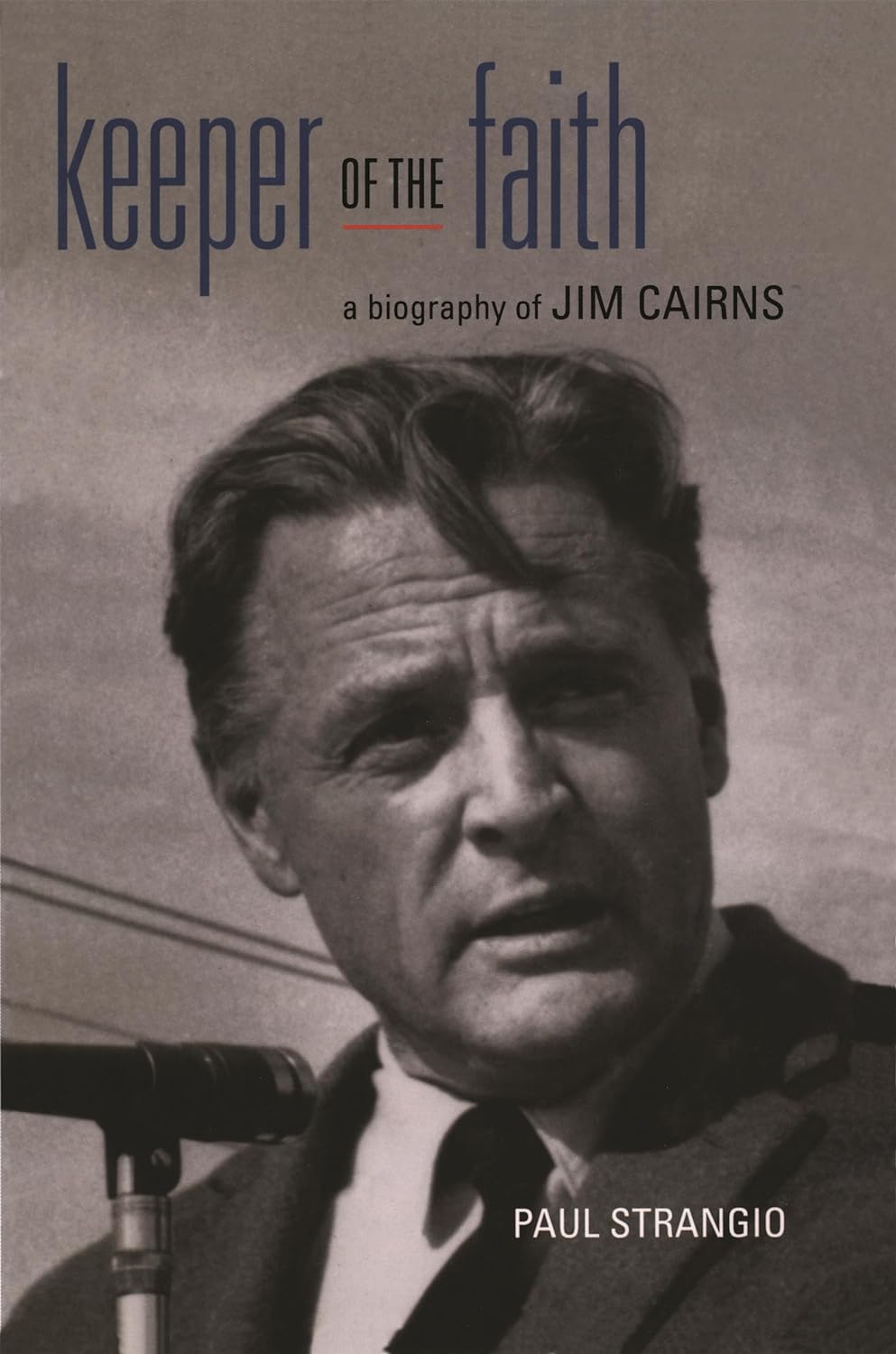
... (read more)Keeper of the Faith: A biography of Jim Cairns by Paul Strangio
First, a disclaimer. Since 1975 I’ve had a sneaking affection for Jim Cairns. At that time, I was flirting with various environmental causes – as you do at the age of nine. I circulated some petitions at my primary school calling for the preservation of the Tasmanian south-west from its concrete-crazed Hydroelectricity Commission. I forwarded these to a string of political power-brokers, identified rather shrewdly by their appearances on the ABC news.
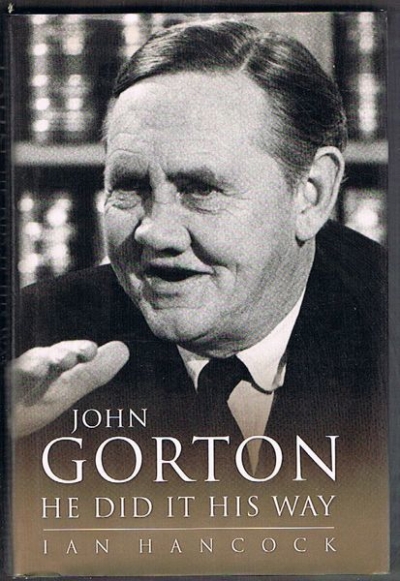
... (read more)Robert Menzies cast such a large shadow that the contribution of his immediate successors has tended to be belittled, if not forgotten altogether. Each of the three is remembered mostly for things unconnected with their prime ministerships: Harold Holt for the manner of his death; John Gorton for his drinking ...
... (read more)Biography can be difficult to achieve. There is the balance between too much detail, where one can’t see the wood for the family trees, or not enough, which can be disappointing all round. One also bears in mind possible antipathy: Sigmund Freud, who famously began burning his personal papers at twenty-nine, was dismissive of future chroniclers: ‘As for biographers, I am already looking forward to seeing them go astray.’
... (read more)Repressive despot, or enlightened reformer? What are we to make of Suharto, four years after his fall? Was his prolonged rule an inevitable outcome of the Indonesian political process and of the mistakes and chaos of the Sukarno years? Or was it an illegitimate and corrupt militaristic venture, which has now been replaced by a genuine democratic political system, whatever its flaws and bloody dissensions? Is it too early to draw firm conclusions?
... (read more)Joseph Benedict Chifley enjoys a special place in the Australian pantheon – an icon of decencies almost extinct. Born in 1885, Chifley was raised in Bathurst, where he joined the NSW Railways in 1903. One of the youngest-ever first-class locomotive drivers at the age of twenty seven, Chifley was among those who struck for six weeks in 1917 against new management practices in the railways. They lost. He was demoted to fireman, and his union, the Federated Engine-drivers and Firemen’s Association of Australasia, deregistered. He was soon restored to engineman.
... (read more)By the time I arrived in Canberra in the late 1970s, Mungo MacCallum was already a legend in his own lunchtime, which, as he admits in this latest book, ‘frequently dragged on towards sunset’. He was famed for introducing a new style of political journalism into Australia: irreverent, opinionated, witty, at times scurrilous. He was impatient of cant, and punctured pomposity. These qualities are all apparent in Mungo: The Man Who Laughs. It is avowedly neither autobiography nor history. It is an odd hybrid, divided distinctly into two parts: a set of autobiographical sketches devoted to his early life, laced with politics and laughter; and a personalised chronicle of the age of Gough Whitlam.
... (read more)Australians have always played their sports hard. We who would have given a soft part of our anatomy to have worn the baggy green for Australia love a winner or a victorious team. Our sporting aristocracy has often been characterised by a gimlet-eyed, thin-lipped determination and ruthlessness: Don Bradman is the apotheosis of these champions.
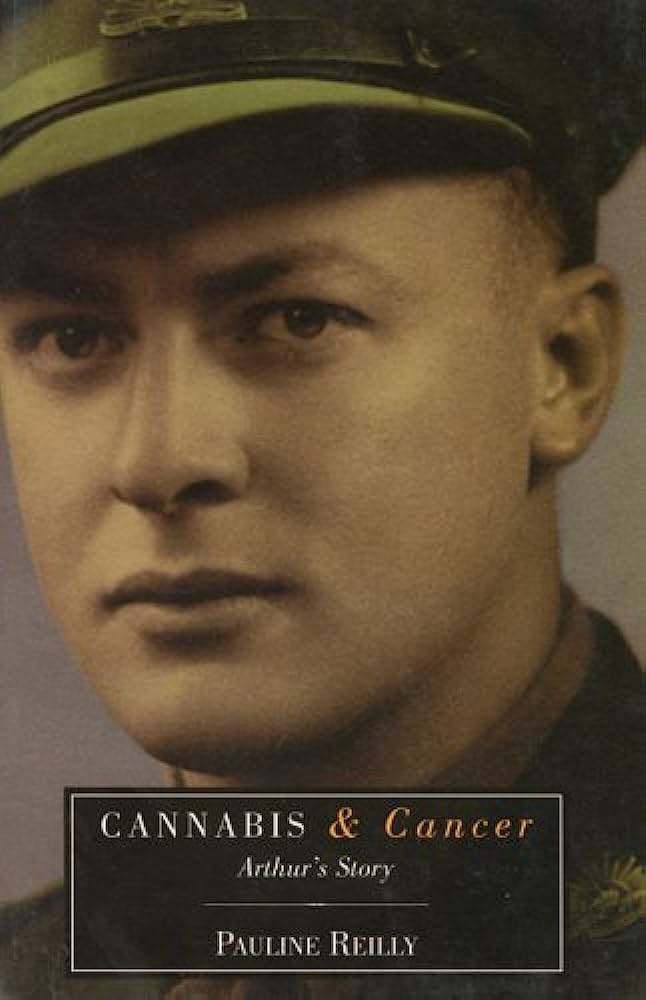
... (read more)Cannabis and Cancer: Arthur’s Story by Pauline Reilly
This is a book about pain. In December 1999, Arthur Reilly was diagnosed with life-threatening cancer. The methods of relief offered to him, principally morphine, had drastic side-effects which undermined what pleasure he might have found in living. For four months, he lost weight and showed little interest in his usual activities. He became depressed and contemplated suicide.
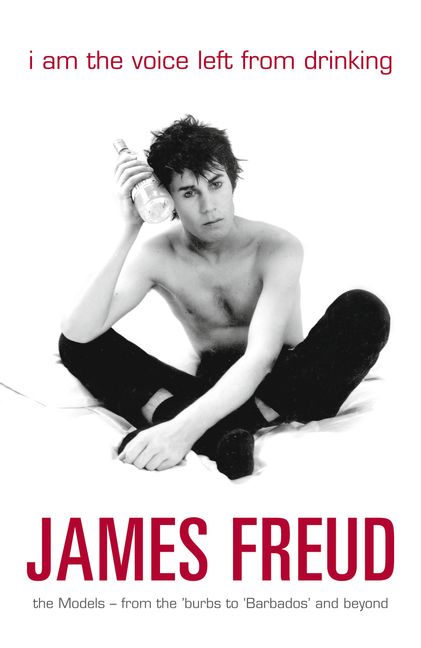
... (read more)i am the voice left from drinking: the Models –from the ‘burbs to ‘Barbados’ and beyond by James Freud
One day during school holidays in 1981, the year I turned sixteen, I ate spaghetti bolognese in a new brick house in Noble Park. My hosts were two delightful girls around my age, dressed in checked mohair jumpers and straight black trousers. Sonia and Letitia ran the Models fan club. Our subjects included whether I should grow a ‘floppy fringe’, like Models’ keyboard player Andrew Duffield (I did), and James Freud’s recent appearance, alongside the Models’ Sean Kelly, on the television show Sounds. This was an event which many in the pro-Models camp found meaningful: Sean and James were friends again! Freud and Kelly had started their music careers in the late 1970s, in the Teenage Radio Stars. When Freud re-joined Kelly in the Models in 1983, his pop sensibility helped to take them to the top of the charts with the hit singles ‘Barbados’ - a line from that song gives this book its title - and ‘Out of Mind, Out of Sight’.
... (read more)