

The shortlist for the 2026 Peter Porter Poetry Prize has been announced
Australian Book Review is delighted to announce the shortlist for the 2026 Peter Porter Poetry Prize. The prize was judged by Judith Bishop, Felicity Plunkett, and Anders Villani. We received 1,360 entries from thirty-two countries. The shortlisted poems will appear in the January-February 2026 issue. Now in its twenty-second year, the Porter Prize is one of Australia’s most lucrative and respected poetry awards. It honours the life and work of the great Australian poet Peter Porter (1929–2010), a contributor to ABR for many years.
Status: Shortlist announced
First prize: AU$6,000
Four other shortlisted poets: AU$1,000
Dates: Opened 7 July and closed 13 October 2025
Judges: Judith Bishop, Felicity Plunkett, and Anders Villani
More information
Click here for more information about past winners and to read their poems.
Please read our Terms and Conditions and Frequently Asked Questions.
The Peter Porter Poetry Prize is funded by the ABR Patrons, including support in memory of Kate Boyce.
The shortlist for the 2026 Peter Porter Poetry Prize is as follows (in alphabetical order by author surname):
J Andros (United States) | ‘American Influencers’
Kirsten Krauth (Vic.) | ‘Diverging’
Cheryl Leavy (QLD) | ‘Kumanjayi’
Claire Potter (NSW) | ‘Invisible Hinges’
Lisa Gluskin Stonestreet (United States) | ‘In Costume’
Of the five shortlisted poems, the judges had this to say:
‘American Influencers’
With the mythic sweep of Whitman or Ginsberg and the acuity of a lyric essay, this capacious poem attempts to hold the current moment in the United States, like filings of a precious, corroded metal. Nimble leaps between past, present, and future; a formal refinement that careens and fractures with its subject; tonal fluidity; historical record; critical theory; the poem deploys its resources with deft instinct and blazing commitment. Through invocations to AI tools, as a lyric might invoke a deity, the poem dramatises the crisis of futurity and truth itself: what we seek by pursuing it; where to find it; who gatekeeps it. The first-person speaker traverses the country, and the American continent, with a gaze – at class struggle; at racial injustice; at climate breakdown; at isolationism and loneliness – that urges a response and makes response possible.
‘Diverging’
If poetic form, as Denise Levertov argued, can be ‘a method of apperception … of recognising what we perceive, and is based on an intuition of an order’, then the intuition behind the form of ‘Diverging’– the juxtapositional logic of acceptance and love – draws its reader into its felt and embodied forms of care. The repeated slashes are a tain, retaining the image of a child on the verge of adulthood, and a formal trope for neurodivergence and gender transition. In a complex dance of initiation and response, the poem’s lines begin with alternating pronouns, ‘i’ and ‘he’. The poem generously approaches a generational divide with its adopted lexicon of ‘gay-ming’, ‘jellycat’, and ‘heartstopper’, yet its language is strongly grounded also in the simplest physicality of verbs. The poem’s achievement is to approach, with all its craft, the infinite difference of another, as Levinas conceived it.
‘Kumanjayi’
Pulsing between speaking and silence, anger and tenderness, the poem’s spare lyricism flares into moments of repetition. These reflect trauma’s return and return, in kind, steadily to ceremony and honouring. Beginning where anger meets violence, ‘Kumanjayi’ turns to observance, tending the aftermath of violence across this ‘whole bloodied continent’. The poem works precisely with diction and lineation, preferring steady witness to metaphor, as though swept clear of distraction. Drawing the reader into its momentum, shifting pronouns invite witness and ask readers to consider whether, ancestrally or now, we are part of the ‘we’ who gather to heal or the ‘they’ who enact the violence, perhaps both. The poem’s first-person singular ‘I’ steps in only after partaking in collective mourning and healing, quietly requesting permission to address and imagine the young Kumanjayi. In the year in which there have been the most Aboriginal deaths in custody since 1979, this necessary poem moves delicately and unswervingly towards justice.
‘Invisible Hinges’
This ravishing poem resonates with the delicate precision of a world deeply seen, felt, sounded, and spoken. Here, lines that are ‘all sheen and peck’, ‘the apparition of a satin dress’, ‘crushed emperor’s clothes’, ‘torch beams / searching for amethysts’, spill down the page like moonlight on a river, as silver, grey, and white seasons give way to summer’s ‘wild, golden altar’. The lyricism of the language signals an ethical attention to the phenomenal world with its singular inscapes and instresses. Looking out of Georgian windows, the speaker imagines the ‘invisible hinges’ of personal and historical transits. Even as its main subject is a love relationship spanning Britain and Australia, the poem observes the theft of Country enabled by ‘terra nullius’ and the original injustice through which, quoting René Char, poet and French Resistance fighter, ‘the fruit of one / became “the fruit of the other”’.
‘In Costume’
A work of rhythmic and sonic panache, this poem catalogues the masks we wear and celebrates – and laments – the lives they make (almost) possible. While rooted in urban United States, the poem does what great lyrics do: attains broad resonance through precision. Dresses and their accoutrements here are more than yearnings for new identities, new ideologies, new ways of acting upon the world and feeling the world acting upon us. They are portals, transfiguring reality itself: cracking it open, if temporarily. In telling the story of those portals, the poem becomes one too, thanks to the poet’s quicksilver control of pace, tension, imagery, and enjambment. A volta leaves the reader full with interpretative possibility; we open a wardrobe of implication from which every reading pulls a new dress.
Of the overall field, the judges had this to say:
1360 poets entrusted their poems to the judges of this year’s Peter Porter Poetry Prize. We read with attention and joy as we weighed our decisions with the care of poets who have all entered this competition in previous years. We read vivid sestinas, blackout poems interrogating history, poems of mourning and love, vital experiments in breaking and querying language, intimate lyrics, pantoums, sonnets, and concrete poems. If the poems had a palette, its accent was the green of hope and healing, held gently in a wide range of poems speaking across time and place. Many poems also responded to current wars, grief, loss, and mental illness; betrayal, estrangement, and futility. We felt deeply the currents of passion and compassion in so many of these poems, and we saw how poetry – even as it feels less valued than at many times in history – still provides a place of refuge and a way to speak about what cannot otherwise be spoken. This is the work Tracy K. Smith speaks about when she describes poetry’s capacity to express ‘the notion that your life must be as important to you as mine is to me’.
The longlist for the 2026 Peter Porter Poetry Prize is as follows (in alphabetical order by author surname):
J Andros (United States)
Jamil Badi (Vic.)
Daragh Byrne (NSW)
Elena Croitoru-Reed (United Kingdom)
Ross Gillett (Vic.)
Lily Holloway (New Zealand)
Kirsten Krauth (Vic.)
Cheryl Leavy (QLD)
Damen O’Brien (QLD)
Claire Potter (NSW)
Lisa Gluskin Stonestreet (United States)
Dominic Symes (Vic.)
The 2026 Peter Porter Poetry Prize longlist
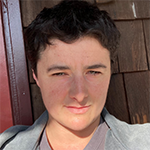 J Andros
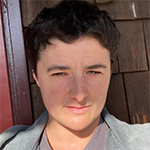
J Andros (they/he) writes to find a more freeing form of communication. Originally from Washington DC, he was exposed early to protests and continues to work from New York City or the San Francisco Bay Area. His writing has been featured on radio shows, in short films, in anthologies, and on stages around the world. J Andros co-founded the poetry publication Poets Reading the News and has taught and studied creative writing at NYU and other institutions. You can find more of their work at www.jandros.work or on social media @nycdownglo.
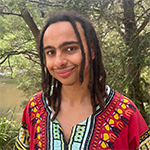 Jamil Badi
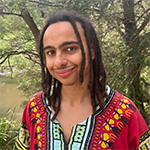
Jamil Badi is a writer living on unceded Wurundjeri land. Inspired by oral storytelling practices, his work primarily consists of folktales which aim to blend the properties of the spoken word with the written. His fiction, poetry, and creative non-fiction has appeared in Meanjin, Overland, Island, Cordite, Voiceworks, and elsewhere. He is a recipient of the 2026 Next Chapter Fellowship.
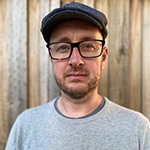 Daragh Byrne
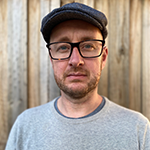
Daragh Byrne is a Sydney-based Irish poet. His work has appeared in Southword, Poetry Wales, Poetry Birmingham Literary Review, Banshee, Howl New Irish Writing, Cyphers, Crannóg, The Waxed Lemon, The Four Faced Liar, Stony Thursday Book, and elsewhere. He has been shortlisted or commended in the Patrick Kavanagh Award, Fool for Poetry International Chapbook Competition, Poetry London competitions (pamphlet and single poem), and the Listowel Writer’s Week Collection Competition. He is founding editor of The Marrow, a journal of international poetry. https://themarrowpoetry.com
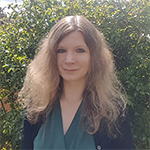 Elena Croitoru-Reed
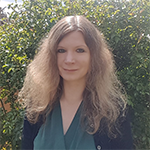
Elena Croitoru-Reed has a Masters in Creative Writing from the University of Cambridge. She has won the Charles Causley Poetry Prize, the South Bank Poetry Prize, and was commended in the National Poetry Competition. She has also placed or was a finalist in the Montreal Poetry Prize, Bridport Prize, and other awards. Her first poetry pamphlet won the Live Canon Pamphlet Prize. Her work is forthcoming or has appeared in POETRY, World Literature Today, and The Poetry Society, among others.
 Ross Gillett
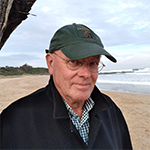
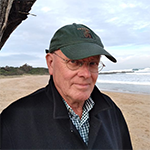
Ross Gillett lives on Dja Dja Wurrung country in Daylesford in the central highlands of Victoria. He has won a number of Australian awards, including the Newcastle Poetry Prize, and has twice been shortlisted for the Blake and Peter Porter prizes. His first book, The Sea Factory, was published by Five Islands Press in 2006, and currently his books The Mirror Hurlers (2019) and Swimmer in the Dust (2022) are available from Puncher & Wattmann.
 Lisa Gluskin Stonestreet

Lisa Gluskin Stonestreet is the author of The Greenhouse (2014), which was awarded the Frost Place Prize, and Tulips, Water, Ash (2009), which was awarded the Morse Poetry Prize). Her poems have appeared in journals including Plume, Boulevard, Beloit Poetry Journal, and Kenyon Review, as well as in multiple anthologies. She lives in northern California, where she reads, writes, edits, teaches writing, and with writers in her backyard Poetry Shack. lisagluskinstonestreet.com
 Lily Holloway

Lily Holloway is a powerlifting enthusiast and a recent graduate of the Syracuse University Creative Writing MFA. This year, they won The Joyce Carol Oates Award in Poetry for the best group of poems by a graduate student at Syracuse University as well as The Joyce Carol Oates Award in Fiction for best story. They are a 2024 winner of the Griffith Review Emerging Voices competition and placed second in the 2024 Black Warrior Review Poetry Competition. Their work is published or forthcoming in various publications, including Black Warrior Review, Sundog Lit, Ōrongohau | Best New Zealand Poems, Peach Mag, and Hobart After Dark. Their chapbook was published in 2021 as a part of Auckland University Press’s AUP New Poets 8. Find them on X and Instagram.
 Kirsten Krauth
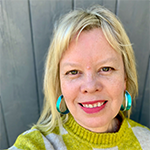
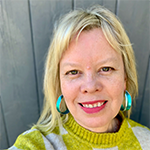
Kirsten Krauth is an author, podcaster, editor, and poet. Her latest novel, Almost a Mirror, was shortlisted for the Penguin Literary Prize and SPN Book of the Year and recognised by The Guardian as one of the Best Australian Books of 2020, sparking a podcast and live show. Her poem, ‘Pencils from Heaven’, was runner up in the Blake Poetry Prize and her first book of poetry, Beautiful Avalanche, will be published by Life Before Man in 2027.
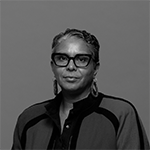 Cheryl Leavy
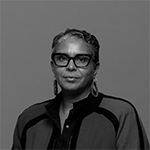
Cheryl Leavy is an award-winning writer from the Kooma Nation who is passionate about language revitalisation. Writing in both English and her critically endangered Kooma language, she has been published by Cordite, Griffith Review, Southerly, The Guardian, and in the University of Queensland Press anthology, Words to Sing the World Alive. In 2022, Cheryl won the Oodgeroo Noonuccal Prize for Indigenous Poetry. She has recently completed her first poetry collection, titled Mudhunda – The Song Country, to be published in 2027. Cheryl’s dèbut bilingual picture book, Yanga Mother, was shortlisted for an Australian Book Industry Award and a Queensland Literary Award for a Work of State Significance.
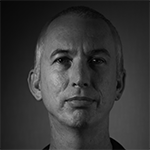 Damen O’Brien
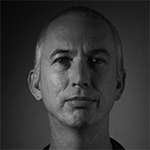
Damen O’Brien is a multi-award-winning Brisbane-based poet. His prizes include The Moth Poetry Prize, the 2017 Peter Porter Poetry Prize, and the New Millennium Writings Award. His poems can be found in New Ohio Review, Aesthetica Magazine, Arc Poetry Journal, Mississippi Review, and other journals. Damen’s latest book is Walking the Boundary (Pitt Street Poetry, 2024).
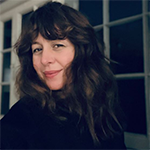 Claire Potter
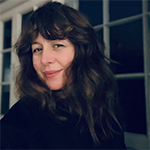
Claire Potter is author of four poetry collections, Acanthus (Giramondo, 2022), Swallow (Five Islands, 2010), N’ombre (Vagabond, 2007), and In Front of a Comma (Poets Union, 2006), as well as numerous essays and translations. She lives between Sydney and London, where she is Head of the Writing Centre at the Architectural Association.
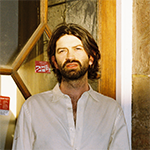 Dominic Symes
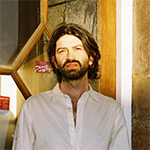
Dominic Symes lives on the unceded lands of the Wurundjeri people of the Kulin Nation. His début collection, I saw the best memes of my generation (Recent Work Press, 2022) was highly commended in the 2024 NSW Premier’s Literary Awards. In 2025 he was shortlisted for the Overland Judith Wright Poetry Prize and became a father for the first time. His second collection, songs of love & hate speech, is forthcoming with Rabbit in 2026.
The Peter Porter Poetry Prize is funded by the ABR Patrons, with generous support from Andrew Taylor AM.
If you are an ABR subscriber, you will need to sign in to post a comment.
If you have forgotten your sign in details, or if you receive an error message when trying to submit your comment, please email your comment (and the name of the article to which it relates) to ABR Comments. We will review your comment and, subject to approval, we will post it under your name.
Please note that all comments must be approved by ABR and comply with our Terms & Conditions.