
2025 Arts Highlights of the Year
To celebrate the year’s memorable plays, films, television, music, operas, dance, and exhibitions, we invited a number of arts professionals and critics to nominate their favourites.
Andrew Ford
Following the death of Tom Stoppard, I read that his own favourite among his plays was The Invention of Love. The production I saw of it at London’s Hampstead Theatre was a highlight of my year; the ensemble cast, led by Simon Russell Beale, conveyed the play’s wit and emotion with astonishing power. You don’t expect, as a musician, to be bowled over by familiar old warhorses such as Ravel’s Boléro or Schubert’s Octet in F Major (the latter a piece that generally bores me stiff), but they both got to me this year. Jaime Martín conducting the Sydney Symphony Orchestra made me feel as though I was hearing the Ravel for the first time and with such clarity, as if I was following the score. The Schubert was performed, at the end of the Australian Festival of Chamber Music in Townsville, by eight very tired musicians with minimal rehearsal. But, led by the festival’s artistic director, Jack Liebeck, a miracle of collegiate music-making occurred, and the piece stayed with me for days afterwards.
Andrew Furhmann
The Cage Project (Musica Viva), a collaboration between installation artist Matthias Schack-Arnott and pianist Cédric Tiberghien, stood out among performance events this year for its sophistication, ambition, and beautiful peculiarity: a vision of John Cage’s Sonatas and Interludes, both archaic and futuristic. The Dance X Festival, presented by The Australian Ballet, once again brought together companies from around the country for a two-week dance jamboree. The influence of the nation’s top ballet company at every level of dancemaking in this country continues to amaze. In November, choreographer Sandra Parker premiered her three-hour duet Threshold (Dancehouse), completing an extraordinary diptych with last year’s Safehold. It is the sort of self-consciously serious art in which meaning appears to exceed the mechanics of its making. And, finally, it was tremendously exciting to see Temperance Hall, led by William McBride and Anna McDermott, re-emerge as a venue for developing and presenting experimental dance, performance, and bodily thought.
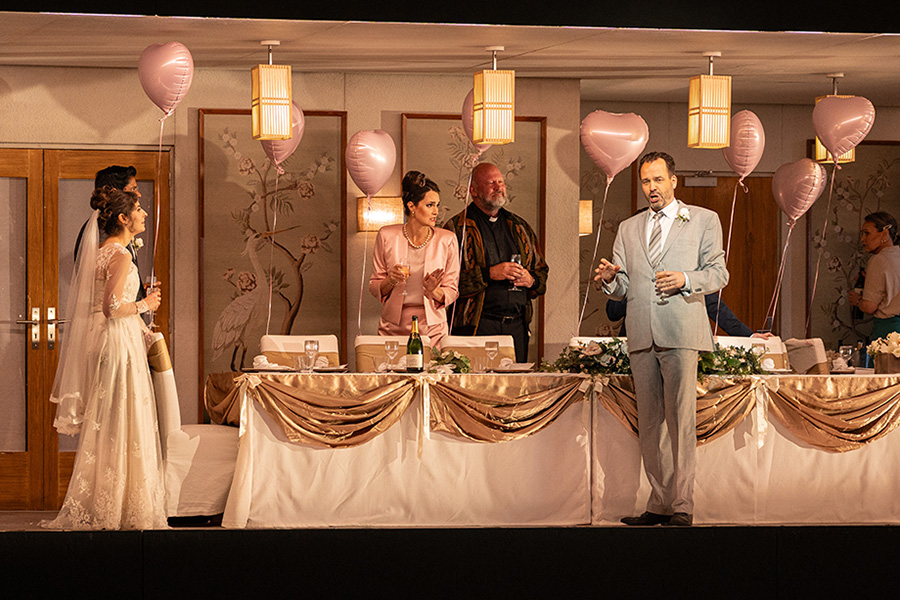 Innocence (photograph by Andrew Beveridge)
Angela Viora
Two works at Asia TOPA (the Asia-Pacific Triennial of Performing Arts), Melbourne’s festival celebrating contemporary Asian-Pacific performances, offered the most thought-provoking encounters of my year. Kagami (The Shed), a posthumous mixed-reality concert by the late Japanese composer Ryuichi Sakamoto and producer Todd Eckert conjured the uncanny sensation of witnessing presence without flesh: an avatar both intimate and unreachable. Suspended between archive and apparition, this virtual body invited reflection on futurity, authorship, and the limits of liveness. In striking contrast, Indonesian performance artist Melati Suryodarmo’s unannounced reprise of Butter Dance (Dancehouse) – performed again after twenty-five years – exposed the body at its most vulnerable and insistent. Slipping, falling, and rising on a mound of melting butter, Suryodarmo’s mature body performed persistence as an elemental force. Her breaths, crashes, and recalibrations carried the weight of memory, exile, and becoming. Seen together, these works framed performance as a negotiation between disappearance and endurance, reminding us that, whether rendered virtual or defiantly flesh, presence still demands our full attention.
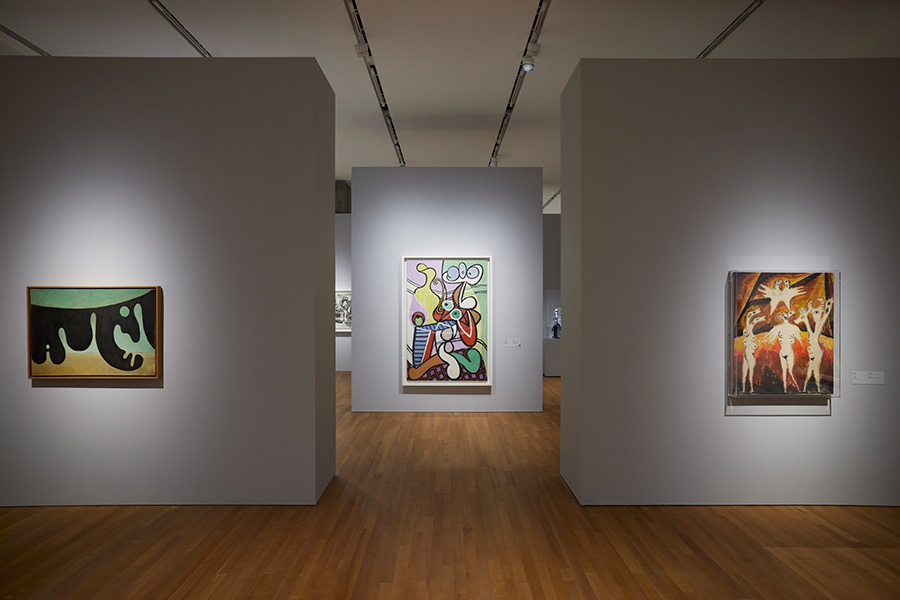 Installation view of The Hong Kong Jockey Club Series in Picasso for Asia - A conversation, 2025 (photograph by Lok Cheng, courtesy of M+)
Anne Rutherford
‘We are five-star people’, says David Gulpilil in Journey Home, David Gulpilil (Savage Films and Brindle Films). ‘We walk the red carpet, the red earth of our country, and it’s the red earth and our ceremonies that make us who we are.’ It seems strange to write about a funeral as exuberant, life-affirming, but this outstanding documentary, in which Gulpilil’s family invites Australia to participate in his mortuary rites (Bäpurru), draws us as viewers into an immersive experience of the radiance and vitality of Yolŋu culture and ceremony. The account of the logistical challenges encountered in staging this extraordinary funeral frames the expression of a deep, palpable grief. But, as the ten-day ceremony builds, as the clans embrace Gulpilil and dance his spirit back into his sacred waterhole, the pulse of the clapsticks, the guttural voices of the song makers, and the drone of the didgeridoo meld the rhythm of beating feet and the moving swell of dancers into a hypnotic, almost euphoric affirmation of culture. In reclaiming Gulpilil, through ceremony, for culture and country, this film echoes the bark petition and the Barunga Statement as a profoundly moving and important declaration of a luminous living culture.
Ben Brooker
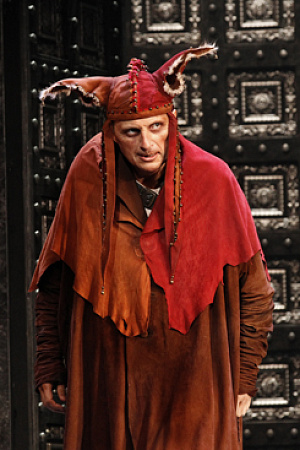
Eddie Perfect’s Beetlejuice the Musical (Michael Cassel Group) was an unashamed riot, a brilliantly conceived and executed musical adapted from Tim Burton’s 1988 film. I once thought of Perfect as a poor man’s Tim Minchin but this production, which transfers to the West End in May, convinced me otherwise. Where Beetlejuice was joyously silly, Simon Stone’s production of Kaija Saariaho’s final opera, Innocence (State Opera South Australia) (ABR Arts, 5/3), was magnificently brooding and the highlight of this year’s Adelaide Festival. Few contemporary operas can match its rich score and resonant themes, all masterfully synthesised in Stone’s epic staging. While I was largely underwhelmed by film this year (including Paul Thomas Anderson’s over-praised One Battle After Another, by production company Ghoulardi), the fiftieth anniversary restoration of Stanley Kubrick’s Barry Lyndon (Warner Brothers) occasioned for me a complete reappraisal of a film I once nodded off to. Far from soporific, this painterly, unexpectedly funny picaresque romp struck me as perhaps the great director’s masterwork.
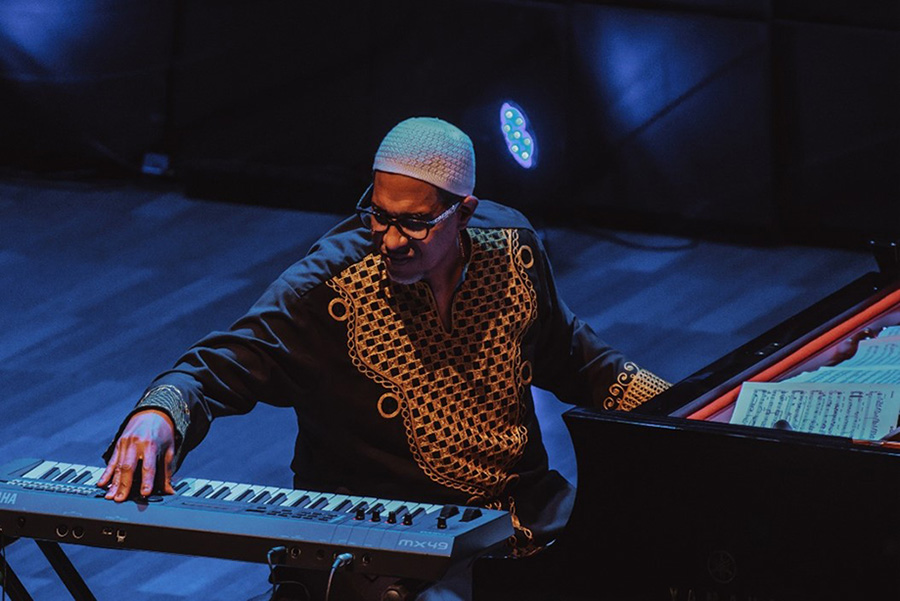 Danilo Pérez at the Melbourne Recital Centre as part of the Melbourne Internation Jazz Fesitval (photograph by Duncographic)
Des Cowley
Chris Abrahams’ s performance on the 102-key Stuart & Sons grand piano at Tempo Rubato in March was a standout. Renowned for rarely speaking on-stage, Abrahams’s spontaneous outburst – ‘what a great fucking piano’ – perfectly captured the moment. In August, Paul Grabowsky brought a stellar ensemble to Melbourne’s JazzLab to re-imagine Jim Hall’s ambitious 1975 recording Concierto, itself a re-imagining of Joaquín Rodrigo’s famous concerto for guitar. The result was a magisterial presentation that honoured one of America’s unsung jazz heroes. The Melbourne International Jazz Festival (ABR Arts, 30/10) in October delivered many highlights, chief among them Bill Frisell’s audacious open-ended improvisations and bassist Linda May Han Oh’s affecting work, Invisible Threads, inspired by her mother’s stories. Lastly, Artistic Director Aaron Choulai showed a willingness to take the Australian Art Orchestra in new directions with his hour-long suite, To Kill a Magic We Got Used To. His heady cocktail of Stravinsky, improvisation, spoken word, and rap was played to gripping effect.
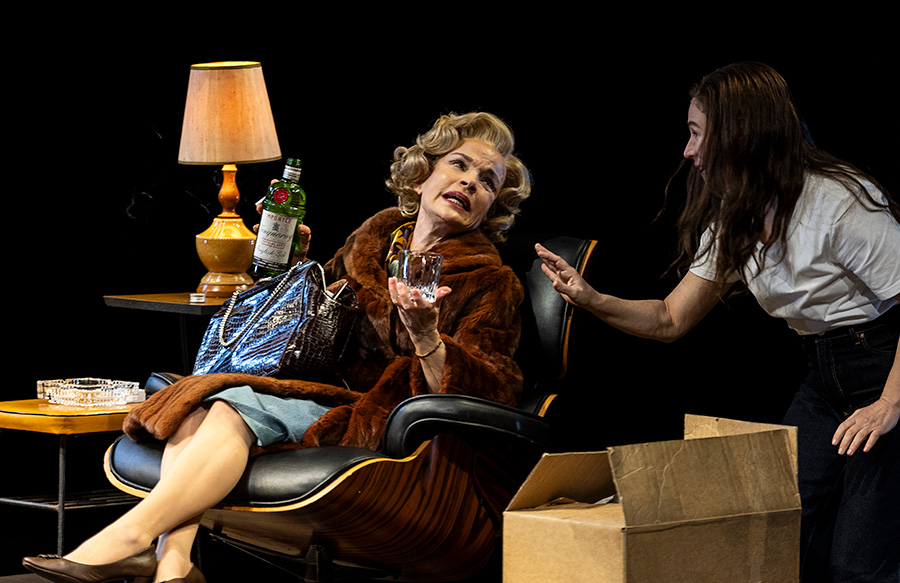 Sigrid Thornton as Phyllis Herman and Yael Stone as Martha Herman in Mother Play (courtesy of Melbourne Theatre Company)
Diane Stubbings
Aside from Sigrid Thornton’s commanding performance in Paula Vogel’s Mother Play (ABR Arts, 7/7) for Melbourne Theatre Company, all my highlights this year were on screen. Ryan Coogler’s Sinners (Proximity Media) is a wild and joyous ride through the American South in the 1930s. Resplendently shot, it is more than just a film about the undead; it is a fierce reminder of how the unresolved sins of the past continue to haunt, even terrorise. It also has some glorious musical set pieces. In The Life of Chuck (Intrepid Pictures), Mike Flanagan took a good Stephen King short story and turned it into something great. Employing ingenious allusions to Walt Whitman and Carl Sagan, The Life of Chuck affirms that our lives, our histories, our emotions, and our spirits are connected in ways both inspirational and inexplicable. Imperfect it may be, but Chloé Zhao’s adaptation of Maggie O’Farrell’s Hamnet (Hera Pictures) leaves an indelible mark. Anchored by a career-defining performance from Jessie Buckley, it is a gut-wrenching study of grief and the transformative power of art.
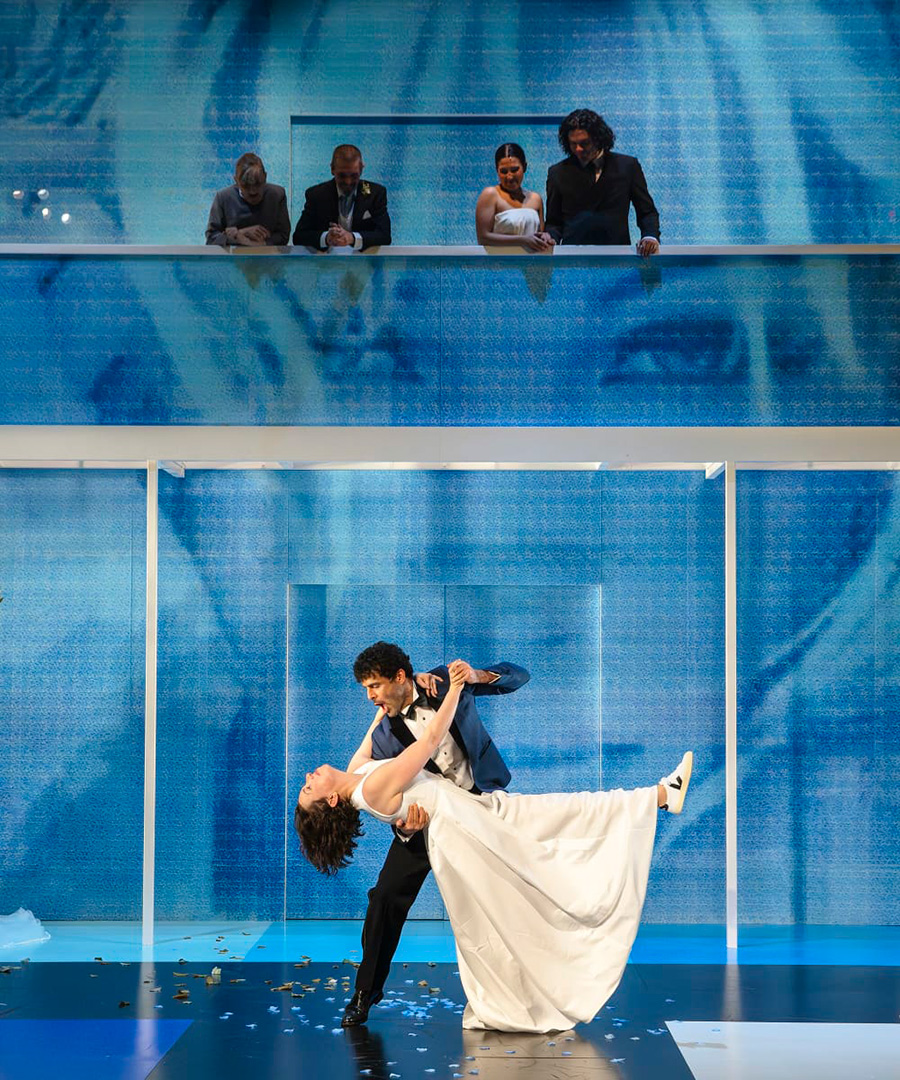 Much Ado About Nothing by the Melbourne Theatre Company (phototograph by Gregory Lorenzutti)
Ellie Nielsen
Twenty years in the making, staged at fortyfivedownstairs, Emma Louise Pursey’s solo work, Where is Joy?, elevated the bio-play to a lyrically nuanced level. Pursey, together with director Susie Dee, produced a poetic, inventive, and illuminating night of theatre in a production that centred the Melbourne modernist Joy Hester. Earlier in the year, at Red Stitch Actors’ Theatre, a revival of Joanna Murray-Smith’s thirty-year-old play, Honour, proved unsettlingly contemporary. Directed by Sam Strong, with a riveting Caroline Lee in the title role, this stark and arresting production resonated with the sober realisation that, despite the passing of time, equality remains elusive. Julie Forsyth’s performance in the Melbourne Theatre Company’s Much Ado About Nothing (ABR Arts, 20/11) was a splendid end-of-year highlight. Although director Mark Wilson’s mad-cap production at times left Shakespeare’s complexities in its wake, Forsyth’s talent for both comedy and tragedy (one springing from the other with meticulous split-second timing) was, in short, remarkable.
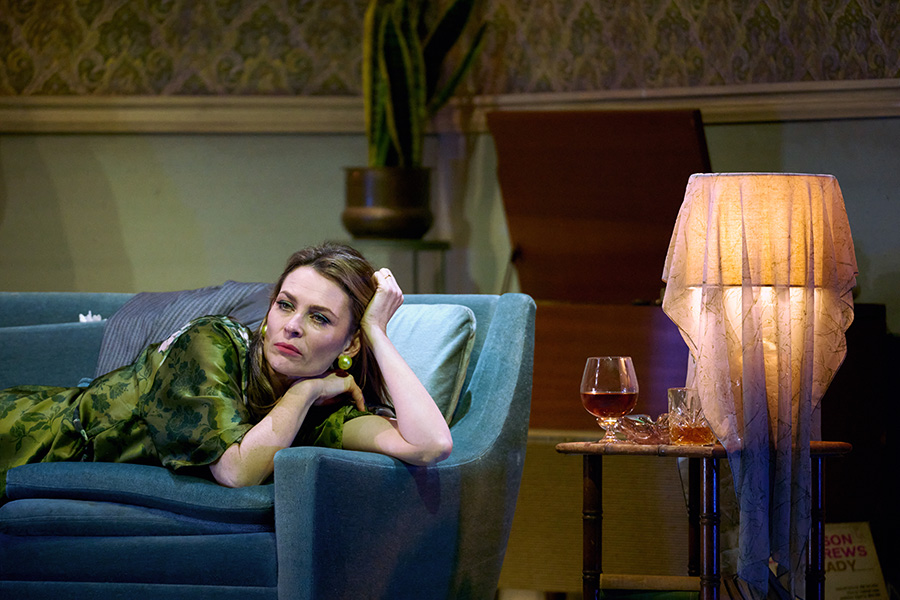 Kat Stewart as Martha in Who's Afraid of Viginia Woolf (photograph by Eugene Hyland)
Felicity Chaplin
François Ozon’s When Fall is Coming (FOZ), which screened at the French Film Festival, was beautifully shot, perfectly cast, and featured impeccable storytelling. It had enough plot ambiguities to make judgement deferrable. Focussing on an ‘accidental’ poisoning by mushrooms, it also proved an interesting intertext for Helen Garner, Chloe Hooper, and Sarah Krasnostein’s The Mushroom Tapes (Text Publishing), released in November. I took a much-anticipated visit to Maison Gainsbourg in Paris, a house preserved by Charlotte Gainsbourg since her father’s death in 1991. Her softly spoken audio guide shepherds you through the house in which Serge lived for twenty-two years. The accompanying museum includes artefacts and memorabilia related to his creative process. Tracey Emin’s exhibition ‘Sex and Solitude’ at Fondazione Palazzo Strozzi in Florence featured Emin’s provocative and at times moving paintings, drawings, short films, photography, embroidery, appliqué, sculptures, and neons. A retrospective screening of Fantastic Mr Fox at the charming Paramount Cinema in Maryborough, Central Victoria, was an unexpected highlight after attending the Wes Anderson exhibition at La Cinémathèque Française in Paris.
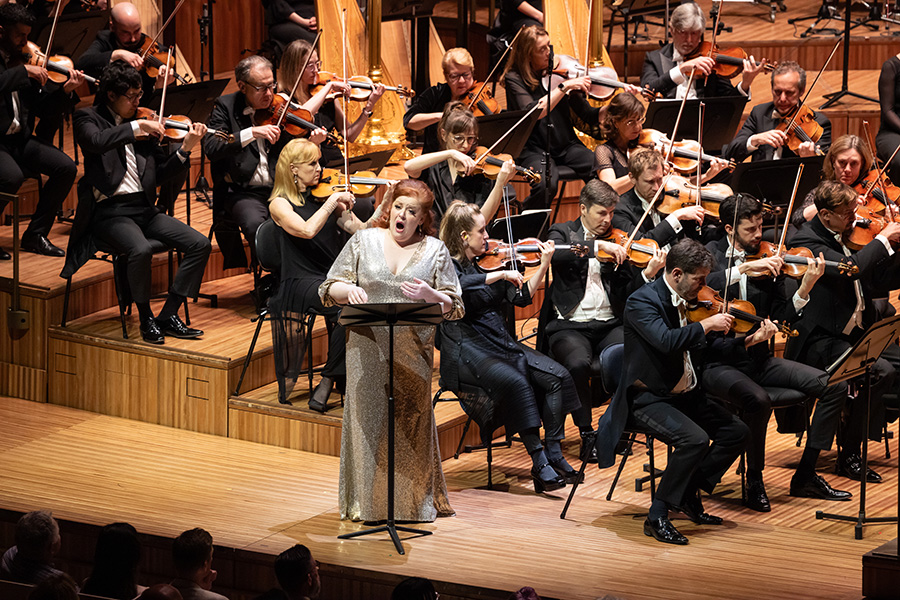 Miina-Liisa Värelä as Brunnhilde in Siegfried (photograph by Daniel Boud)
Ian Dickson
In what has been a pretty strong year, both musically and theatrically, for this audience member, the week beginning November 10 was exceptional. On Monday 10 November, Musica Viva presented Piotr Anderszewski’s elegantly understated transversal of Brahms, Bach, and Beethoven and delivered an outstanding recital. The Red Stitch Actors’ Theatre production of Edward Albee’s Who’s Afraid of Virginia Woolf (ABR Arts, 5/7/24) arrived in Sydney from Melbourne trailing clouds of glory and on Thursday 13 November I discovered why. Powerfully directed by Sarah Goodes and superbly performed, this was a major production of a classic play. Kat Stewart’s unusually glamorous Martha underplayed the brash vulgarity and gave us a whip smart woman balanced on a knife edge between anger and despair. Her final moments were lacerating. David Whitely was a definitive George whose ruthless intelligence and self-loathing fuelled his blistering rage. Something enormous was needed to top Albee’s ferocious play, and that arrived for me on Sunday 16 November. Siegfried (Sydney Symphony Orchestra) (ABR Arts, 14/11), strongly cast and conducted with blazing authority by Simone Young, was a fitting climax to an extraordinary week. Mention must be made of Gerhard Siegel’s expert Mime. As our hero’s GPS, Samantha Clarke was a lush Woodbird. Above all, Simon O’Neill was a tirelessly lyrical Siegfried. The SSO were in stupendous form; the orchestral introduction to the third act almost blew Utzon’s shells off the Sydney Opera House. Next year’s Götterdämmerung should be spectacular. A week to remember with gratitude.
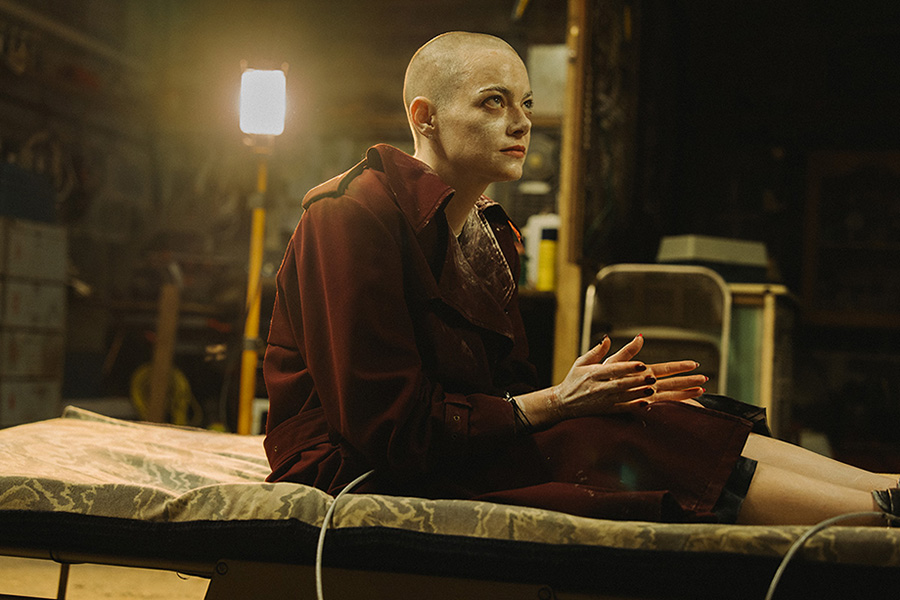 Emma Stone as Michelle Fuller in Bugonia (courtesy of Universal Pictures)
Jordan Prosser
In 2025, three top-notch American movies tackled our sociopolitical moment head-on. United by a sense of bracing literalism, each film features a pair of duelling adversaries who could have been ripped right from the front pages of the internet. Paul Thomas Anderson’s One Battle After Another (Ghoulardi) sees Leonardo DiCaprio’s burnt-out revolutionary facing off against Sean Penn’s twitchy, uber-masculine white supremacist colonel. In Yorgos Lanthimos’s Bugonia (Element Pictures) (ABR Arts, 30/10), Jesse Plemons’s rabbit-holed conspiracy theorist kidnaps Emma Stone’s girlboss CEO on suspicion of her being an alien. And in Ari Aster’s Eddington (Square Peg) – the most indelible of the three – Joaquin Pheonix’s embittered New Mexico sheriff clashes with Pedro Pascal’s craven, small-town mayor during the depths of Covid-19 lockdowns. Aster burrows so deep into his own personal neuroses that he finally arrives at something universal: an acknowledgement that we’ve lost whatever used to paper over the seams of our society. The more absurd Eddington gets, the more frighteningly real it becomes; it’s the perfect encapsulation of life in the 2020s.
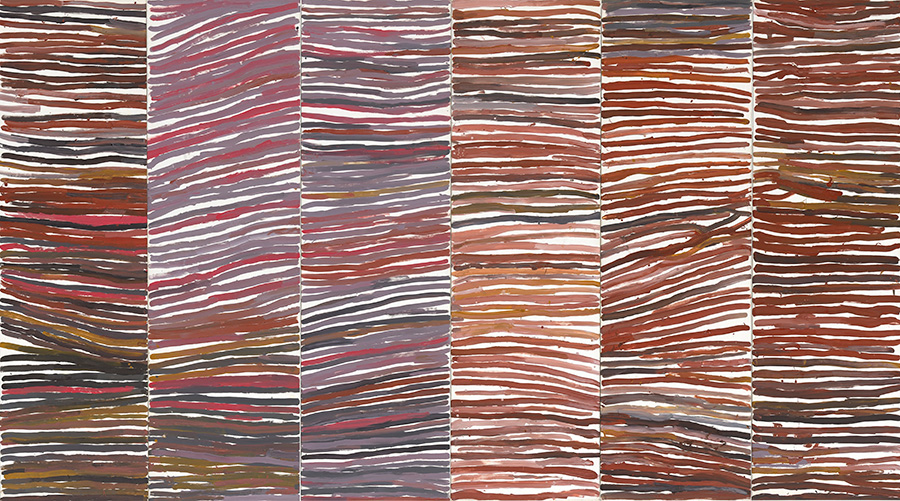 Emily Kam Kngwarray, ‘Untitled (awely)’, 1994, NGA © Emily Kam Kngwarray Copyright Agency, licensed by DACS 2025
Julie Ewington
From a remarkable year: first, the brilliance, diversity, and conceptual ambition of art by Australia’s First Peoples. Yolŋu power: The art of Yirrkala (Art Gallery of New South Wales, or AGNSW) was a joy that repaid successive visits. In London, Tate Modern (partnering with the National Gallery of Australia) reconfirmed Emily Kam Kngwarray as one of the country’s greatest painters (ABR Arts, 5/11). At the University of Melbourne’s Potter Museum of Art, 65,000 Years: A short history of Australian art nailed the complexities of first contact between Aboriginal peoples and Europeans in Victoria. Dialogue across and with Asian cultures is central to our region. Cao Fei: My city is yours (AGNSW) was exuberant, rewarding; Picasso/Asia: A conversation (ABR Arts, 1/4), at M+ in Hong Kong, explored the nuances of cross-cultural encounters in innovative and daring conjunctions. In Melbourne, Kimono reminded us of the wealth of the National Gallery of Victoria’s Asian collection and its determined pursuit of contemporary expressions. (A pity about the exhibition design.) And, this Sydney summer, don’t miss Janet Dawson: Far away, so close (AGNSW) and Primavera 2025: Young Australian artists at the Museum of Contemporary Art Australia – a wonderful senior artist and an intelligent glimpse of the new crop.
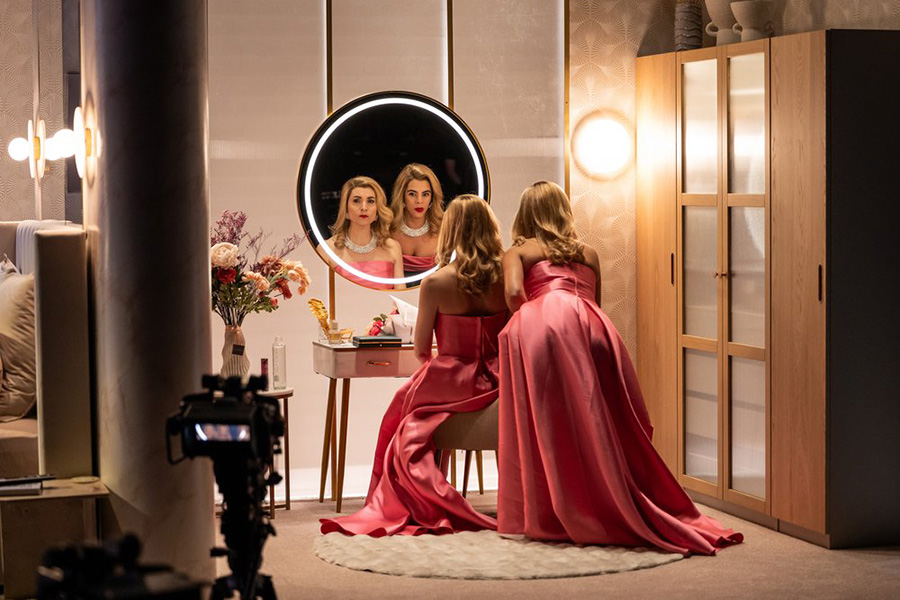 Jessica O’Donoghue and Meechot Marrero in Sydney Chamber Opera’s Aphrodite (photograph by Daniel Boud)
Michael Halliwell
Two productions of new American works of completely contrasting scale were notable. The indefatigable Sydney Chamber Opera premiered a chamber work by one of the young stars of the American operatic scene, Nico Muhly. Aphrodite (ABR Arts, 25/6) is a taut and confronting two-hander drawing on myth in a contemporary setting. It follows Muhly’s success at the Met with Marnie. Antony and Cleopatra (The Metropolitan Opera) is another new opera, this one by John Adams, a most celebrated and performed American opera composer. It is expansive, sumptuously sung and staged, and a welcome addition to the surprisingly few enduring, popular works in the vast Shakespearean operatic canon. Opera Australia’s new production of Dvořák’s most popular opera, Rusalka (ABR Arts, 21/7), was memorable primarily for Nicole Car, Australia’s internationally acclaimed soprano, who delivered a performance of the title role for the ages, cementing her stature in the international operatic firmament.
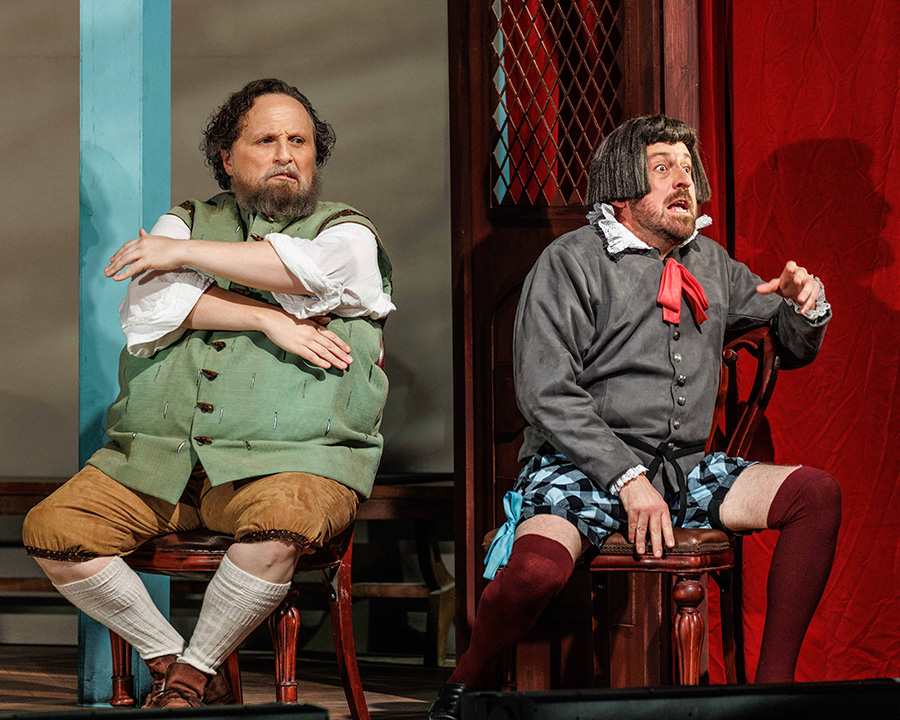 Warwick Fyfe as Hans Sachs and Christopher Hillier as Sixtus Beckmesser in Die Meistersinger von Nürnberg (courtesy of Melbourne Opera)
Michael Shmith
2025 was a year bookended by two great operas whose novel productions and utmost musicianship transformed what could have been prosaic or simply gimmick-ridden into extraordinarily memorable experiences. In February, Melbourne Opera’s new production of Die Meistersinger von Nürnberg (ABR Arts, 17/2) , staged under the dome of the Royal Exhibition Building, made the building itself an essential part of the performance. Its heroes were conductor Anthony Negus, director Suzanne Chaundy, and set designer Andrew Bailey, as well as Warwick Fyfe’s dignified, soulful Sachs and Christopher Hillier’s sensitively pedantic Beckmesser. In December, Opera Australia’s new production of Orpheus & Eurydice (ABR Arts, 3/12) at the Regent Theatre brilliantly combined classical staging with circus and dance into a seamless eighty-minute performance pulsing with brilliance and intensity. Praise beyond measure goes to conductor Dane Lam and director and set designer Yaron Lifschitz, also to countertenor Iestyn Davies’s astonishingly athletic and beautifully sung Orpheus.
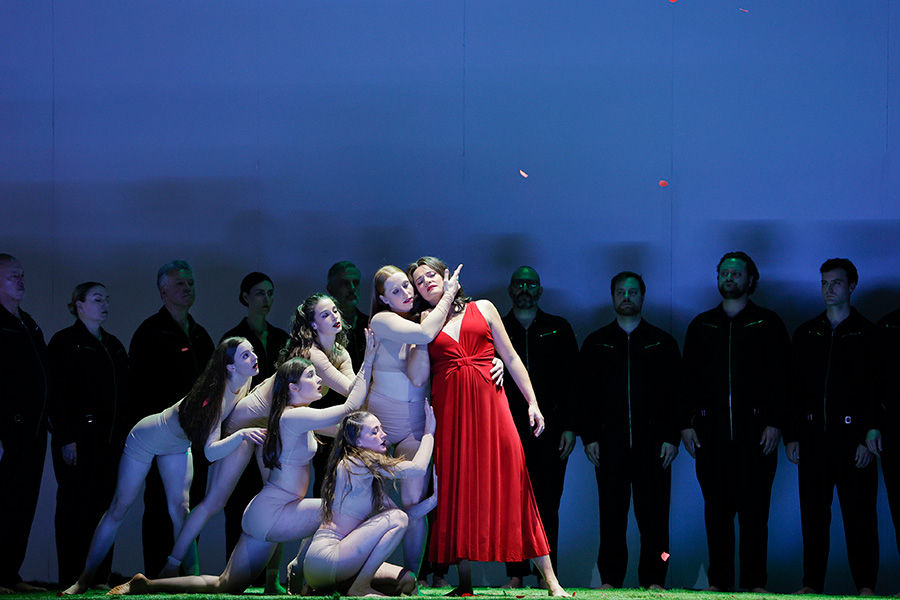 Samantha Clarke as Eurydice and Circa Ensemble in Orpheus & Eurydice (© Jeff Busby)
Peter Rose
Audiences may be inconstant, but what a rousing year it was for music. In April, if Matthias Goerne was in poor voice for Winterreise (Melbourne Recital Centre), one could focus on Daniil Trifonov’s superb accompaniment, and a few days later he scintillated in Rachmaninov’s Third Piano Concerto (Melbourne Symphony Orchestra [MSO]). Joyce DiDonato , in November, was opulent and charismatic in Berlioz’s Les Nuits d’été (ABR Arts, 26/11). The MSO, led on both occasions by Jaime Martín, has rarely played better. Opera in Melbourne was a decidedly mixed bag, but Sydney highlights included Nicole Car’s soaring début in Dvořák’s Rusalka and a luminous concert version of Siegfried from the Sydney Symphony Orchestra and Simone Young. Distracting acrobatics aside, Opera Australia’s Orpheus & Eurydice was notable for British countertenor Iestyn Davies’s soulful and exquisitely sung Orpheus. My winter travels took me to Europe, where I heard superb performances by the Berlin, Dresden, and Vienna orchestras. Best of all was a Bruckner Ninth from the Gewandhaus Orchestra Leipzig, conducted by Herbert Blomstedt. The maestro, now ninety-eight, uses a walking frame and has two clipped immemorial gestures, but what he does with his eyes! This was blazing, unforgettable Bruckner.
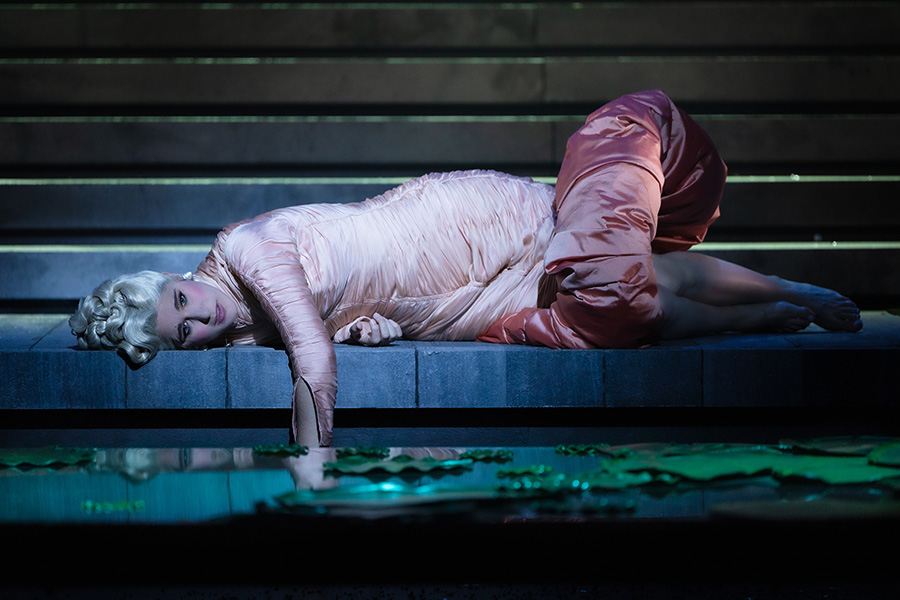 Nicole Car as Rusalka (courtesy of Opera Australia)
Robyn Archer
Listening Room #6: New York Minimalism and the Avant Garde, an ostensibly non-live performance, felt every bit as authentic as a live experience. On a chilly winter night, the venue was core: in Brunswick, Tempo Rubato is a small venue mainly dedicated to contemporary classical music. The wholly convivial little bar bubbled with conversation warmed by hot toddies, but when the audience entered the performance space, an air of quiet respect prevailed. Curated and hosted by the gently spoken DJ Weary, the program began with pianist Georgina Lewis playing, live, John Cage’s ‘In a Landscape’. The rest of the program allowed us to listen to the gloriously clear hi-fi reproduction of music by Meredith Monk, Steve Reich, Phillip Glass, Laurie Anderson, and others, played from pristine vinyl recordings. Weary read detailed notes to introduce each track. Deeply sonically pleasurable, this was a special shared experience. I felt as if I was hearing Laurie Anderson’s ‘O Superman’ for the very first time. Listening Room happens in various venues around Melbourne, and the experience is highly recommended.
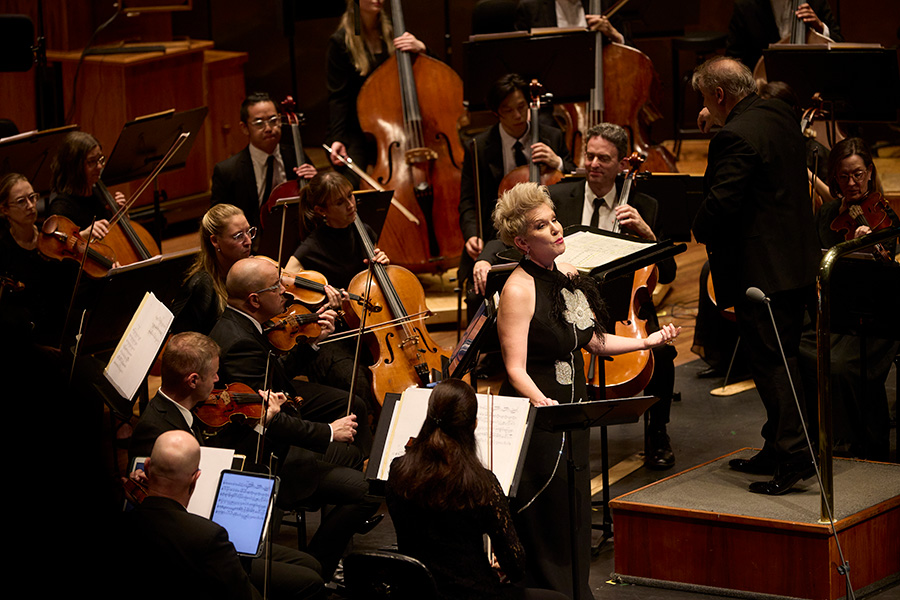 Joyce DiDonato, accompanied by the Melbourne Symphony Orchestra, in the Ryman Healthcare Spring Gala (photograph by Laura Manariti)
Tim Byrne
Choreographer Stephanie Lake continues to astonish with the breadth and intensity of her talent, and this year several new works contributed to her increasingly international reputation. Her collaboration with The Australian Ballet was hugely productive, pushing the dancers into dangerous territory. But it was her own contemporary dance company’s The Chronicles (Stephanie Lake Company) that best demonstrated her vision: ferocious, incantatory, and richly rewarding. Circa’s collaboration with Opera Queensland found the perfect synthesis of circus and opera with Orpheus & Eurydice: it was utterly transcendent. Transcendence was also plentiful in Tom Wright’s brilliantly staged exploration of the Greeks in Troy (Malthouse Theatre) (ABR Arts, 12/9), which refracted contemporary concerns through a prism of ancient ritual and catharsis. And from the epic to the breathtakingly intimate, a collection of late Samuel Beckett works entitled Still (Victorian Theatre Company) – directed by Richard Murphet and starring the astonishing Robert Meldrum at Theatre Works’ Explosives Factory – distilled an entire life into moments of brilliant clarity, poignancy and insight: a late-career masterclass.
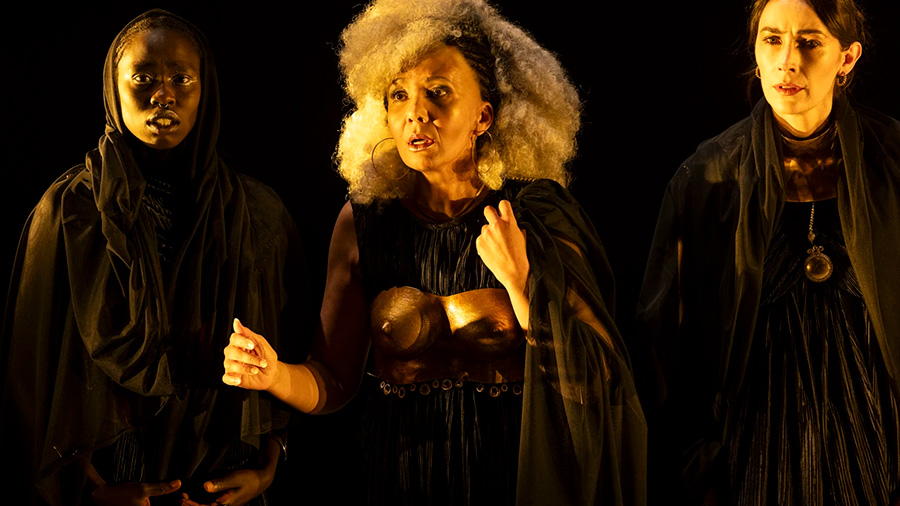 Troy (photograph by Pia Johnson)
Vyshnavee Wijekumar
Ryan Coogler’s horror flick Sinners (Proximity Media) is why I love cinema. The Golden Globes-nominated film stars Michael B. Jordan (times two) as twin brothers who return to their hometown, Mississippi, to open a juke joint. The unexpected supernatural antagonists – plus a killer blues soundtrack – makes this film an exciting audiovisual spectacle. I caught the theatre show Birds by Sarah Stafford and Alex Hines at the Melbourne Fringe Festival; it is a hilarious dark comedy about climate apocalypse through the physical demise of two oblivious women, a send-up of Australian culture, and a damning yet disgusting depiction of the aftermath of rising temperatures. And, finally, I happened upon the exhibition Interior/Exterior at FUTURES Gallery while wandering around in Fitzroy with a friend. I was particularly engrossed by a striking new surreal work from Matilda Davis called The mother at the cemetery, portraying motherhood as a death and rebirth of identity.
Leave a comment
If you are an ABR subscriber, you will need to sign in to post a comment.
If you have forgotten your sign in details, or if you receive an error message when trying to submit your comment, please email your comment (and the name of the article to which it relates) to ABR Comments. We will review your comment and, subject to approval, we will post it under your name.
Please note that all comments must be approved by ABR and comply with our Terms & Conditions.