
Arts
Film | Theatre | Art | Opera | Music | Television | Festivals
Welcome to ABR Arts, home to some of Australia's best arts journalism. We review film, theatre, opera, music, television, art exhibitions – and more. To read ABR Arts articles in full, subscribe to ABR or take out an ABR Arts subscription. Both packages give full access to our arts reviews the moment they are published online and to our extensive arts archive.
Meanwhile, the ABR Arts e-newsletter, published every second Tuesday, will keep you up-to-date as to our recent arts reviews.
Recent reviews
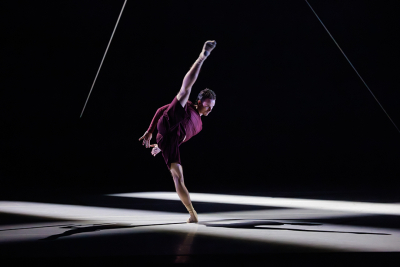
Titles are deliberately suggestive; they give you an indication of what’s to come. Continuum, the title of Sydney Dance Company’s latest offering, was appropriate, if not immediately resonant. Continuum features a triple bill of works from choreographers Stephen Page, Tra Mi Dinh and Rafael Bonachela.
... (read more)Frankenstein (★★) and Springsteen: Deliver Me from Nowhere (★★★1/2)
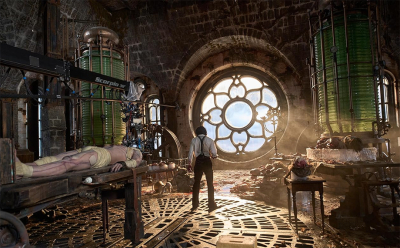
The first filmed version of Mary Shelley’s gothic novel Frankenstein; or, The Modern Prometheus (1818) was the silent short Frankenstein (1910). Since then, more than four hundred versions of Shelley’s sutured-together golem have bestridden both the large and small screen. The most well known remains Universal Pictures’ Frankenstein (1931) and its sequel, Bride of Frankenstein (1935), pre-Code gothic horrors which implanted Boris Karloff’s pitiable Monster in the collective imagination forever after.
... (read more)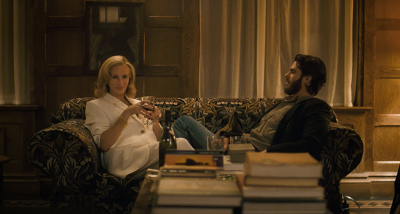
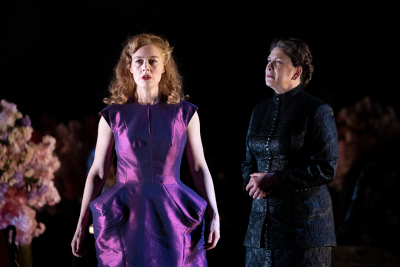
Daphne du Maurier’s novel Rebecca (1938) opens with one of the most iconic lines in literature (and, thanks to Alfred Hitchcock’s 1940 adaptation, one of the most iconic lines in cinema): ‘Last night I dreamed I went to Manderley again.’
... (read more)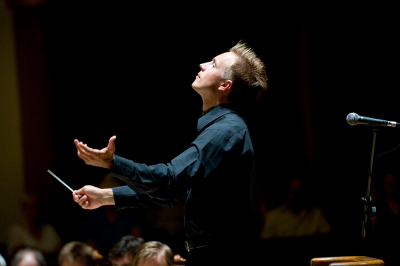
Melbourne Symphony Orchestra’s program was a feast of late Romanticism preceded by an entrée from the mid-Romantic period. The opener was the Overture to Wagner’s Der fliegende Holländer (The Flying Dutchman), composed in 1841, when Mendelssohn, Chopin, and Schumann were at the height of their creativity.
... (read more)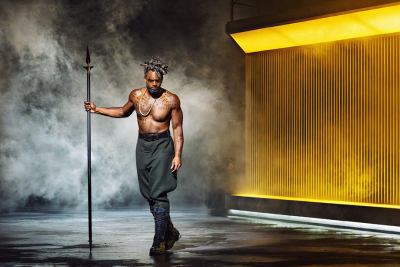
It says something about the general mood in the United States at present that there is a sense of foreboding even in a town as ostentatiously laid back as Santa Fe. The locals are as friendly and eager to chat as ever, but inevitably the first question to emerge when I explain my accent is: ‘What do you Aussies think about our situation here?’ – an echo of the question that used to be asked of foreigners, seconds after they landed in Australia. This insecurity from a nation that used to be supremely indifferent to foreign opinion is a sign of the disquietude of the Trump era.
This is the highlight of Santa Fe’s summer season. The culmination of both the opera and chamber music festivals and the annual Indian Market weekend bring in the tourists, and the high-end restaurants were packed. ... (read more)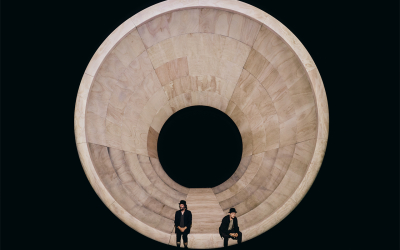
In his Broadway debut, sexagenarian Keanu Reeves has reunited with Alex Winter – his co-star from the Bill & Ted film trilogy (1989, 1991, 2020) – for Jamie Lloyd’s bold, minimalist production of Samuel Beckett’s classic. Hollywood stars seeking to prove their mettle on the stage can wrong-foot fans, opting for experimental fare, but this tendency is strangely fitting in Waiting for Godot, a play devoid of traditional exposition, in which confusion reigns supreme.
... (read more)The Mountain Bride – Vermiglio (★★★★1/2), The Boy with Pink Trousers (★★★1/2), and La Grazia (★★★★★)
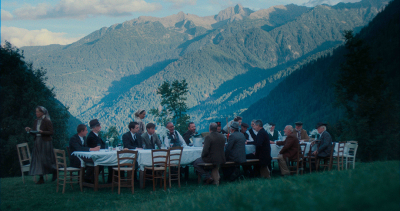
Maura Delpero’s The Mountain Bride – Vermiglio was the winner of the Silver Lion Grand Jury Prize at the 2024 Venice Film Festival. It is a film of austere beauty, as fragile as it is forceful. Set in the Trentino village of Vermiglio in 1944, it conjures a community perched on the edge – geographically at the border of Switzerland and Austria, historically at the close of World War II, and spiritually at the uneasy threshold between tradition and change.
... (read more)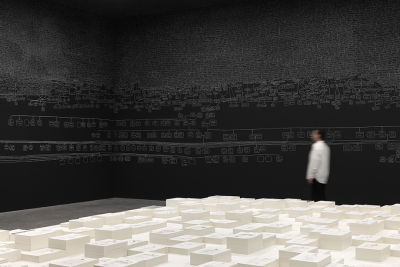
Archie Moore’s kith and kin is an immersive, dark installation created within a black-painted building – a replica of the Australian pavilion at the 2024 Venice Biennale – that itself sits inside a voluminous wing of Brisbane’s Gallery of Modern Art (GOMA). The ‘pavilion’ becomes its own discrete space. An adjacent high window allows natural sunlight and views of the sky. In Venice, the doors opened to the canal; within GOMA, this sky view is as close as the installation gets to nature. Not far from the installation, however, you can overlook Maiwar/the Brisbane River; water flowing around the globe connects these two places. Once inside the exhibition space, your eyes gradually adjust to the darkness.
... (read more)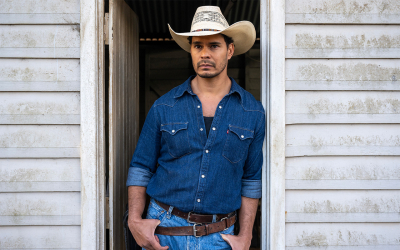
One of the great strengths of the Mystery Road series has been its ability to distil complex social relationships, with deep historical roots in racism, into compelling dramatic narratives. Mystery Road: Origin Season 2 continues this work of taking a scalpel to aspects of Australian society that hide uncomfortable truths but, unlike the previous seasons, in which Detective Jay Swan confronts a violent criminal underbelly, this season shifts focus to explore the more ‘respectable’ violence embedded in the health and welfare systems, in a country town where First Nations residents live alongside those who were instrumental in enforcing the policy of assimilation.
... (read more)