Non Fiction
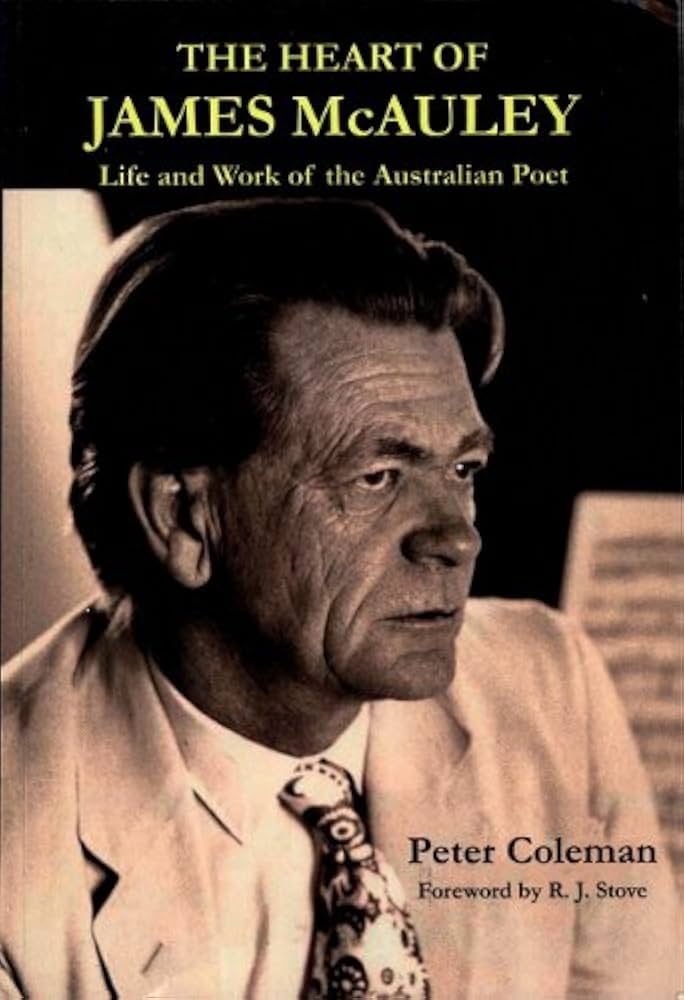
The Heart of James McAuley: Life and work of the Australian poet by Peter Coleman
This book is a bird of most curious kidney. For the life of me I can’t see any raison d'etre for it. Not that James McAuley, with his wardrobe of fascinating hats, doesn’t cry out for a book, and not that Peter Coleman doesn’t have so many of the qualifications to write that book. But this work is not it. It’s thin, to the point of emaciation. It appears exactly four years after McAuley’s death, which, as literary biographies go, is but a day. Which puts me in mind of an Entebbe Raid or Teheran Hostages book, hitting the market while the event is still fresh. But McAuley’s career, for all its interest, lacks that brand of newsworthiness. And a book with so comprehensive a title as The Heart of James McAuley: Life and Work of the Australian Poet presumably aims to be more than a piece of ephemera.
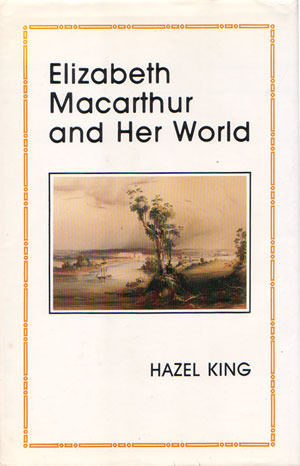
... (read more)Elizabeth Macarthur and Her World by Hazel King & Land of a Thousand Sorrows by F. Murray Greenwood
The daughter of a prosperous-enough middle-class farming family in Devon, Elizabeth Veale received an upbringing and an education that stood her in good stead during her long existence in New South Wales as Mrs. John Macarthur.
... (read more)In his introduction to this collection of essays the editor, Ross Fitzgerald, remarks: ‘Our age is not exactly brimming over with positive affirmation and joyful anticipation.’ One wonders whether or not there has ever been a period of human history which such an assertion would accurately describe, let alone whether this would be a particular occasion for celebration. After all what gives an aggressive advocate of military solutions to current political problems a certain degree of hope may well cause the pacificist the deepest despair. There is no unity and certainly no necessary common goal to what gives diverse groups and individuals their respective sources of hope and pessimism.
... (read more)The Australian Labor movement, and more generally, parties of the left in the western capitalist democracies, have been troubled for a century by two central problems.
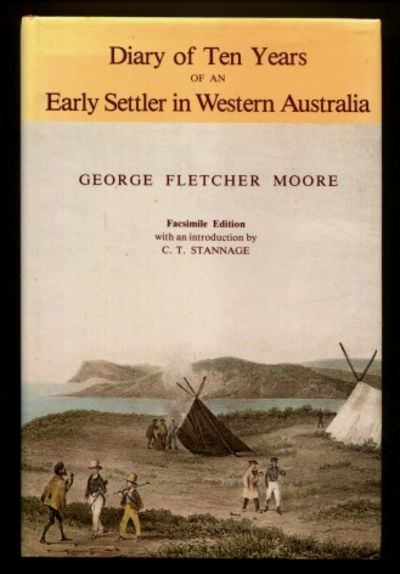
... (read more)Diary of Ten Years’ Eventful Life of an Earlier Settler in Western Australia by George Fletcher Moore & Western Australia by J.S. Battye
For historians, living in a ‘A State of Excitement’ during Sesquicentenary year was exhausting and, with Skylab, occasionally dangerous.
... (read more)This issue of Melbourne Studies in Education marks the twenty-first anniversary of a series which came of scholarly age in its earliest years. The academic prestige of the series has been largely built on publications concerned with the historical, philosophical and cultural dimensions of educational practice, particularly in Australia. The present volume contains an index to all contributions to the series since its inception – a useful gift to educational students and researchers.
... (read more)The Deadly Element: The Men and Women behind the Story of Uranium by Lennard Bickel
Uranium is a word which has become so highly emotive in this country that it is embedded in the national psyche; but not one person in 10,000 who would react instinctively and dialectically to the word knows anything about the element itself apart from connotations of Doomsday … the world on fire or the seeping shroud of radiation sickness laying waste the entire earth in sterile despair.
... (read more)The Australian and New Zealand Writers' Handbook (2nd Edition) edited by Joan Clarke
The greatest area of growth in the writing profession is among the group that used to be scurrilously called ‘hobby writers’.
A recent study of British authors reveals that fifty-nine per cent will write only one book in their writing careers.
Using this figure and extrapolating from the 3500 applicants for Public Lending Right here, there are at least 2100, maybe 3000, people in Australia who have written one book and either have run out of the spirit to write another, or maybe have encountered such frustrations with contracts, editors, and distributors that it is not worth it to write another.
... (read more)This Sin and Scandal: Australia’s population debate 1891–1911 by Neville Hicks
Perhaps no other social attitude has changed so markedly in this century as the prevailing public reaction towards the question of the limitation of population growth and the use of birth control devices.
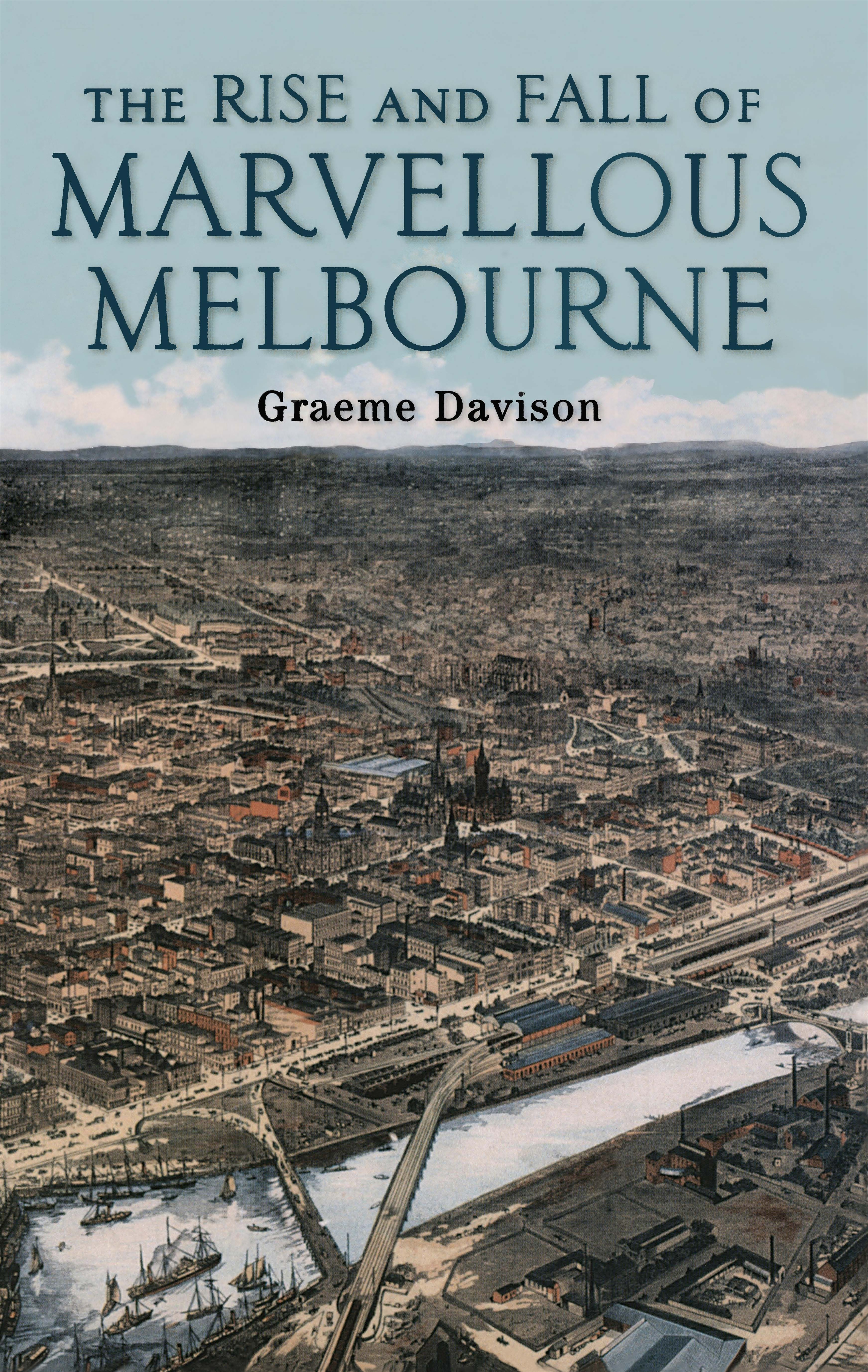
... (read more)The Rise and Fall of Marvellous Melbourne by Graeme Davison
Fifteen years ago the British urban historian Asa Briggs wrote a short but stimulating essay on Melbourne in the Victorian era in his Victorian Cities. In thirty pages he not only challenged the conventional assumptions of Australian historiography of that time (specifically deploring the lack of systematic study of the Australian city) but also threw out various ideas about how to approach Australian urban history. It took some time for historians here to take up Briggs’ challenge, but with the publication of Graeme Davison’s The Rise and Fall of Marvellous Melbourne Australian urban history has come of age.
... (read more)