Accessibility Tools

  • Content scaling 100%
  • Font size 100%
  • Line height 100%
  • Letter spacing 100%

Philosophy

This volume, which complements a collection of public lectures by Australian and New Zealand Philosophers, comprises separate interviews with fourteen prominent Australasian philosophers. Many general readers will be unfamiliar with the interviewees, the exception being Peter Singer, whose international reputation transcends academic philosophy. However, the subjects, and indeed many other Australasian philosophers not included here, have made a significant contribution to the discipline at an international level. Indeed, a good number of Australasian philosophers, including some of those interviewed here, hold, or have held, chairs at some of the top universities in the world. Although it is not widely appreciated in Australia and New Zealand, the antipodean philosophical community punches above its weight internationally. This is something both to reflect on and to celebrate.

... (read more)

In a famous essay on poetry, English philosopher Michael Oakeshott evoked the metaphor of conversation to describe how people share and discuss ideas. A conversation, suggested Oakeshott, allows a continuous discussion between past and present, between the thought of earlier generations and the pressing needs of the present. A conversation is not a search for truth or even facts, but an endless dialogue among diverse voices.

... (read more)

The war of religion currently being fought with fusillades of paperbacks and feuilletons has taken a new turn. It started with an ambuscade by the ‘new’ atheists – also known as ‘militant’ or ‘Darwinian’ atheists – Richard Dawkins, Sam Harris, and the ubiquitous Christopher Hitchens (may he remain so). They were quickly joined by many sympathisers sharing the belief that peace, secularism, and rationality are under assault, not only from religious extremists, but also from the root religious ideas and attitudes that are presumed to nourish them.

... (read more)

Early in Murray Bail’s novel The Pages (2008), we find the following commentary on the very idea of philosophical research being undertaken in Australia:

How anyone can believe that Sydney could produce in its own backyard a philosopher of world significance or even minor significance shows how little understanding there is of the co ...

Typhus by Jean-Paul Sartre (translated by Chris Turner) & Critical Essays by Jean-Paul Sartre (translated by Chris Turner)

by
May 2011, no. 331

Those wanting to understand better the radical changes in Western thought and social mores since World War II could benefit from revisiting Jean-Paul Sartre (1905–80). Of course, one can sympathise with Jonathan Rée in his critique of much of Sartre’s work as ‘slap-dash’, ‘long-winded’, ‘carelessly profuse’ (Times Literary Supplement, 26 November 2010). It is true that by the time Sartre became famous, much of his best writing was behind him. Nonetheless, Sartre lived and worked on what we can now identify as a temporal seismic fault-line between then and now. His voluminous and variegated work – short stories, novels, plays, essays, movie scripts, journalism, autobiography, and correspondence, as well as philosophy proper – remains a rich site for investigating the thirty or so years between the mid-1930s and the mid-1960s, that period when, as Thomas Pynchon puts it, ‘a screaming came across the sky’. To re-engage with Sartre is to re-enter the zone of the epicentre, where broken twists of what was once continuous tradition mingle with new developments – some of which we already know to have failed, while others have become familiar features of our present landscape.

... (read more)

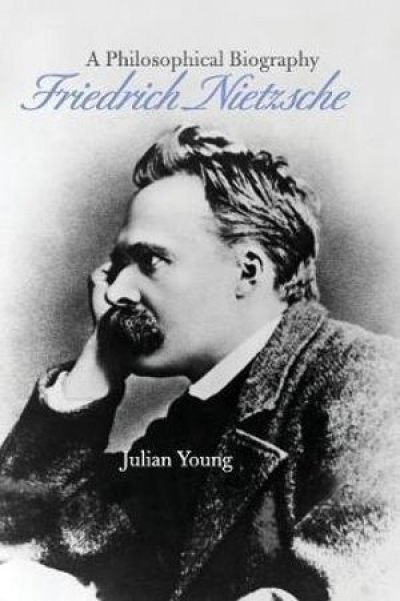
If any book market is nearing saturation, it must be the Nietzsche one, yet new titles keep appearing. Julian Young’s biography, Nietzsche: A Philosophical Biography, is unusual, given the author’s academic repute as a Nietzsche scholar. Young acutely surveys Nietzsche’s life, while offering erudite accounts of his philosophy. As Young observes in explaining Nietzsche’s own self-referential style, ‘biographies sweeten the hard-to-swallow pill of philosophy’, and this is also true of Young’s book. Moreover, while Young clearly loves Nietzsche, this book is not written in the sycophantic style that is common of the genre (Nietzsche’s philosophy is criticised in many places, as is Nietzsche himself).

... (read more)

On Evil by Terry Eagleton

by
October 2010, no. 325

One of the more robust responses to what has come to be called the New Atheism has been that of the influential literary critic Terry Eagleton. He weighed into the argument early with an aggressive and widely cited critique of Richard Dawkins’s The God Delusion (2006) in the London Review of Books, in which he charged Dawkins with theological ignorance. He extended his argument in a series of lectures, published as Reason, Faith and Revolution: Reflections on the God debate (2009), which condemned the atheist movement for its allegiance to an outdated form of nineteenth-century positivism and for its optimistic belief in the virtues of progressive liberal humanism. His latest book, On Evil, is a kind of supplement to the debate, in which he attempts to drive home what he considers the naïveté of such a view.

... (read more)

One of the most productive and interesting areas of research in applied philosophy is concerned with moral issues around warfare. Although there had been important contributions previously, Michael Walzer’s Just and Unjust Wars (1977) was immensely influential in philosophy and well beyond its confines, reinstating ‘just war’ thinking as a mainstream intellectual position. It became, for instance, a standard text in Western military academies.

... (read more)

John Armstrong hails from Scotland and is currently philosopher in residence at the Melbourne Business School. He is well known for several popular but elegant works on, broadly speaking, aesthetic matters: among them, Conditions of Love (2002), The Secret Power of Beauty (2004) and Love, Life, Goethe (2006). His recent book is more ambitious than its predecessors, but remains essentially in their fold.

... (read more)

If beauty is in the eye of the beholder and taste is subjective, why is there often overwhelming agreement that a particular thing is beautiful? Are tastes shaped by brain structure, unconscious psychic drives, society or culture? For almost half a century, the idea of innate, universal and cross-cultural aesthetics has been hotly contested in art theory and cultural studies. Now Denis Dutton argues that our aesthetic responses are instinctual. He has timed his book well. Freud has fallen from favour, post-modernism is generally despised and Darwin studies are on the rise.

... (read more)
Page 8 of 13