Memoir
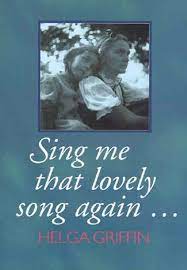
Helga Griffin (née Girschik), conscious that memories differ and that her own is not infallible, is careful to respect the other people implicated in her story. Aware of her responsibility to them, she is nonetheless committed to breaking what she calls the Schweigen, the long silence. Sing Me That Lovely Song Again is highly apposite in its account of the damaging experience of internment. During the years of World War II, the Girschik family were incarcerated as enemy aliens in a camp at Tatura, in northern Victoria. They were displaced persons. The adults were fated to spend what should have been highly productive years trapped in a frustrating stasis that was to have long-term effects. For the children, this experience must have been formative. How were they to understand their confinement and the distress of the adults? This resonates strongly when we consider the ‘illegal aliens’ or refugees, many of them children, recently locked up in detention centres in this country. Although Griffin does not make this parallel explicit, it is implicit in the way her narrative situates her family’s experience within a larger historical context.
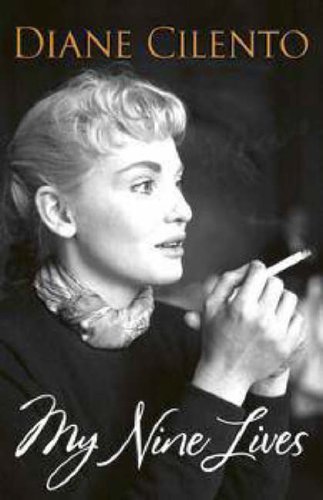
... (read more)Due to some clever product placement (James Bond and wife bashing) Diane Cilento’s Nine Lives have become public property, even before the reader picks up the book. We know it all: she is a member of a celebrated Australian family and made her reputation in some famous movies; she had three husbands, including two well-known ones; she set up a theatre commune in North Queensland. We even know from the gossip columns details that are not in the book: the farcical story of the last days of her third husband, the wonderful Tony Shaffer (worth a hundred Sean Connerys), his London mistress and the Shaffer inheritance. I flick through the book, notice the enthusiastic style, look at the not-quite-thrilling photographs, dip into the quite amusing anecdotes, and study the index in vain for the name Jo Jo Capece Minutolo, Tony’s mistress, whom everyone has been talking about. She has called the book ‘inappropriate’; Connery has called it ‘a crock of shit’.
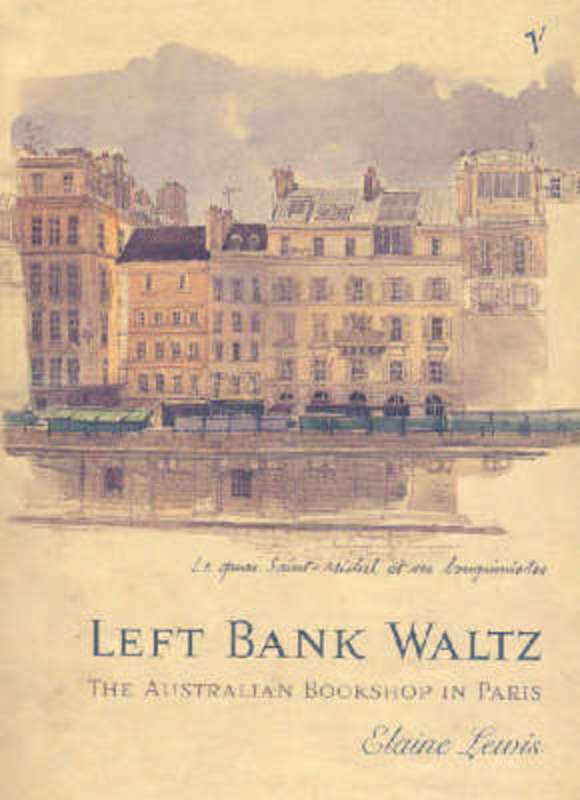
... (read more)Left Bank Waltz: The Australian bookshop in Paris by Elaine Lewis
Elaine Lewis established and ran the Australian Bookshop in Paris from 1996 to 1998. It acted as an outlet in France for Australian books, a nexus for travelling Australian writers and a cultural hub in the Parisian arts scene. This is the story of the bookshop in its heyday, before Lewis returned to Australia and the bookshop retired to an online existence.
... (read more)I had never been to Adelaide in my life when I arrived for an interview that, as it turned out, would result in my spending the next twenty-five years in South Australia. The early November heat was too much for my Melbourne best suit, and I was carrying my coat when I walked gratefully into a city pub for a post-interview beer. In the bar – air conditioned down to a level threatening patrons with cryogenic suspension – I tried Southwark and then West End, finding both just drinkable, and lingered in front of a wall poster about the Beaumont children, by that time missing for nine or ten months.
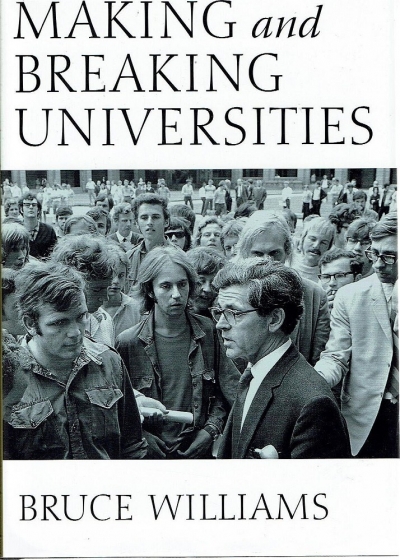
... (read more)Making And Breaking Australian Universities: Memoirs of an academic life in Australia and Britain 1936–2004 by Bruce Williams
When is it morally defensible to take one’s own life? Whenever, might be the first response: it is, after all, one’s own life. While the church still regards it as a grave sin, attempted suicide is not a crime, though helping someone else to commit suicide is. Yet does not a desire to end one’s life at a time of one’s own choosing have to be weighed against the pain it might cause others? Is suicide not a statement to family and friends that whatever love, care and support they have given, it was not enough?
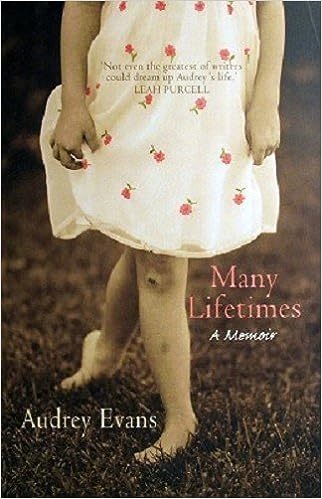
... (read more)By definition, chiaroscuro is Italian for lightdark; in practice, it is a technique wielded by painters and graphic artists, whereby dynamic applications of highlight and shade are contrasted for dramatic impact. Along with Rembrandt and Caravaggio, Audrey Evans proves herself to be a master of chiaroscuro in her memoir, Many Lifetimes. One can see the hand of the artist as she sketches her truths in simple, yet striking, strokes; Evans writes with a raw honesty that turns a spotlight onto chosen moments in her life, and allows others to remain enveloped in darkness.
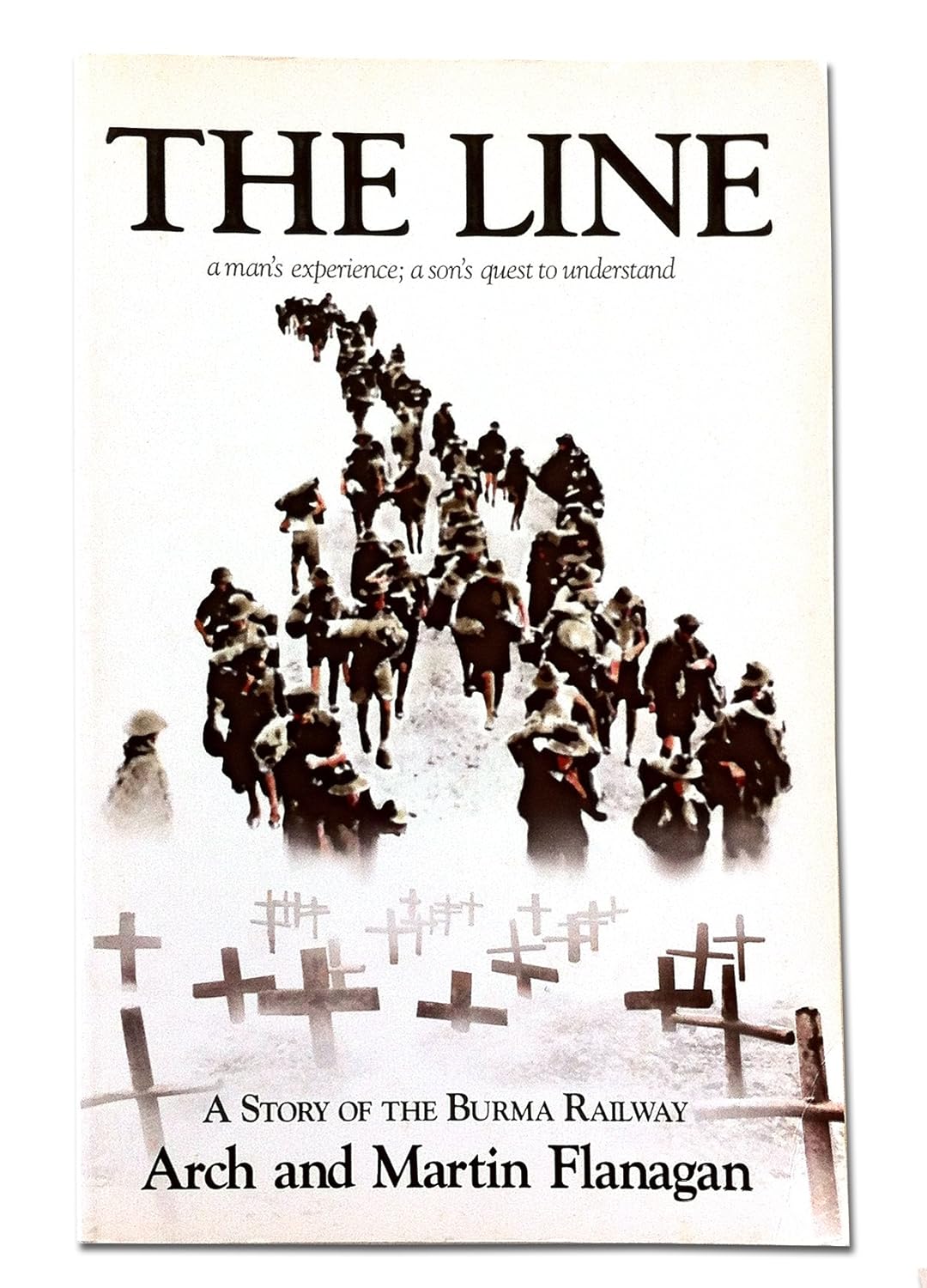
... (read more)The Line: A man’s experience; a son’s quest to understand by Arch and Martin Flanagan
This book is a double-barrelled memoir, its two authors providing, at heart, a first- and second-generation account of the Burma Railway and its resonances down their line. It’s arc is wider though, and it’s preoccupations more universal, than a simple family history, if there is such a thing. Arch Flanagan, the patriarch and veteran, contributes five pieces, two of memoir, two short stories and an obituary. Martin, son and searcher, intersects these texts with a narrative of his own, alternately probing the spaces and interrogating the players of this history.
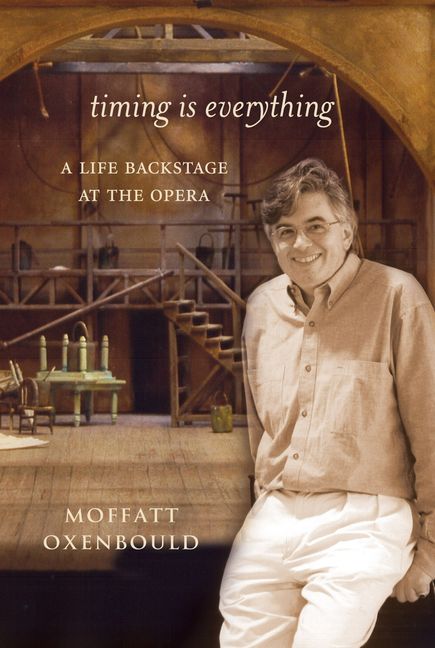
... (read more)Timing Is Everything: A life backstage at the opera by Moffatt Oxenbould
To state the case bluntly, is there in fact any place for opera in the twenty-first century? What is the use of opera? Many would say that it is a moribund art form, traditional and arthritic, class-ridden, a minority and élitist pursuit of an arcane society harbouring secret rituals in the mode of cabbalists with their adherence to vision and the genealogy of seers. My questions suggest some kind of crisis. Yet they are unanswerable because, like all art at a profound level, opera is useless.
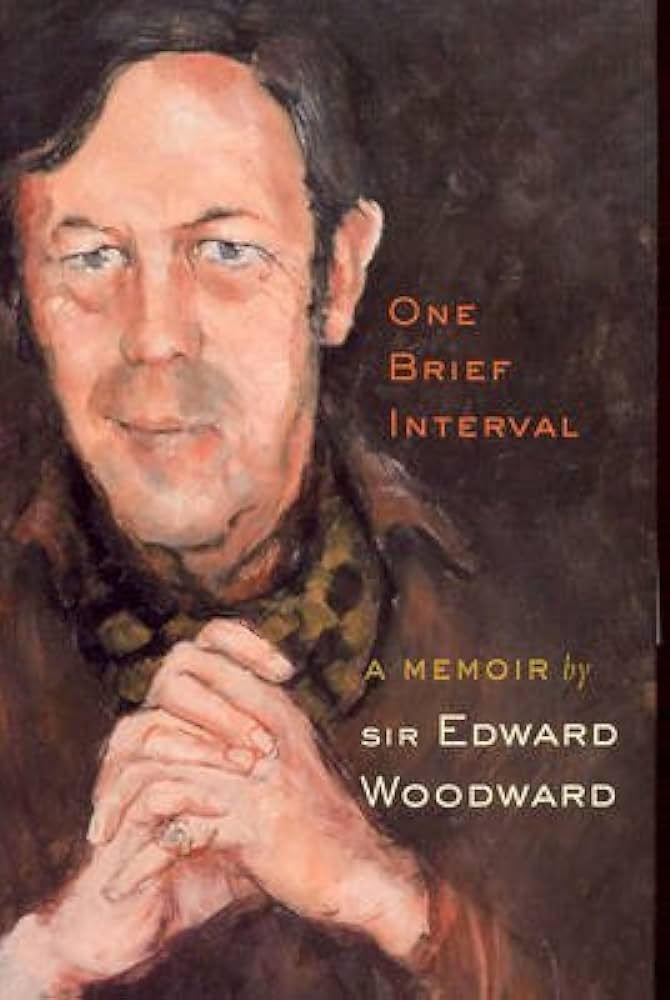
... (read more)This is a book for people interested in the law, politics and the institutions of public life, areas in which Sir Edward Woodward was actively involved for the last half century. It is a record of achievement and provides an interesting and clear-eyed perspective on many of the important issues of that period.
... (read more)