
ABR receives a commission on items purchased through this link. All ABR reviews are fully independent.
When it is absent
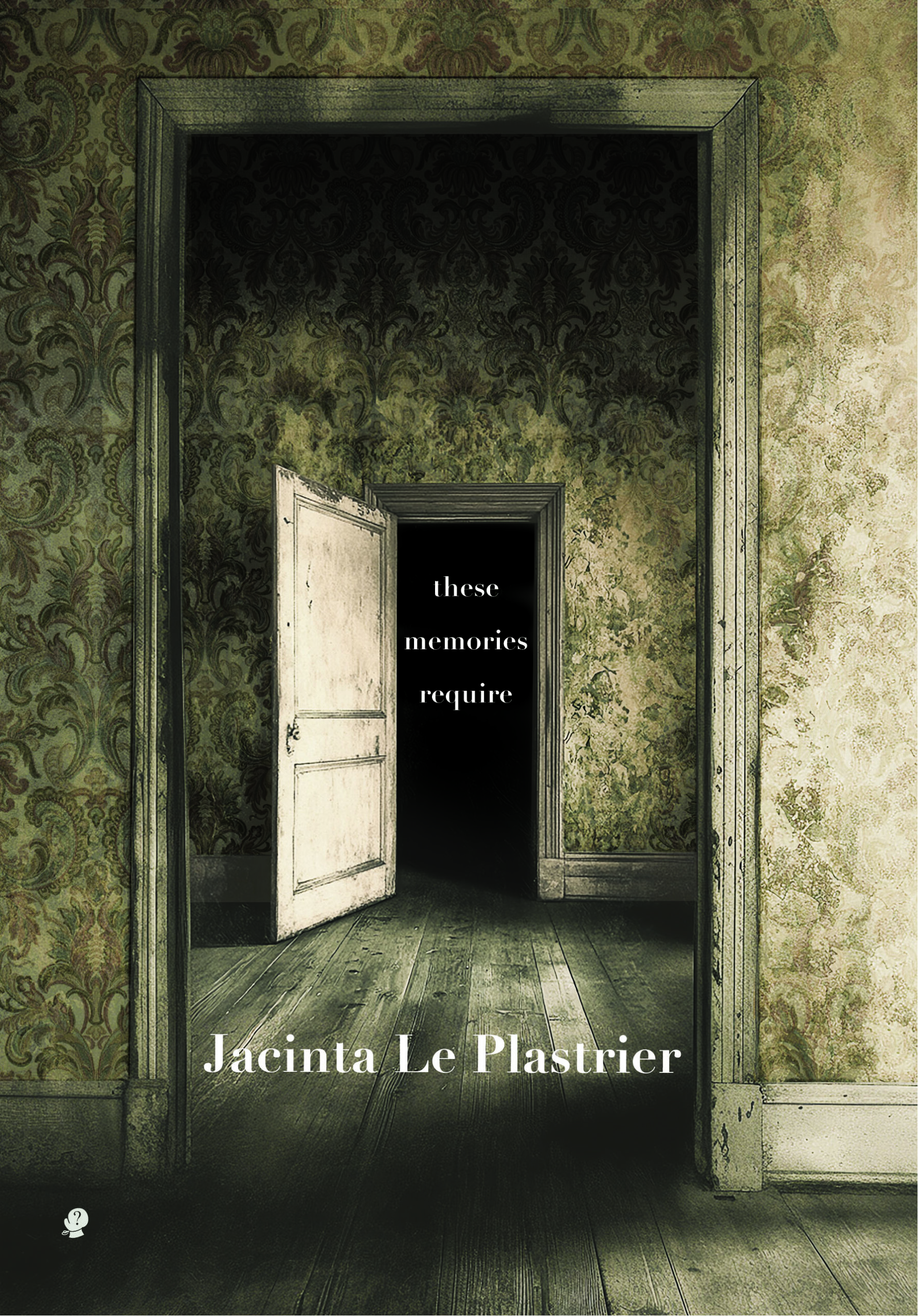
Poets pop up in these memories require and A Lick of Fireweed, two new volumes by Jacinta Le Plastrier and Erik Jensen, both Melbourne/Naarm-based writers, poets, and publishers. Each book is an act of memory, and of connection, sometimes personal, sometimes imagined.
Here is Jensen remembering a moment with Les Murray, who died in April 2019.
Our greatest living poet
fell beside the toilet bowl
and as I helped him up
soft like well-proofed dough
he smiled and said: Ascension
my least favourite act.
That sounds so like Murray that I have no doubt it happened. And ‘well-proofed dough’ is a wonderful description of Australia’s most famous poet. If poked, we all dent, no matter how high we have ascended. This poem, ‘Les Murray’, is characteristic of Jensen’s approach. As with an iceberg, there is far more than is visible on the surface.
Here is Le Plastrier connecting the fevered illness of a friend with the execution of Federico Garcia Lorca during the Spanish Civil War. The poet sits with the friend, ‘companionable, by your shaking self’, and then
Federico, i know that you remember
we should distrust, even
the language we wrestle
to purity, for what
it may still smuggle
over insidious borders
so the tyrants, also, dispatch
their execution orders,
the one for your name,
19th of august, 1936
without the chill of doubt
This poem, titled ‘untitled (recovery)’, combines Le Plastrier’s interest in considering the memories of others and exploring personal memories that are linked to the lives of others. The challenge is to do this meaningfully and ethically. That is what these memories require.
This search – to know, to reveal, to admit, to uncontain – takes the poet and her readers to confronting places, such as child abuse: ‘are you sure // your father / touched your breasts?’ (‘untitled [ahoy]’); ‘I want to tell you a terrible thing. I am the ghost in the room; I am the haunting that will not be done’ (‘untitled, [pacing]’).
She calls out Sigmund Freud for shifting his views on incestuous abuse (‘freud reneges, turns actuals into fantasy’) and quotes from Trauma and Recovery, the 1992 book by American psychiatrist Judith Herman: ‘the conflict between the will to deny horrible events and the will to proclaim them aloud is the central dialectic of psychological trauma’.
This powerful sequence includes ‘Catalogue’, a three-page poem that is redacted but for four lines: ‘naked, night after night. I was absolutely terrified’; ‘the family’; ‘She seems satisfied.’; ‘There are other things I could add’. Looking at it, one thinks of the yet-to-be-released Epstein files.
Le Plastrier, who dedicates the book to her three daughters, writes corporeally about childbirth in its wonder and its tragedy: ‘such exquisite visceral intimacy is our physical originality. / mother, harbouring outside, enfolds a life, vital // in its aspirations, mortal from the instant it’s begun’.
In ‘icu (for b.)’ a child, perhaps one of her own, is ‘born unbreathing blue’ and placed in an incubator, ‘blued, / as in the depths of a vast aquarium’. The poet then shifts to an indented stanza about another child, someone else’s daughter. ‘g. dies in the glasscot / exactly next to you, / her parents’ grief / at 3am, at the royal women’s hospital, total’.
The compound word ‘glasscot’ brings a tear to this reader’s eye. Le Plastier’s presentation of the poems is predominantly in lower case, with most poems untitled but followed by a possible title in brackets: ‘words are brief, / for what I dedicate without vocabulary’ (‘untitled [when]’).
Jensen’s volume is a sequel to his impressive 2021 début collection, I SAID THE SEA WAS FOLDED: LOVE POEMS, which recounts the first three years of his relationship with non-binary Melbourne musician Evelyn Ida Morris. That book is full of love, while recognising the challenges and fragilities of commitment.
This follow-up is about their break-up, seven years into the relationship. ‘These poems were first written for Evelyn Ida Morris. Thank you for everything,’ Jensen writes in his sole acknowledgement.
What follows is a gentle, caring exploration of love and of separation. ‘They say a poem is the distance / between two people / and that’s why I write them so short’ (‘Spring’). He speaks the truth. The longest poem in this collection is twenty-three lines.
Yet Jensen makes the words count, as in ‘Clean and new’, from the fourth year of the relationship: ‘I feel a deep, true love / not the anxious, hummingbird love’. He brings a sense of place to the page as he and his partner drive between Melbourne, Canberra, and Sydney, with descriptions of the natural world that are beautiful and wistful, such as ‘downcast sunflowers’ (‘Port Fairy’) and ‘At the road’s edge: a lick of fireweed’ (‘Glengarry [passenger seat]’).
Jensen is the founding editor of The Saturday Paper and editor-in-chief of Schwartz Media. His previous books include On Kate Jennings (2017), part of Black Inc.’s Writers on Writers series, and in the poem ‘The bronze ring’ he recalls writing Jennings’s obituary when she died in 2021: ‘She wrote in slanting script / This is how much I love you’.
That is a good note to finish on; Le Plastrier and Jensen show a commitment to love in all its forms, and both recognise when it is absent. Jensen’s final poem, ‘The bluebell’, is a reminder that love is special, even when the love affair has come to an end:
In the back of the book
I place a blue flower
on its way like memory
to becoming paper.
In the pages she writes
it didn’t hurt, not much:
it’s rare for someone
to read you so closely.


ABR receives a commission on items purchased through this link. All ABR reviews are fully independent.


Leave a comment
If you are an ABR subscriber, you will need to sign in to post a comment.
If you have forgotten your sign in details, or if you receive an error message when trying to submit your comment, please email your comment (and the name of the article to which it relates) to ABR Comments. We will review your comment and, subject to approval, we will post it under your name.
Please note that all comments must be approved by ABR and comply with our Terms & Conditions.