Accessibility Tools

  • Content scaling 100%
  • Font size 100%
  • Line height 100%
  • Letter spacing 100%

Poetry

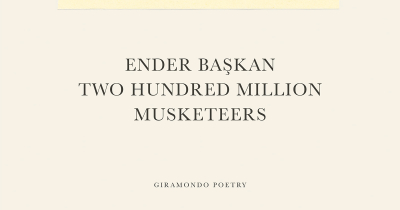
Two Hundred Million Musketeers by Ender Başkan & All Rage Blaze Light by Anna Jacobson

by
January–February 2026, no. 483

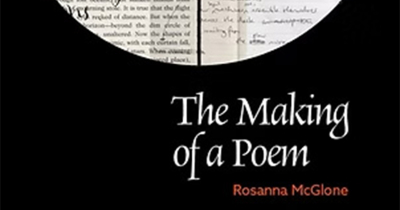
When was poetry turned on its head? Was it with T.S. Eliot and his nemesis, William Carlos Williams? Or perhaps it was the slow burn from Emily Dickinson. Was it with Walt Whitman that everything changed? Or did the Surrealists manage to kick down the walls? Gertrude Stein, e.e. cummings? Sylvia Plath? Adrienne Rich? Or possibly Frank O’Hara? It is hard to say just when it happened, or exactly what happened (two world wars and two nuclear bombs!), but poetry had its part in the explosive history of the arts this past century, and as a result, it is now a job requirement for each poet to find for themselves a personal path towards poetry and some understanding – or invention – of what poetry is.

... (read more)

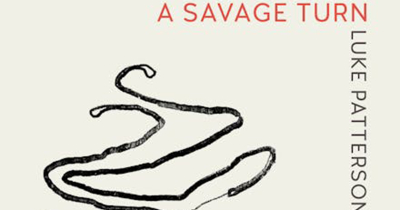
Aboriginal poetry has the ability to hold love and rage simultaneously. Luke Patterson’s début A Savage Turn does this masterfully, constructing pieces full of fire and defiance ‘amongst the love / poems’. In this collection, Patterson - a Gamilaroi poet, educator, and musician – unpacks colonial myth and legacy, subverts reader expectations, and teases out a tenderness that nourishes this collection.

... (read more)

Pre-dictatorship, without knowing it, I shared my home with the rats.
They ate even from my open cabinet. When I found their teeth marks
on the morning figs, I realized together we had been waiting for them to
ripen. In unison, now. Simple membranes separate all of us from death.

... (read more)

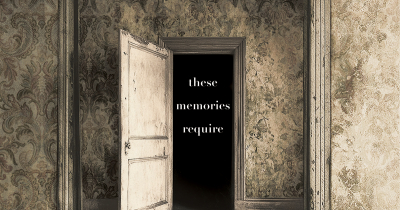
these memories require by Jacinta Le Plastrier & A Lick of Fireweed by Erik Jensen

by
December 2025, no. 482

Poets pop up in these memories require and A Lick of Fireweed, two new volumes by Jacinta Le Plastrier and Erik Jensen, both Melbourne/Naarm-based writers, poets, and publishers. Each book is an act of memory, and of connection, sometimes personal, sometimes imagined.

... (read more)

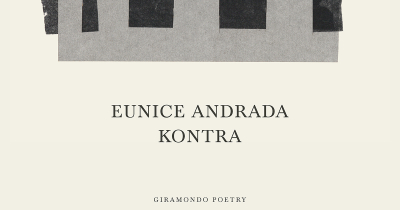
This week on the ABR Podcast, Grace Roodenrys reviews KONTRA by Eunice Andrada, observing that the collection draws on a poetics of cultural excavation.

... (read more)
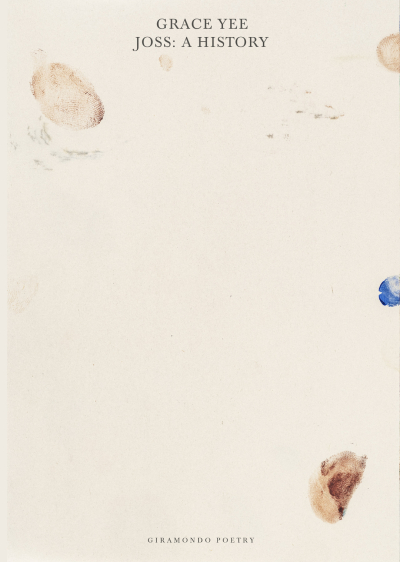
Joss: A history, Grace Yee’s second book of poetry following her multi-award-winning début collection, Chinese Fish (2024), navigates the spatial and temporal dimensions of heritage, inheritance, and memorialisation. From the Victorian goldfields to ‘China proper … bounded by Swanston-street and Russell-street’ ( ...

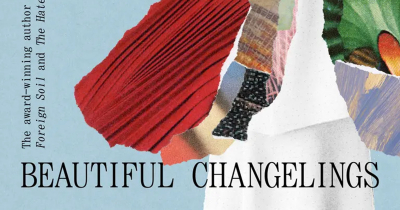
Early in beautiful changelings, Maxine Beneba Clarke writes: ‘i would like a hysterectomy.’ It is a sentence with no lyrical ambition, arriving in the voice of a medical form or consent document. But in the space of a poem, it performs a different task; it returns medical language to the body that had to speak it. Clarke’s work proceeds from this logic. Her poems do not translate pain into metaphor; they record how pain enters systems: reproductive, racial, bureaucratic.

... (read more)

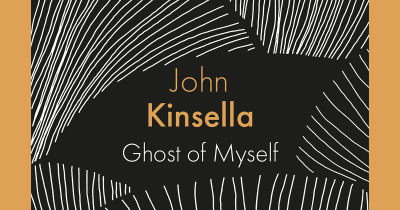
As someone whose primary literary interest is Aboriginal writing, reviewing John Kinsella’s aptly titled Ghost of Myself means approaching his poetry with a different perspective from many of his readers. The coolness of the writing, combined with the sombreness of much of his observation of the world around him, gives an end-of-days tenor to the four sections that comprise Ghost of Myself.

... (read more)

KONTRA by Eunice Andrada

by
November 2025, no. 481

The god of lyric poetry in Greek mythology was an attempted rapist. Indeed, one of the primal scenes of Western literature – Apollo’s pursuit of the nymph, Daphne – is a story of attempted rape. When Daphne can no longer outrun Apollo, she transforms into a laurel tree to escape violation. The heartbroken Apollo plucks a leaf from her branches, vowing to honour Daphne by adorning his hair and lyre with laurel and keeping her leaves eternally green. Thus began the long association of the laurel wreath with poetic or artistic achievement in Western culture: the rapist, in his grief, turned to poetry. And his poetry would forever sing of the loss and longing caused by a thwarted rape.

... (read more)

Extraordinary though it is, narrative film has its limitations. It is a truism of film criticism, for instance, that biopics of writers are usually at their weakest when representing the process of writing. It is an understandable problem. How, in the dynamic medium of film, is one to represent the (in)action of writing, which is largely solitary, motionless, and internal? In biopics of poets such as Syliva Plath and Dylan Thomas, the process of composing poetry is usually rendered in a Terrence Malick–like montage of soft-focus, shallow depth of field, handheld shots meant to signify the numinous, visionary experience of poetic inspiration. This cinematic convention is more or less nonsense. Biopics of writers are also largely indifferent to issues of technique – the slow, uneconomical labour of dealing with language as a medium. Who cares if that verb in the last line should be a gerund?

... (read more)
Page 1 of 93