
Accessibility Tools

  • Content scaling 100%
  • Font size 100%
  • Line height 100%
  • Letter spacing 100%

Poetry

How good to receive Gwen Harwood’s latest book of poems, The Lion’s Bride! Though Harwood seems to be continually active making words for music for Australian composers, a five to seven year interval lies between the appearance of each volume of poems –·here I include the 1975 Selected Poems because it gave us twenty-seven New Poems, including many that caught the imagination of readers and are already well-known: ‘The Blue Pagoda’, ‘At Mornington’, ‘Father and Child’. Selected Poems also included the tragic sonnet ‘Oyster Cove’, which, though we could not know, anticipated courageous series in The Lion’s Bride which mourns and confronts the guilt bequeathed by the black Tasmanian dead.

... (read more)

What a delight it is to read a collection of contemporary poetry which is not only good but entertaining and capable of arousing emotions – and the delight is intensified because the experience is so rare. Most Australian poets that I have read recently seem to think that the exercise of writing, for example ‘happy days / lost in lust’ justifies them in putting ‘poet’ instead of ‘esq.’ after their names. Geoffrey Lehmann is not one of these. On the strength of his recent book, Nero’s Poems: Translations of the Public and Private Poems of the Emperor Nero, published by Angus and Robertson, it can be seen that Mr Lehmann justly deserves the title ‘poet’, even though, for the duration of the book, we are asked to suspend our belief and attribute the poems to the Emperor Nero himself.

... (read more)

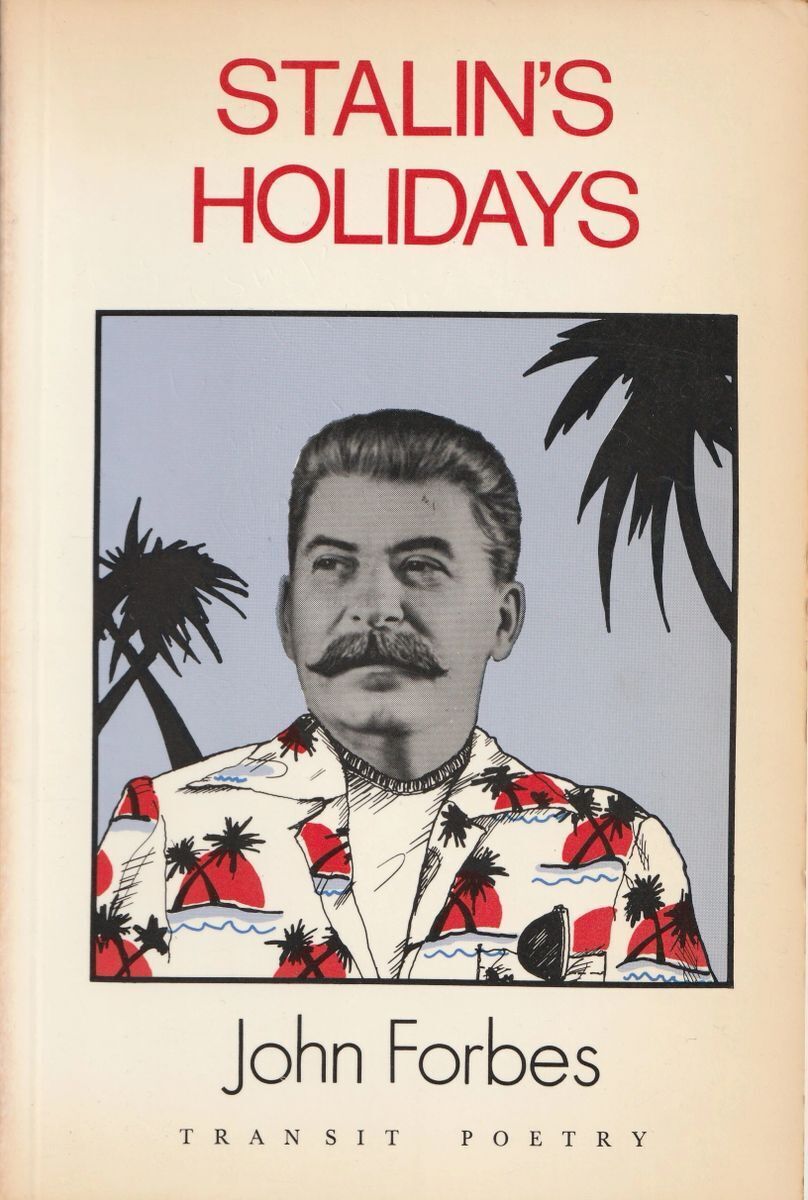
Stalin’s Holidays by John Forbes & The Division of Anger by Gig Ryan

by
May 1981, no. 30

The poet John Ashbery, now a considerable force in American poetry, has said: ‘I think that any one of my poems might be considered to be a snapshot of whatever is going on in my mind at the time…’ Like John Ashbery – and Frank O’Hara (who was involved with the Abstract Expressionism scene in New York before being killed by a dune buggy in 1966) – John Forbes and Gig Ryan are, in Australia, poets who must be linked to the broad automatic writing phenomenon which gained strength with so-called Action Painting (or, to use its other name, Tachisme). The foundation of that art movement was surrealist painting, sculpture, and writing; and these were made familiar to young American artists when writers and painters such as Max Ernst and André Breton escaped from Europe before Hitler took over.

... (read more)

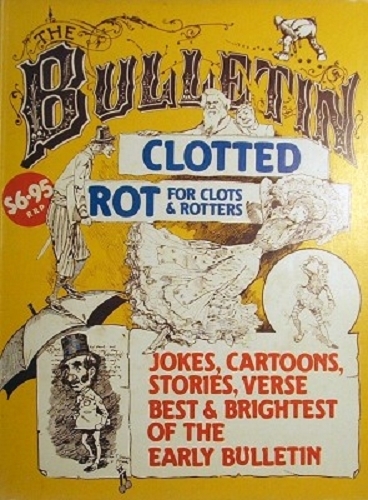
‘On Saturday, January 31, 1880, the newsboys of Sydney hung about the entrance of a broken-down old building in Castlereagh-street, waiting for bundles of a new weekly paper as they were issued damp from the press. That day, for fourpence (reduced to threepence the following week), the citizens of Sydney could read, for the first time, and in very small print, the columns of The Bulletin.’

... (read more)

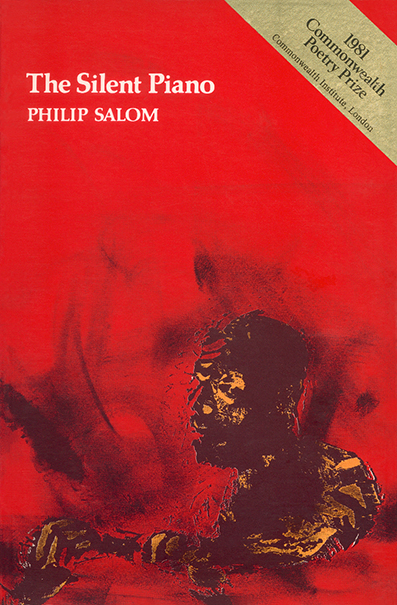
Thirty-year-old Western Australian poet Philip Salom’s first collection takes its title from Camus: ‘... a prisoner in a camp where cold and hunger were almost unbearable – who constructed himself a silent piano.’

... (read more)

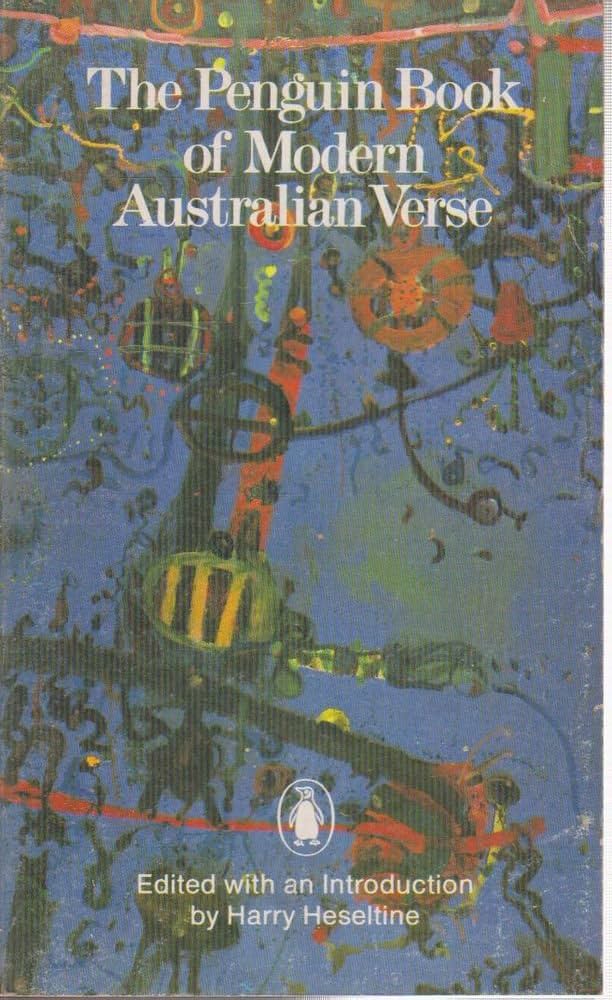
The appearance of anthologies which have the intention of representing the poetic output of a specific ‘era’ often indicates that era's having achieved a status of authority. Harry Heseltine’s Penguin Book of Modern Australian Verse anthologizes poetry of the nineteen-sixties and seventies, and just as surely as in any such anthology, the poetry of these decades becomes relegated to the past tense.

... (read more)

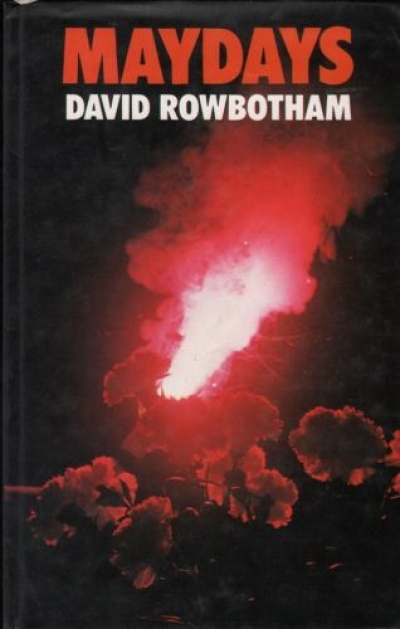
Maydays by David Rowbotham

by
August 1980, no. 23

It is five years since Rowbotham’s Selected Poems, one of that extraordinary number of summing-up volumes that has been, perhaps, last decade’s most telling and characteristic factor. The need to gauge one’s own work (and focus) from some working perspective has always been the basis of a living poet’s Selected Poems. But this decade’s perspective makers have, almost without exception, shared an additional, if implied, purpose: their selections point to a stocktaking rather than a summarising intention.

... (read more)

Grass Script by Robert Gray & Sisters Poets 1 edited by Rosemary Dobson

by
June 1980, no. 21

Of all the Australian poets of Robert Gray’s generation none gives more attention to the visual. Reviewers of his two earlier books remarked on this so often that it has become almost a truism in discussing his work. Some also commented on the obvious importance of painting to Gray’s poems and this can be a useful approach in trying to describe his work to anyone unfamiliar with it (an unnecessarily large number since from the acknowledgements it appears he sends his poems to only two magazines).

... (read more)

Walking the Line by Rae Desmond Jones & Summer Ends Now by John Emery

by
June 1980, no. 21

Rae Desmond Jones has joined the growing band of poets now working in the more expansive medium of prose diction (thereby possibly expanding their readership as well). Others that come to mind are David Malouf, Roger McDonald, and Rodney Hall.

At just 74 pages, Rae Desmond Jones’s first story collection gives the impression of being a slim volume. The contents page lists only ten stories. Yet this impression is deceptive. There are actually twelve stories (inexplicably, two aren’t listed in the contents), and the usual typography concentrates the prose, emphasizing its density and the sense of menace underlying the narratives.

... (read more)

The tone and range of these poems are similar to those in Brissenden’s earlier volumes, but they seem to have a certainty and force not always apparent previously.

... (read more)
Page 92 of 94