Accessibility Tools

  • Content scaling 100%
  • Font size 100%
  • Line height 100%
  • Letter spacing 100%

Environment and Climate

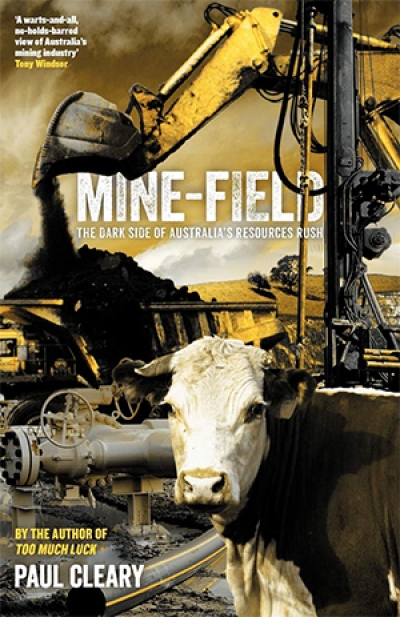
When BHP Billiton announced last month that it would indefinitely shelve its proposed Olympic Dam expansion in South Australia, some said it signalled the symbolic end of the mining investment boom. South Australian Premier Jay Weatherill’s reaction was particularly revealing. With his government now staring into a $1 billion black hole, Weatherill declared that he and the community had lost trust in BHP, and that the decision was a ‘major disappointment’. Many of Weatherill’s critics have suggested that his response betrayed his party’s zeal for the mining project, to the detriment of other sectors, with the sole aim of bolstering the state’s beleaguered economy. Putting ‘trust’ and ‘mining companies’ in the same sentence may be nothing more than political aikido. After all, given the tumescent economic growth that has come from the commodities rush, Weatherill’s reaction is predictable. Yet one can’t help but feel that his trust is misplaced.

... (read more)

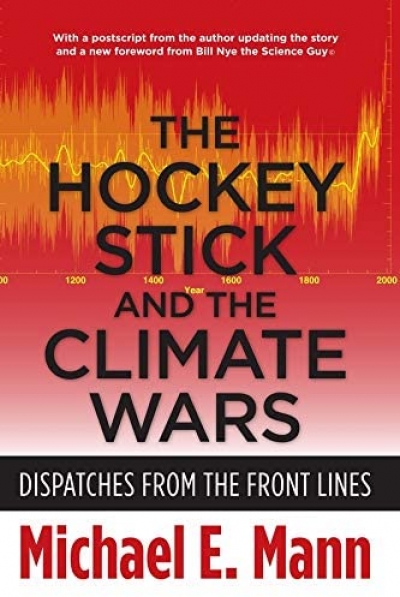
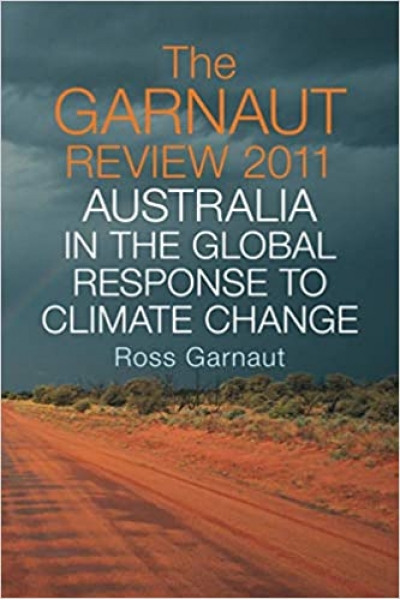
In my recent commentary on The Garnaut Review 2011, I said ‘Climate change is often framed as a number of battles; between science and opinion, between sustainable development and economic growth, between government control and individual freedom ...’ (ABR, November 2011). Little did I know that my next review would be of a book about the Climate Wars, written by an active warrior in those battles, and subtitled Dispatches from the Front Lines.

... (read more)

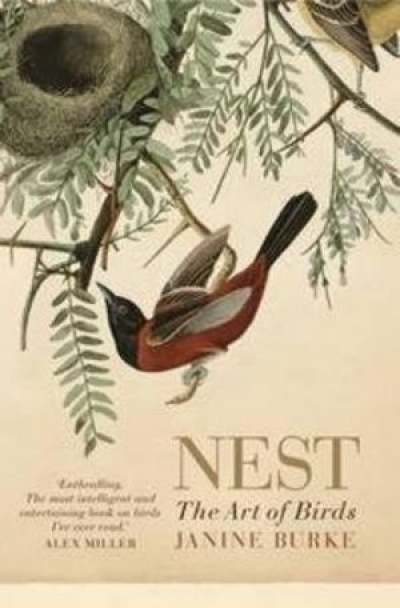
Fernando Nottebohm has been interested in birdsong since early childhood. By 2001 he had spent thirty years at Rockefeller University in New York studying how birds learn to sing, concentrating on canaries who are capable of learning new songs each year. His interest has been to study birdsong as ‘a model for the brain’. He studied the brains of caged birds and birds in the wild. The birds that needed to forage and escape predators produced more neurons in the hippocampus, the part of the brain that is essential to memory.

... (read more)

Climate change is often framed as a number of battles: between science and opinion, sustainable development and economic growth, government control and individual freedom, or environmentalists and business leaders. All of these are simplifications of the complexity involved in our modern world’s developing adequate responses to human-caused climate change.

... (read more)

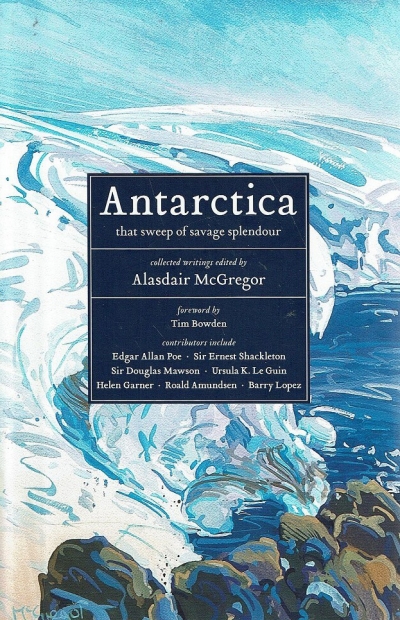
On 18 January 1773, less than twenty-four hours after first entering Antarctic waters and concerned by the ice gathering around the Resolution, Commander James Cook surveyed the waters. A few hours later he wrote in his journal: ‘From the mast head I could see nothing to the Southward but Ice, in the Whole extent from East to WSW without the least appearance of any partition.’

... (read more)

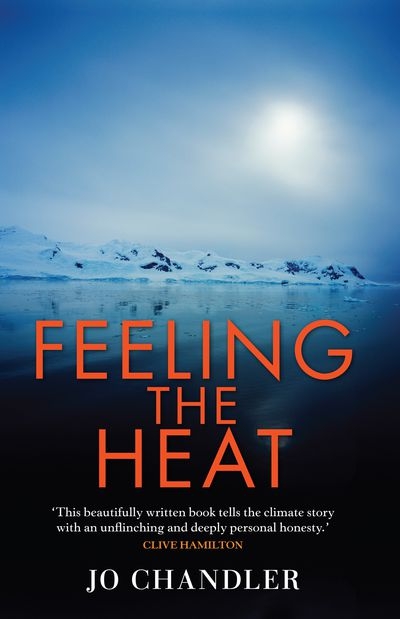
In Feeling the Heat, journalist and science writer Jo Chandler voyages to Antarctica (mostly), where she meets and talks with scientists about the meaning of their work. She reminds me of the eighteenth-century philosophical travellers, the first anthropologists who travelled to strange lands (Australia included) to observe the language and customs of savage peoples, and to learn from them. From ice field and coral reef, Chandler reports on the latest in climate science, as if meeting the inhabitants of a distant country where they do things differently.

... (read more)

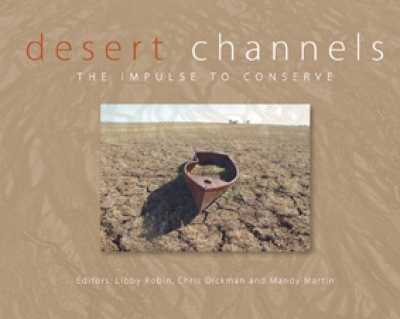
Desert Channels: The Impulse to Conserve by Libby Robin, Chris Dickman, and Mandy Martin
by
May 2011, no. 331

In recent months a significant part of Australia has been subject to deluge and flood. As the continent recharges its waterways and water tables, we are like an ant nest into which a curious child has thrust a hose – rushing about rescuing and shoring up, patching and rebuilding, behaving as if this upheaval is an aberration, and as if building towns and cities on flood plains is sensible.

... (read more)

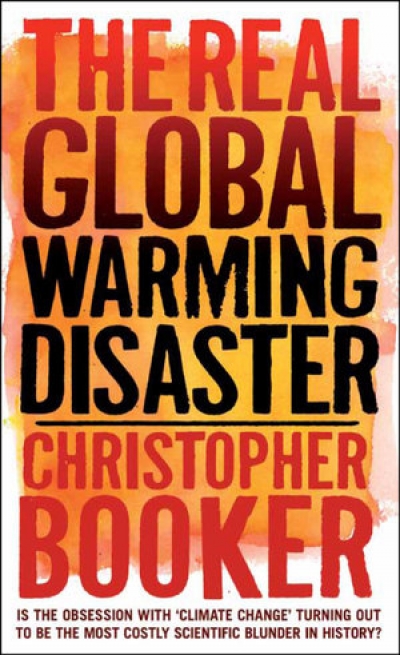
Christopher Booker is appalled that humanity has thrown its glimmering record of progress on the pagan bonfire of environmentalist superstition. He is shocked that the scientific community is helplessly in thrall to a cabal of corrupt hacks masquerading under theIntergovernmental Panel on Climate Change’s confected rubric. He is dumbfounded that ‘natural’ climatic fluctuations have been spun into some deranged ‘global warming’ conspiracy theory.

... (read more)
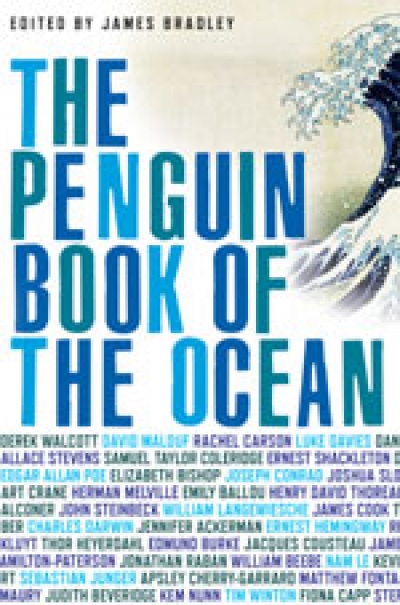
Imagine a bookshop or library whose contents were shelved in a cross-generic way to include a section for Anthologies: this surely would be the largest division, encompassing all of the subsections of literature, science, music, philosophy ... The anthology (‘gathering of flowers’), with its impeccable classical pedigree, is the most comprehensive kind of book, catering in the contemporary reading economy to every conceivable market, from astral travelling, through gay fiction, ghost stories, long/short/tall stories, poetry of all persuasions, to travel in Turkey and Great Zoos of the World. There is a burgeoning publishers’ trade for the literary anthology – a ‘safe’ book, the serious reader’s stocking-filler, something with at least a few contributions calculated to entertain or edify.

... (read more)

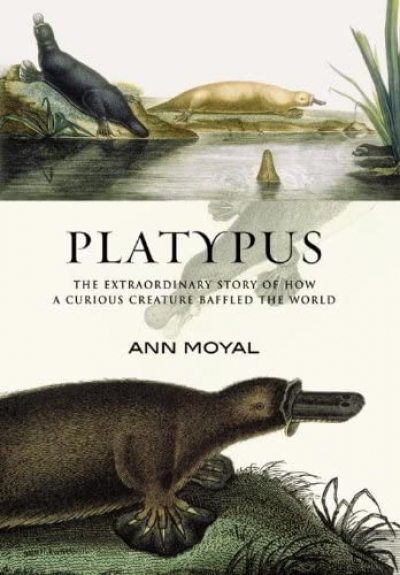
When the first specimen of the Platypus reached Europe in 1798, it was received with incredulity by zoologists. With anatomical and morphological characteristics seemingly belonging to reptiles, birds, and mammals, it simply did not fit into the existing classifications. Further, it appeared to lack mammary glands and therefore could not be classed as a mammal, yet it had obvious mammalian characteristics such as fur and a single bone comprising the lower jaw. It was also noted that there was only one external body opening, the cloaca, into which the uteri, the gut, and the kidneys empty. Hence the name Monotreme (having one hole) applied by English anatomist Sir Everard Home in 1802. Put simply, the Platypus created more than its share of headaches for taxonomists.

... (read more)
Page 11 of 12