
Shadows
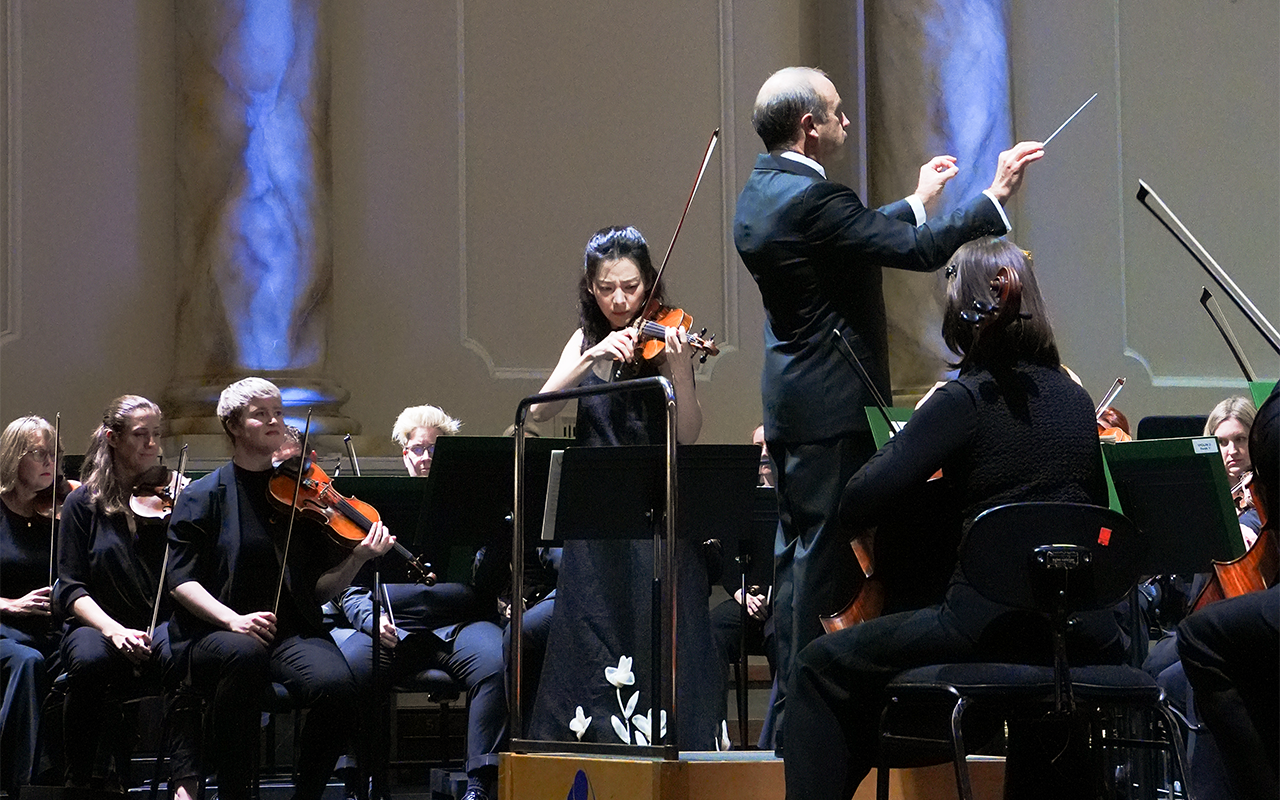
Perhaps more than any other composer, Dmitri Shostakovich’s music is a window onto his life and times. His Symphony No. 10 in E minor, Op. 93, completed in 1953, is generally seen as his response to the death of Joseph Stalin months earlier. Shostakovich said in his memoir, Testimony (1979), that it was about Stalin, though he had been working on it prior to Stalin’s death.
The Adelaide Symphony Orchestra’s programming of this symphony might be seen as a comment on the tumult in current world affairs and the drift towards oppressive autocracy. Their 2025 program would have been finalised last year and the inclusion of the Shostakovich was presumably intended to celebrate the fiftieth anniversary of the composer’s death in 1975; it was a prescient as well as a fitting choice.
The long, tragic, moderato movement, perhaps an expression of the composer’s private emotions, transports the audience into a state of contemplative mourning for those who suffer helplessly under oppression. The reflective voice of the clarinet haunts this movement and clarinet principal Dean Newcomb performed to heartbreaking effect. One can’t help but be reminded of the day in which Alexander Solzhenitsyn’s Ivan Denisovich Shukov lays bricks in the Siberian cold. The first movement ends with a gentle piccolo passage, the piccolo seemingly representative of the composer himself.
Continue reading for only $10 per month. Subscribe and gain full access to Australian Book Review. Already a subscriber? Sign in. If you need assistance, feel free to contact us.


Leave a comment
If you are an ABR subscriber, you will need to sign in to post a comment.
If you have forgotten your sign in details, or if you receive an error message when trying to submit your comment, please email your comment (and the name of the article to which it relates) to ABR Comments. We will review your comment and, subject to approval, we will post it under your name.
Please note that all comments must be approved by ABR and comply with our Terms & Conditions.