
Books of the Year 2025
Amanda Lohrey
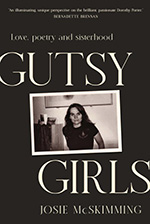
My novel of the year is Italian writer Vincenzo Latronico’s Perfection (Text Publishing), a slyly political novel about a cool young couple in Berlin whose good intentions are undermined by neo-liberalism’s pet child, a rootless cosmopolitanism. I once shared an office with the poet Dorothy Porter and it was an experience. Porter died in 2008 at the age of fifty-four and in Gutsy Girls (University of Queensland Press) her sister Josie McSkimming crafts an affecting portrait of the poet and the resistance of both sisters to their volatile father. Beautifully written and with some of Porter’s best poetry woven throughout the text. Joan Didion’s Notes to John (Fourth Estate) is perhaps the ultimate in literary voyeurism, a diary of Didion’s sessions with her psychiatrist, published after her death. Didion’s therapist is an intriguing character in his own right.
Beejay Silcox
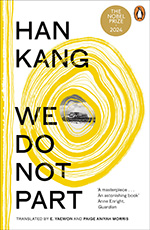
This year, I’ve been haunted by books that exist twice: once in their original language, and again in translation. Han Kang’s We Do Not Part (Hamish Hamilton), translated from Korean by e. yaewon and Paige Aniyah Morris, places the weight of South Korean history in the body of a songbird. Alba de Céspedes’s There’s No Turning Back (Pushkin Press), translated from Italian by Ann Goldstein, speaks from Fascist Italy with a defiance that still feels like contraband (it was originally published in 1938). Olga Ravn’s The Wax Child (Viking), translated from Danish by Martin Aitken, reaches back to seventeenth-century Danish witch trials and thrums with allegorical possibility. And Solvej Balle’s On the Calculation of Volume series (Faber: three are available in English; seven are planned), translated from Danish by Barbara J. Haveland, traps its protagonist in the same November day, proving that repetition can be its own kind of revelation. All are glorious reminders that without the work of translators – or transcreators – literature would never leave home.
Ben Brooker
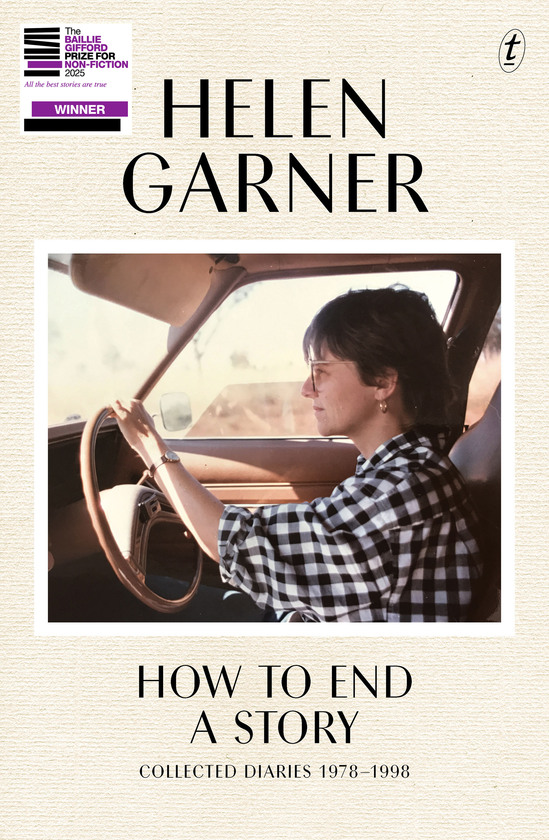
I inhaled each of Helen Garner’s three volumes of diaries as they were first published between 2019 and 2021 (Text Publishing), but to revisit them this year in a handsome collected edition, How to End a Story: Collected diaries (Pantheon), was to revel in their brilliance all over again. Sharp-witted, percipient, and ruthlessly self-scrutinising – have any writer’s journals since Virginia Woolf’s felt so vital? Part paean, part elegy, part polemic, Robert Macfarlane’s superb Is a River Alive? (Hamish Hamilton) is a lyrical entreaty to reimagine our relationship with a natural world profoundly mistreated and misunderstood. Few writers can interweave their love of nature and of language so deftly. Omar El Akkad’s One Day, Everyone Will Have Always Been Against This (Text Publishing) is a work of rare, Orwell-like moral clarity and an unsettling indictment of Western liberal duplicity in the face of Israel’s destruction of Gaza. Read it for both its novelistic artfulness and its conscience-rattling fury.
Carody Culver
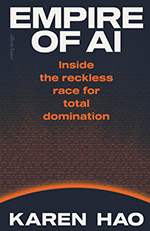
A book I haven’t been able to stop thinking (or proselytising) about since I turned the final page is Karen Hao’s Empire of AI: Inside the reckless race for total domination (Allen Lane), a meticulous exposé of Big Tech’s neocolonial machinations. Richard King’s Brave New Wild: Can technology really save the planet? (Monash University Publishing) turns a similarly critical eye to the outlandish technofixes being touted as solutions to the climate crisis. Sophie Gilbert’s Girl on Girl: How pop culture turned a generation of women against themselves (John Murray) made me wholly reassess the music, television, and other cultural artefacts of my youth, all the way back to the Spice Girls Impulse Body Spray I owned as a ‘Wannabe’-loving tween. Finally, Elaine Castillo’s novel Moderation (Atlantic) is a caustically witty skewering of corporate greed and a charming love story set in the bland corridors and lavishly rendered worlds of a virtual-reality company.
Clare Wright
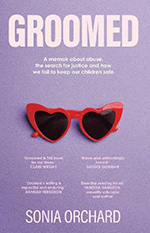
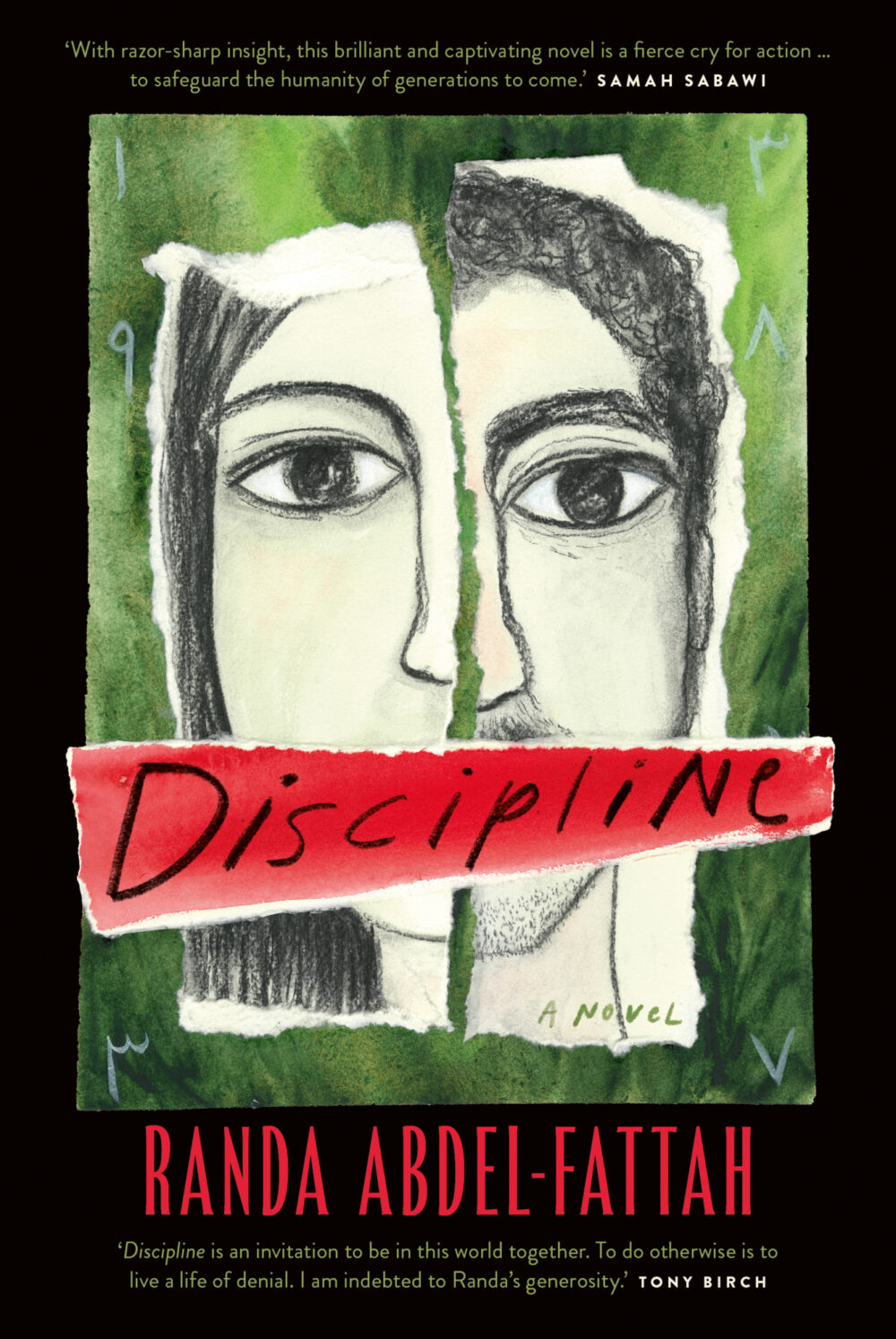
Pre-Christmas book listings often suffer from presentism: we recall the last works we consumed first. But Sonia Orchard’s Groomed (Affirm Press), released in January, was my stand-out, jaw-drop, gut-punch read of the year. I’m shocked it didn’t get more buzz. Randa Abdel-Fattah’s Discipline (University of Queensland Press) bowled me over in one ferocious sitting. It is a novel about the limits of academic freedom and journalistic integrity in a time of genocide – our time, NOW – that proved its point by being muzzled by a university-sponsored writers’ festival. The Last Outlaws (Scribner), historian Katherine Biber’s gripping non-fiction account of the lives of Jim and Joe Governor, was a victim of the same festival’s (moral) collapse. A fine study of the national and narrative legacies of colonial violence, it deserved better. Finally, Mandy’s Sayer’s gentle, generous memoir, No Dancing in the Lift (Transit Lounge), shimmied its way straight to my heart.
Clinton Fernandes
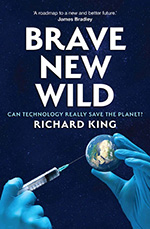
Brave New Wild by Richard King is a timely inquiry into the rising movement of eco-modernism and the idea that new technological fixes can deal with ecological crises caused by earlier technologies. The title comes from Aldous Huxley’s novel Brave New World where humans were re-engineered to fit society. King explores the ideology that seeks to achieve something similar – re-engineer nature to suit the existing economic and political system – rather than constructing a society that nurtures human creativity and morality and allows them to flourish. Lurking in the background are the material interests of technology billionaires, the corporations they control, and the governments that give effect to their priorities. Brave New Wild examines biotechnology, nanotechnology, plans to re-engineer the earth to manage planetary temperatures by reflecting sunlight back towards space, and more. He shows how technology is a medium through which power is exercised and its effects experienced.
Diane Stubbings
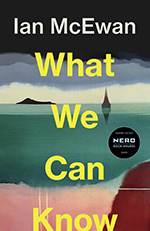
If I was allowed to keep only one book from 2025, it would be Diane Seuss’s Modern Poetry (Fitzcarraldo Editions), her first collection of poetry since her 2022 Pulitzer Prize-winning frank: sonnets. Beneath the disarming simplicity of Seuss’s language there is a complex poetic sensibility at work. Her juxtaposition of the sublime and the abject in poems such as ‘Romantic Poet’ is stunning. Ian McEwan may never better Atonement (2001) but What We Can Know (Jonathan Cape) – a study of poetry, time, and the vagaries of history – will certainly rank high among his best novels. In Death and the Gardener (Weidenfeld & Nicolson), Georgi Gospodinov transforms the physical garden once tended by his narrator’s dead father into a metaphorical garden that blooms with memories both anguished and joyful. Claire-Louise Bennett’s Big Kiss, Bye Bye (Fitzcarraldo Editions) – a novel about one woman’s displacement and emotional discombobulation – has a mesmerising interiority. While Bennett’s disorienting blend of the comic and the tragic may have its roots in Beckett, she has emerged as one of the most electrifying of contemporary writers.
Esther Anatolitis
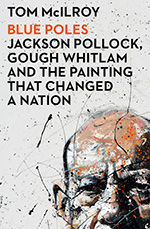
Three thoughtful books for big summertime conversations. Tom McIlroy’s Blue Poles: Jackson Pollock, Gough Whitlam and the painting that changed a nation (Hachette) bridges art and politics with an urgency that feels current – because it is. Artistic confidence is entirely compatible with political vision; McIlroy leaves us wondering how the latter is even possible without the former. Ritual: A collection of Muslim Australian poetry (Sweatshop), edited by Sara M. Saleh and Zainab Syed with Manal Younus, with a foreword by Eugenia Flynn, is an Australian-first anthology inscribing local poets into well over a thousand years of powerful Islamic writing. And the sprightly, joyful All the Colours of the Rainbow (Lothian), written by Rae White and illustrated by Sha’an d’Anthes, is a marvel. It guides both children and adults into talking gender diversity with dignity, care, and plenty of imagination – as only a picture book can.
Felicity Plunkett
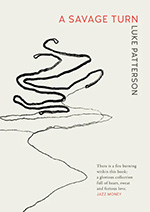
Fiona Benson’s Midden Witch (Jonathan Cape) explores artists and outcasts, mostly women, suspected of witchcraft. Benson’s decoctions compound hedge magic, herbs, testimony, and superstition. She distils splintery incantatory lyrics, then expands the line to hold rites like the self-exorcising monologue of a mother ‘at the end / of my magic tricks’. Benson admits the witch in every mother who, throwing herself between her child and danger, reaches for counter-spells, evil’s ‘correct deflection’: ‘Which makes me the spell-catcher. / Which makes me the witch.’ In Josephine Rowe’s poem-like, distilled, and astonishing Little World (Black Inc.), the uncorrupted body of a child maybe-saint, boxed and bequeathed, travels across time. Retaining awareness, ‘a lamp swung in the dark’, she observes exile and affinity. Mesmerising, too, is Gamilaroi poet and musician Luke Patterson’s début, A Savage Turn (Magabala Books). Insubordinate and potent as any spell, these inventive, exhilarating poems attend tenderly to heart and Country.
Geordie Williamson
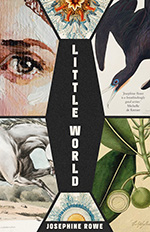
Josephine Rowe’s Little World (Black Inc.) is … I’m honestly unsure. A prose poem? A hyperlink novel? A Buddhist Gohonzon scroll? Whatever the case, Little World confirms Josephine Rowe as a subtle cartographer of both inner and outer worlds. Sentences from the book keep returning, even months after reading, like a long exposure photo resolving into image. Most books are written; this one is composed. And although it’s more in the spirit of a lifetime achievement award, since Pictures of You (University of Queensland Press) contains a selection of Tony Birch’s short stories already published over decades, this handsome hardback provides an appropriately respectful setting for the author’s plain, subtle, yet masterful short fictions. My only complaint is that more of them should have been included. In a somewhat different vein, French novelist Colombe Schneck’s The Paris Trilogy (Scribner, in a fine translation by Lauren Elkin and Natasha Lehrer) is currently bringing a whole other world alive for me.
Glyn Davis
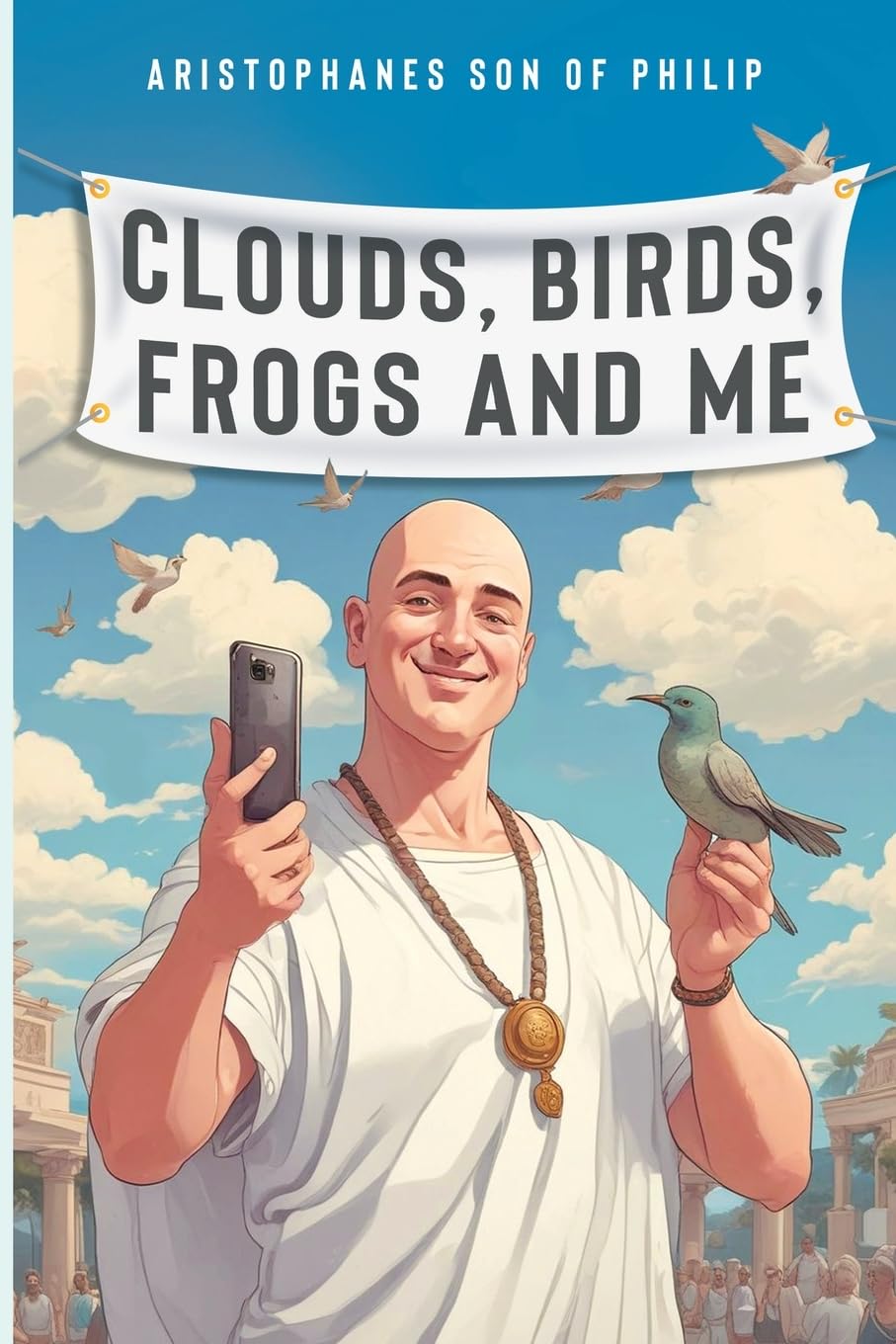
Traditional publishers produced more than one million books worldwide in 2025, with countless more self-published. Any list of favourites is impossibly subjective – so here are three novels which skilfully imagine a time and place far from our moment. Laurent Binet’s epistolary Perspectives (Vintage) conjures the Florence of 1557. Rebecca Kuang shows similar ingenuity when reviving the trope of a journey through hell in Katabasis (Harper Voyager), while Peter Acton gives us the Athens of Socrates in Clouds, Birds, Frogs and Me (Pegasus Publishers), an imaginary autobiography by Aristophanes. On music, Ian Penman’s Erik Satie Three Piece Suite (Fitzcarraldo Editions) offers three different takes on the enigmatic composer, while Melissa Lucashenko’s Not Quite White in the Head (University of Queensland Press) evokes the here and now, in each of the collection’s essays, with characteristic clarity.
James Ley
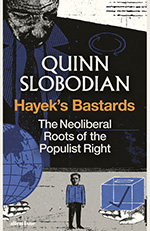
Quinn Slobodian’s Hayek’s Bastards: The neoliberal roots of the populist right (Allen Lane) distinguishes itself from the endless pontificating about contemporary politics by focussing on the complicated intellectual history of neo-liberalism. It shows how the original ideological mission of neo-liberalism – namely, to hobble the democratic state in the interests of capital – led to what Slobodian calls the ‘new fusionism’. In an attempt to reconcile economic libertarianism and social conservatism, neo-liberals began grounding their claims in appeals to nature, their insistence on the biological origins of material inequality and social hierarchy revealing that ruthless economism and racist pseudoscience are more intimately entwined than you might think. My second pick is Francesca Wade’s compulsively readable biography Gertrude Stein: An afterlife (Faber). Wade provides an engaging portrait of her indomitable subject and reflects on the peculiar celebrity that Stein – an incorrigible egotist who never questioned her singular importance as a writer – knowingly cultivated for herself.
Jason Steger
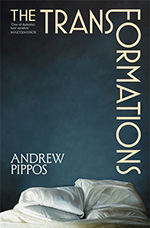
I was very impressed by David Szalay’s Booker-winning, bleak whole-life novel, Flesh (Vintage), chronicling the rise and fall of fifteen-year-old Istvan, whose seeming passivity takes him from hardscrabble life in Hungary to the world of the megarich and beyond. Kiran Desai’s first novel for twenty years, The Loneliness of Sonia and Sunny (Hamish Hamilton), gave me a great pleasure. Sean Wilson’s You Must Remember This (Affirm Press) is an imaginative and moving story about an old woman’s dementia and illustrates the ghastliness of the condition. Andrew Pippos’s The Transformations (Picador) is both a love story and a lament for the changes in the newspaper industry, and Esther Freud’s autobiographical novel, My Sister and Other Lovers (Faber), won me over. Readers of all ages will relish Runt and the Diabolical Dognapping (Allen & Unwin) by Craig Silvey.
John Kinsella
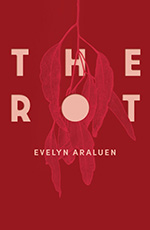
There’s no getting past Evelyn Araluen’s The Rot (University of Queensland Press), which does more than contest imperial capital, brutality, and misogyny – it works to dismantle it and fully expose the rot of empire. It’s a book that will stay with me until I am no longer able to listen and respond. And with Luke Patterson’s A Savage Turn (Magabala Books), we’re talking a first book by a poet of very high technical accomplishment and some devastating insights. It’s a complex array of anti-poetic modes, musicology, and queer voicings of Indigenous affirmation of Country. Susan Stewart’s 2023 Clarendon Lectures are the source for Poetry’s Nature: Four lectures (Oxford University Press) – an immaculately expressed work of acuity and empathy that draws primarily on medieval to modern English language poetry. It explores poetries of animal sound, flowing water, and seasonal change, and conceives of nature itself as creativity and meaning.
Jonathan Ricketson
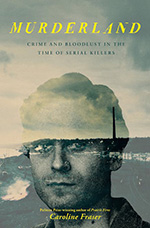
The best thing Helen Garner has ever written is How to End a Story: Collected diaries 1978-1998 (Text Publishing). The diaries cover twenty years of her working life, a period of huge emotional and spiritual upheaval for the writer. In this ‘record of soul’, Garner is unsurpassed in her ability to sift through the muck of existence and transform it into poetry. I loved Caroline Fraser’s Murderland: Crime and bloodlust in the time of serial killers (Fleet), an expansive, luminescent work of true crime. Fraser links the profusion of serial killers in the Pacific Northwest with rising levels of toxic lead pollution; in her persuasive telling, there is a connection between the damage we do to the environment and the harms we visit upon each other. I will never forget Garth Greenwell’s Small Rain (Picador), released in the dying days of last year, which is a little hymn to life in all its mundanity and beauty.
Judith Bishop
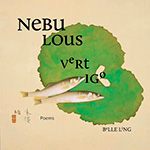
In a year when the frenetic ambitions of generative artificial intelligence and its effects on our sense of truth, capacity for attention, and creativity have felt increasingly toxic to poetry, I’ve sought my antidote in books that follow the tracks of human feeling in slow, perceptive time. Hong Kong poet Belle Ling’s début collection, Nebulous Vertigo (Tupelo Press) reverberates with the tangible presence of the sensuous world. Several poems recall a writing teacher who mocked her use of colloquial words and corrected them to the standard forms. Now artificial intelligence revises us as if it knew best. In Time and World (Polity), eminent German sociologist Hartmut Rosa offers a means to counter our ‘social acceleration’, the feeling that current life requires us to run ever faster. His recommendation: cultivate ‘resonance’, which comprises meaningful relationships that harmonise human minds and bodies with the world and each other. That resonates with me.
Julie Janson
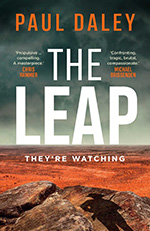
Young love, war, racism, and tropical family turmoil are entwined in The Pearl of Tagai Town (Text Publishing) by Torres Strait Islander author Lenore Thaker. This is a début historical novel about a TSI woman on the north-east coast of Australia. Pictures of You by Tony Birch is a volatile but compassionate collection of his best short stories. Family, from young siblings to the ghosts of Elders, is at the centre of Birch’s tales. Ritual: A collection of Muslim Australian poetry, edited by Manal Younus, Sara M. Saleh, and Zainab Syed, is an evocative anthology that celebrates the diversity of contemporary Islamic Australian poets published in Western Sydney. The Leap (Summit Books) by Paul Daley is a torrid outback noir crime novel about male violence and truth-telling about Indigenous history. Old Days (Magabala Books) by Marjorie (Nunga) Williams features beautifully illustrated stories of the author’s childhood, spent between Iwupataka (Jay Creek) and Ntaria (Hermannsburg).
Kate Fullagar

As a biographer and historian, I learned the most this year from two collections: Reframing Indigenous Biography (Routledge), edited by Shino Konishi, Malcolm Allbrook, and Tom Griffiths, and Deep History: Country and sovereignty (UNSW Press), edited by Ann McGrath and Jackie Huggins. Both are exemplars of collaborative work that take seriously the injunction to listen carefully to what Indigenous people are telling the humanities about their disciplines. If Indigenous people are to find in the national record any memory of their lives or of their role in the past – in terms that make sense to them – then the genres of biography and history will have to expand. God forbid they stay stuck the same forever. These books will help readers who are open to the challenge and prepared to debate it with grace and curiosity. (Full disclosure: I was one of the twenty-seven authors in Reframing Indigenous Biography.)
Kevin Foster
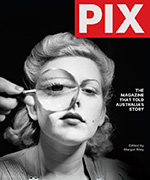
Margot Riley has gifted us a wonderful collection of photographs in Pix: The magazine that told Australia’s story (NewSouth). Prefaced by sharp introductory essays from Riley and Kate Evans, the book covers the magazine’s three-decade history. The images are a joy and a revelation. Reproduced from the original negatives held in the State Library of New South Wales, they are the work of an unsung cadre of outstanding lensmen, offering a startling vision of a world both familiar and strange – still here in some ways but irrevocably gone in others. Their photographs of the nation’s mid-century reveal a more diverse populace than we might have expected and one that was hard-working, passionately leisured, and marching into an uncertain future with determination and hope. The magazine that taught Australians how to read their world through images has been fittingly honoured in this outstanding book.
Marilyn Lake
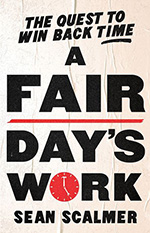
With Zohran Mamdani’s electrifying win in New York, it’s a good time to be reminded that political activism in the name of social justice and a fairer, safer world can indeed secure results. This year, two local books highlight the success of past political campaigns for the recognition of workers as human beings with rights to dignity and to decent wages, conditions and hours of work: Liam Byrne’s No Power Greater: A history of union action in Australia (Melbourne University Press) and Sean Scalmer’s A Fair Day’s Work: The quest to win back time (Melbourne University Press). Meanwhile, in the domain of foreign policy, Emma Shortis’s After America: Australia and the new world order (Australia Institute Press) and Hugh White’s Hard New World: Our post-American future (Quarterly Essay) urge Australians to demand greater independence from the United States and reclaim our dignity and sovereignty in a rapidly changing world.
Marjon Mossammaparast
The backdrop to my reading this year remained Jon Fosse’s Septology (Giramondo). There is an abiding reassurance in returning to this extended meditation on art and God – and in suspecting I will not encounter a full stop even at the last. Lucy Nelson’s collection of short fiction, Wait Here (Summit Books), offered a punctuation point with her twelve stories about women who are not mothers. One character ‘worries that she has cornered the conversation into that place where women ask each other if they have children and Noni must say no and manage the other person’s feelings about it’. Nelson gives moments such as these – daily submerged flutters of the heart – their due, without being loud about it. The publication I most anticipated was the late Antigone Kefala’s first complete poetic works, Poetry (Giramondo). Just shy of three hundred pages, it gathers to a greatness like Hopkins’s ooze. Distilled visions of water, sky, dreams, and olive groves coalesce into the perspective of one who has traversed spaces. Kefala impales where she must – especially pomposity – but ultimately her poetry invites contemplation rather than demands labour. Little wonder it continues to breathe after she is gone.
Mark McKenna
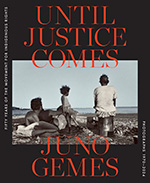
This year, I want to highlight one book in particular. For anyone interested in the long struggle for Indigenous rights in Australia, photographer Juno Gemes’s Until Justice Comes (Upswell Publishing) is essential reading. For more than five decades, Gemes has travelled across the continent documenting landmark moments in the history of Indigenous activism. While the book contains numerous valuable essays, it is Gemes’s photographs that reveal the extraordinary determination and perseverance of Indigenous Australians in the face of so much indifference and so many false promises. At a time when the country is still to find a way forward after the failure of the 2023 referendum, Gemes’s photographs offer sustenance and hope. The result of a lifetime’s work and commitment to the broader struggle, Until Justice Comes is a rare achievement.
Michael Williams
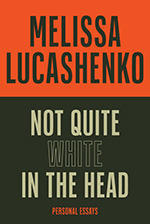
Three collections of essays – from three accomplished novelists – provide perhaps the most politically astute, critically engaged, and philosophically generous writing of the year. In the twenty-five years since White Teeth, Zadie Smith has become as significant an essayist as she is a novelist. Her latest, Dead and Alive (Hamish Hamilton), shows how adept she is, an essay collection ranging from criticism (her take on Tár is a highlight) to obituary (Roth, Morrison, Amis) to the personal. She’s never less than interesting and her capacity to rise above the noise of online discourse makes this collection enduring and surprising. Melissa Lucashenko’s Not Quite White in the Head (University of Queensland Press) is a reminder that beyond her award-winning novels lie the precision and moral authority of one of the nation’s best public intellectuals. As any long-time reader of Lucashenko would expect, she’s funny and unflinching, and unmatched when she writes on class, on activism, and on our culture. And in Attention: Writing on life, art and the world, (Jonathan Cape) Anne Enright is humane, incisive, and full of joy. A treat on every page.
Mindy Gill
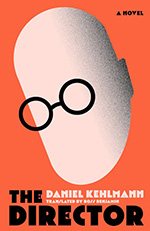
I admit when I picked up Maria Reva’s Endling (Virago) and Daniel Kehlmann’s The Director (Riverrun) from the bookshop, it was because of their excellent covers. Yet I was met with an unexpected symmetry between the two books. Endling, a début with a deft, delicious narrative conceit, follows Yeva, a snail conservationist turned ‘bride’ for a lucrative marriage agency in Ukraine. When Russian forces invade her country, Yeva finds herself in command of the last surviving snail of its species – alongside a van full of kidnapped Western bachelors. Meanwhile, The Director reanimates the life of one of Germany’s great directors, Georg Wilhelm Pabst. It interrogates the cost of compromise – artistic and ethical – as Pabst becomes entangled with the Nazi Ministry of Propaganda. Lastly, for non-fiction, I loved and was sobered by Nicholas Carr’s Superbloom: How technologies of connection tear us apart (W.W. Norton).
Mridula Nath Chakraborty
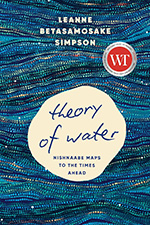
Accidentally, I ended up reading three books that link the red threads of epoch-ending planetary preoccupations framing our perilous humanity. In Wild Fictions: Essays (John Murray), Amitav Ghosh continues his critique of the 300-year-old systems of colonial-capitalism that he inaugurated in his 2016 book, The Great Derangement: Climate change and the unthinkable. Challenging our current unipolar world, he offers portents on barren, accustomed modes of thinking, catastrophic convergences, imaginative collaborations, as well as banyans and tigers from endangered ecosystems of his beloved mangroves in the Sundarbans. Yuvan Ave’s Wainwright Prize commendation, Intertidal: The hidden world between land and sea (Ithaka), asks us to reimagine the values we live by, urging us to hear and look at the teeming multiverses that exist in ever-renewing ecotones of shorelines, transition zones between ecological habitats that regenerate themselves every moment. Michi Saagiig artist-activist Leanne Betasamosake Simpson’s theory of water: Nishnaabe maps to the times ahead (Haymarket Books) evokes water, Nibi, as a form of Indigenous internationalism and interdependent relationality as resurgence.
Patrick Mullins
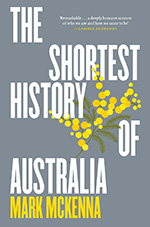
Highlights of my reading year have been books that study the past with fresh eyes. In The Last Outlaws (Scribner), Katherine Biber reckoned, in ways thoughtful and acute, with the crimes of Jimmy and Joe Governor, and what they revealed about the nation state then in the making. In The Prime Minister’s Potato: And other essays (Upswell Publishing), Anne-Marie Condé brought wry and wise insight to bear on a collection of overlooked and discarded curios and characters. Emily Gallagher’s Playtime (La Trobe University Press) evocatively delved into the imaginations and worlds of Australian children, prompting both self-reflection and wonder at how children today might dream and play. Lastly, Mark McKenna’s Shortest History of Australia (Black Inc.) found a new way to trace this continent of ours. With every page, the kaleidoscope shifted and a new way of seeing emerged.
Stephen Romei
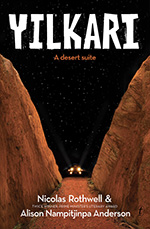
I like books that make me consider, question, and interrogate the life I’ve lived, am living, and am yet to live. Two 2025 releases had that effect: Yilkari: A desert suite (Text Publishing) by Nicolas Rothwell and Alison Nampitjinpa Anderson and Elizabeth Gilbert’s All the Way to the River (Bloomsbury). Gilbert’s memoir, centred on a love affair with artist, musician, and writer Rayya Elias, is a nuclear-grade truth bomb that made me laugh and cry. A candid, critical work of self-analysis, and a story of love and loss, it is the author of Eat Pray Love as you’ve not seen her before. Yilkari is set in Central Australia and the vast enigma at its heart is Indigenous Country, which Rothwell and his Rothwellian narrator can experience but never understand in the way his co-author and wife does. Their book is a masterpiece of knowing and not knowing that every Australian should read.
Stuart Kells
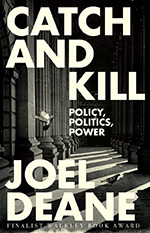
This past year – in many ways a dark moment and a pivot point in world affairs – produced a series of important international books aimed at making sense of politics, conflict, technology, climate change, and public policy. Locally, the sense-making impulse saw the publication of new editions, with new matter, of major political works, such as Joel Deane’s Catch and Kill: The politics of power (Hunter Publishers) and Geoffrey Blainey’s The Causes of War (Scribner). Embraced in the White House and at West Point, Blainey’s book is an example of the extraordinary extent to which Australian writing can affect the world. Helen Garner’s collected diaries, How to End a Story: Collected Diaries 1978-1998 (Text Publishing), provided a different but equally powerful example. In the field of literary studies, Lucy Sussex and Megan Brown’s Outrageous Fortunes: The adventures of Mary Fortune, crime-writer, and her criminal son George (La Trobe University Press) told the fascinating story of the underworld-adjacent crime writer Mary Fortune. Thanks to her status as the first female author of detective fiction, this work, too, is globally important.
Tony Hughes-d’Aeth
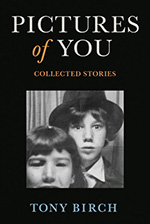
I was beguiled by Konrad Muller’s historical detective novel, My Heart at Evening (Evercreech Editions). Reading it I kept wondering why things weren’t adding up. I knew what was missing but I didn’t know why it was missing … but then the scales fell away. It is an ingenious novel about colonial complicity and historical blindness. Evelyn Araluen’s The Rot is a work of sustained brilliance and searing beauty. The poetry makes no compromises and refuses all hands extended towards it. It is the poetics of defiance. In a different register, but not so far away in spirit, I greatly enjoyed Tony Birch’s Pictures of You (University of Queensland Press), which collects the best of his short fiction. The spare, sharp portraits of working-class life made the Fitzroy of the 1960s come alive. Lastly, David Brooks’s A.D. Hope: A memoir of a literary friendship (Brandl & Schlesinger) was a tender but searching reminiscence of his literary mentor.
Victoria Grieves Williams
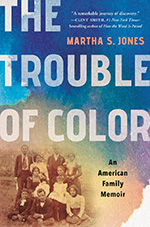
These books represent a transnational collection by authentic black, Native, and Aboriginal writers absorbed with understanding who they are and what that means; sharing with the reader aspects of their inner life, their journey, and what it reveals to them. Two books I reviewed are on my list of favourites for this year. Djon Mundine’s brilliant and beautiful book Windows and Mirrors (Art Ink) reveals his active presence during important nationwide connections in Aboriginal art practices over the last three decades. The formidable career and reputation of the historian Martha S. Jones is now brilliantly capped by her deftly researched, beautifully written The Trouble of Color: An American family memoir (Basic Books). Finally, the soon-to-be-published We Survived the Night: An Indigenous reckoning (Profile Books) by Julian Brave NoiseCat is inventive and revealing; it reads like fiction, despite being a moving, deeply researched family memoir.
Yves Rees

Omar El Akkad’s One Day, Everyone Will Always Have Been Against This is a howl against the genocide in Gaza that rearranged my soul. With devastating precision, El Akkad diagnoses the world’s failure to stop (or even acknowledge) this live-streamed slaughter as a larger indictment of Western liberalism. ‘This is an account of a fracture,’ he writes, ‘a breaking away from the notion that the polite, Western liberal ever stood for anything at all.’ Two other Palestine reads: Randa Abdel-Fattah’s novel Discipline is an excoriating account of structural racism and censorship that, ironically, led to the attempted censorship that blew up Bendigo Writers Festival; Ezzideen Shehab’s Diary of a Young Doctor (Readers and Writers Against the Genocide) bears witness to the daily horrors of life in Gaza with clear-eyed intelligence. Finally, Perfection is quite simply perfection; Vincenzo Latronico’s slim satire, shortlisted for the International Booker, is the great millennial novel – not a monstera leaf out of place.
Zora Simic
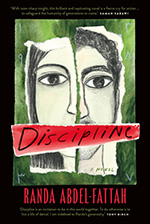
2025 was another year of genocide and much of my reading was directed to that. Like many others frustrated by how mainstream media and politics address Palestine, reading Omar El Akkad’s One Day, Everyone Will Always Have Been Against This provided some necessary relief, as did Randa Abdel-Fattah’s powerful novel Discipline. I’m still thinking about two memoirs I reviewed: Jamie Hood’s Trauma Plot: A life (Pantheon) and Sad Tiger (Seven Stories Press), by French writer Neige Sinno. I urge readers not to let the subject matter – sexual violence and the long tail of trauma – turn them off; these books will surprise you. My favourite fiction – The Transformations (Picador) by Andrew Pippos – came later in the year. He’s a friend, but I would have picked this up anyway. It’s a grown-up novel, set in Sydney in the near-distant past, which captures something very real about how change happens, whether between people, in the workplace, or inside oneself.
Leave a comment
If you are an ABR subscriber, you will need to sign in to post a comment.
If you have forgotten your sign in details, or if you receive an error message when trying to submit your comment, please email your comment (and the name of the article to which it relates) to ABR Comments. We will review your comment and, subject to approval, we will post it under your name.
Please note that all comments must be approved by ABR and comply with our Terms & Conditions.