Fiction
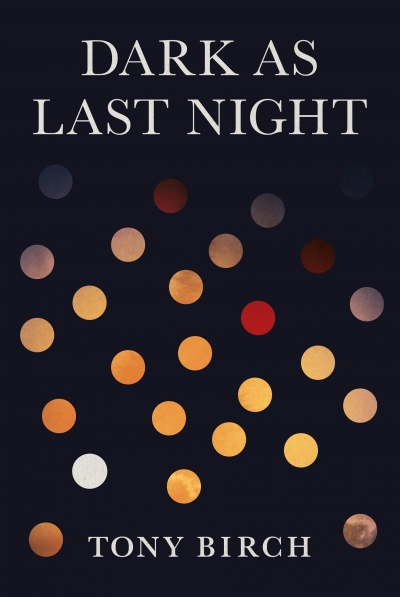
‘And what is wrong with sad stories? The world is always sad.’ So advises Little Red, the aged, marginalised, knowing female character in the title story of Tony Birch’s latest short fiction collection. As in Birch’s previous works, Dark as Last Night contains an abundance of sad stories, but with grief and trauma ameliorated by the main protagonist’s affection for at least one other character, be it a family member or neighbour.
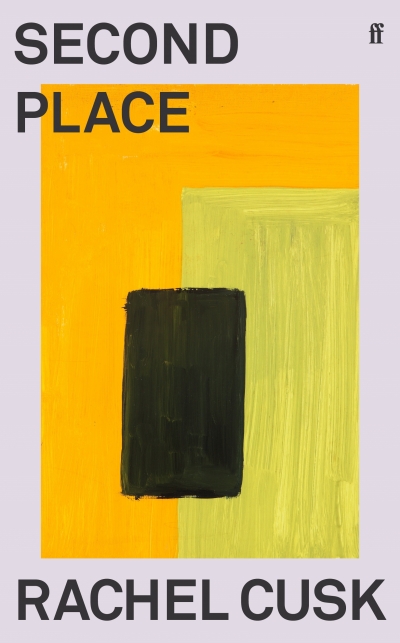
... (read more)In Second Place, the narrator, M, reminisces about the time she invited the artist L to stay on her remote property ‘on the marsh’. Fifteen years earlier in Paris, a painting of L’s on a poster advertising a major retrospective of his art had spoken to M of ‘absolute freedom’. She was then ‘a young mother on the brink of rebellion’. The night before she had allowed a famous writer – ‘an egotist, permanently drunk on his own importance’ – to string her along and then dump her unceremoniously once he decided she wasn’t worth the risk. Viewing L’s paintings in the gallery the next morning, M had felt herself ‘falling out of the frame’ of her own life and ‘became distinct from it’.
... (read more)Three recent novels by Australian women deal with current and increasingly urgent political questions about female identity and embodiment. They each use the conventions of popular realist fiction to provoke thought about the causes of female disempowerment and the struggle for self-determination. Coincidentally, they are also set, or partially set, in Australian country towns, although their locations are markedly different, and their plots culminate in the revelation of disturbing secrets.
... (read more)Two Women and a Poisoning by Alfred Döblin, translated by Imogen Taylor
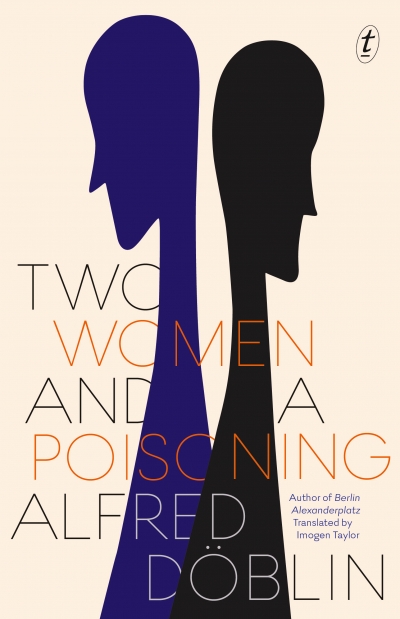
In Two Women and a Poisoning, Alfred Döblin (1878–1957), one of the twentieth century’s greatest fiction writers, brings his other gift – a profound insight into psychological suffering honed by decades of experience as a psychiatrist – to bear on a baffling murder trial in Berlin in March 1923. Like Sigmund Freud’s famous case histories, his account is compelling as both narrative and an analysis of the unconscious inner conflicts of the people involved. Unlike Freud, however, Döblin warns his readers not to expect definitive answers: ‘Who is so conceited as to fancy that he knows the true driving forces behind such a crime?’
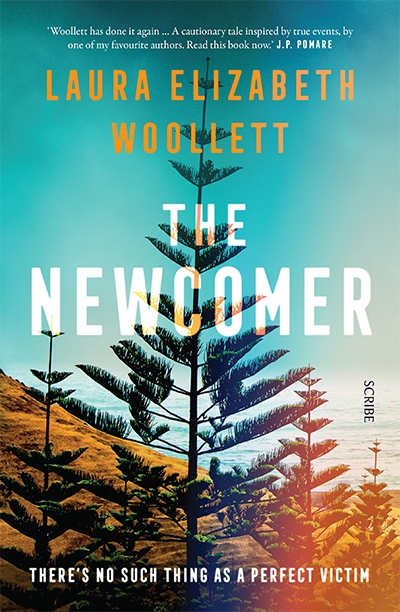
... (read more)The title character of Laura Elizabeth Woollett’s second novel, The Newcomer, is Paulina Novak, who has arrived on Fairfolk Island after leaving a finance career in Sydney. If she is wanting to make a new start, then she’s mistaken; Paulina’s life seems perpetually sullied by alcoholism, an eating disorder, and a tendency to fall for callous men. Acquaintances say that her head is ‘messy’. Paulina herself remarks: ‘My whole life’s a fuck-up.’
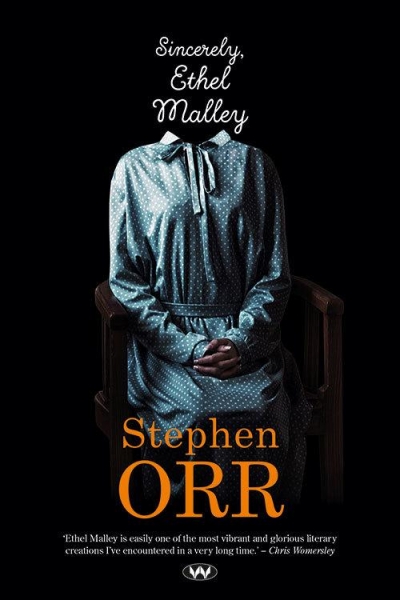
... (read more)‘Ern Malley’ – a great literary creation and the occasion of a famous literary hoax – has continued to attract fascinated attention ever since he burst upon the Australian poetry scene more than seventy years ago. But his sister Ethel has attracted little notice, she who set off the whole saga by writing to Max Harris, the young editor of Angry Penguins, asking whether the poems left by her late brother were any good, and signing herself ‘sincerely, Ethel Malley’.
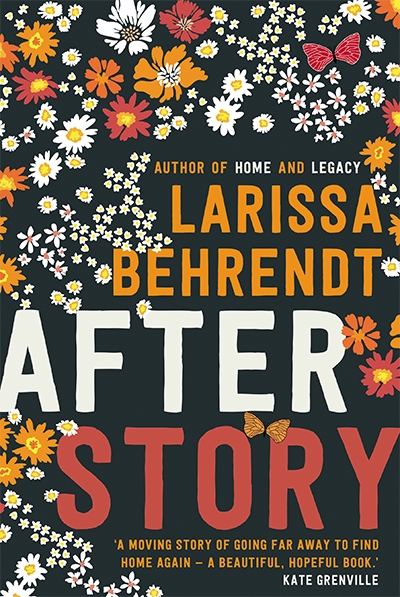
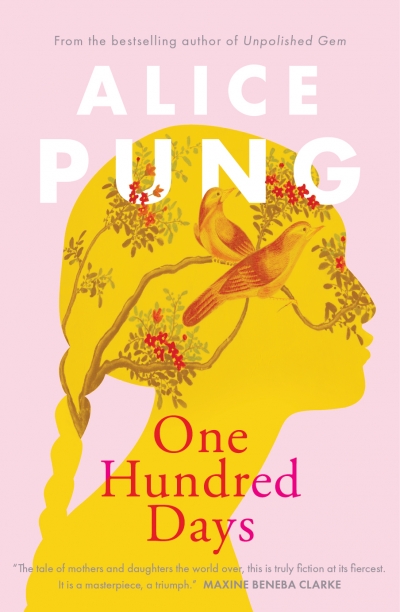
... (read more)In the latter half of this novel, one of its protagonists is viewing a collection of butterflies at the Oxford University Museum of Natural History. This forms part of Jasmine’s holiday with her mother, Della, a tour of famous literary and other notable cultural sites in the United Kingdom. By this stage they have visited Stratford-upon-Avon, Brontë country in Haworth, and Jane Austen’s Bath and Southampton, and have been duly impressed or, in Della’s case, underwhelmed. But now Jasmine can only feel sadness: ‘We take the life of a living thing, hold it to display, because we feel entitled to the knowledge, entitled to the owning, the possessing.’
... (read more)'China Men' by Maxine Hong Kingston, 'Mutuwhenua: The moon sleeps' by Patricia Grace, 'Fortress' by Gabrielle Lord, and 'Female Friends' by Fay Weldon
I’m well overdue with this article, and I suspect John McLaren is never going to speak to me again. Trouble is, I’m on a frenetic reading jag and its mainly McLaren’s fault.
... (read more)Is it tautological to describe a work of fiction as ‘family Gothic’? After all, there’s nothing more inherently Gothic than the family politic: a hierarchical structure ruled by a patriarch, as intolerant of transgression as it is fascinated by it, sustaining itself through a clear us/them divide, all the while proclaiming, ‘The blood is the life.’ Yet three new Australian novels Gothicise the family politic by exaggerating, each to the point of melodrama, just how dangerous a family can become when its constituents turn against one another.
... (read more)It’s difficult to describe what it’s like to be raised in a Chinese family, especially when you are surrounded by markers of Western society. There is no such thing as talking back to your parents or refusing to do what they say. As a child, I never went to sleepovers. During my teenage and young adult years, I felt increasingly trapped in my own home. Everything I did was scrutinised; my parents never seemed to take into account my wants or needs. I found myself grasping for any scrap of independence, usually through lying or stealing or a combination of the two. As children, we are continually told that adults do things to protect us, especially when they are things we don’t particularly like. But when does protection morph into something uglier? When does it smother us, as if our agency has been stripped from us?
... (read more)